The Best Beginner Sousaphone Usually Belongs to a Well-Run Program
A sousaphone is large, specialized, and expensive, so most new marching players should begin on an instrument supplied and maintained by their school. When a program or independent ensemble does need to buy, the best beginner model balances securely on different bodies, responds evenly in BB-flat, survives outdoor use, and can be repaired without a long parts search. Fiberglass designs reduce carrying weight and are often the practical choice for younger players. Brass models offer a traditional feel and rich projection but demand more strength and dent prevention. The right decision begins with the section’s needs, not an isolated model ranking.
A: Usually no; school inventory or rental is safer until program needs and commitment are clear.
A: It often reduces weight, but fit, response, service, and program sound still decide.
A: Brass can offer a rich traditional color, though player skill and condition remain crucial.
A: Three valves cover normal school marching parts and keep the system straightforward.
A: Specifications predict only part of the feel; the student must play the actual instrument.
A: It can simplify certain repairs, but alignment and technician familiarity also matter.
A: Choose according to impact risk, storage, stairs, vehicles, and student handling.
A: Often yes with a well-fitting model and correct leadpipe adjustment, but test carefully.
A: Let a technician price required valves, guides, corks, hardware, and structural work before purchase.
A: The program-supported horn that fits the player, survives the schedule, and receives prompt local service.
Decide Whether the Program Needs Fiberglass or Brass
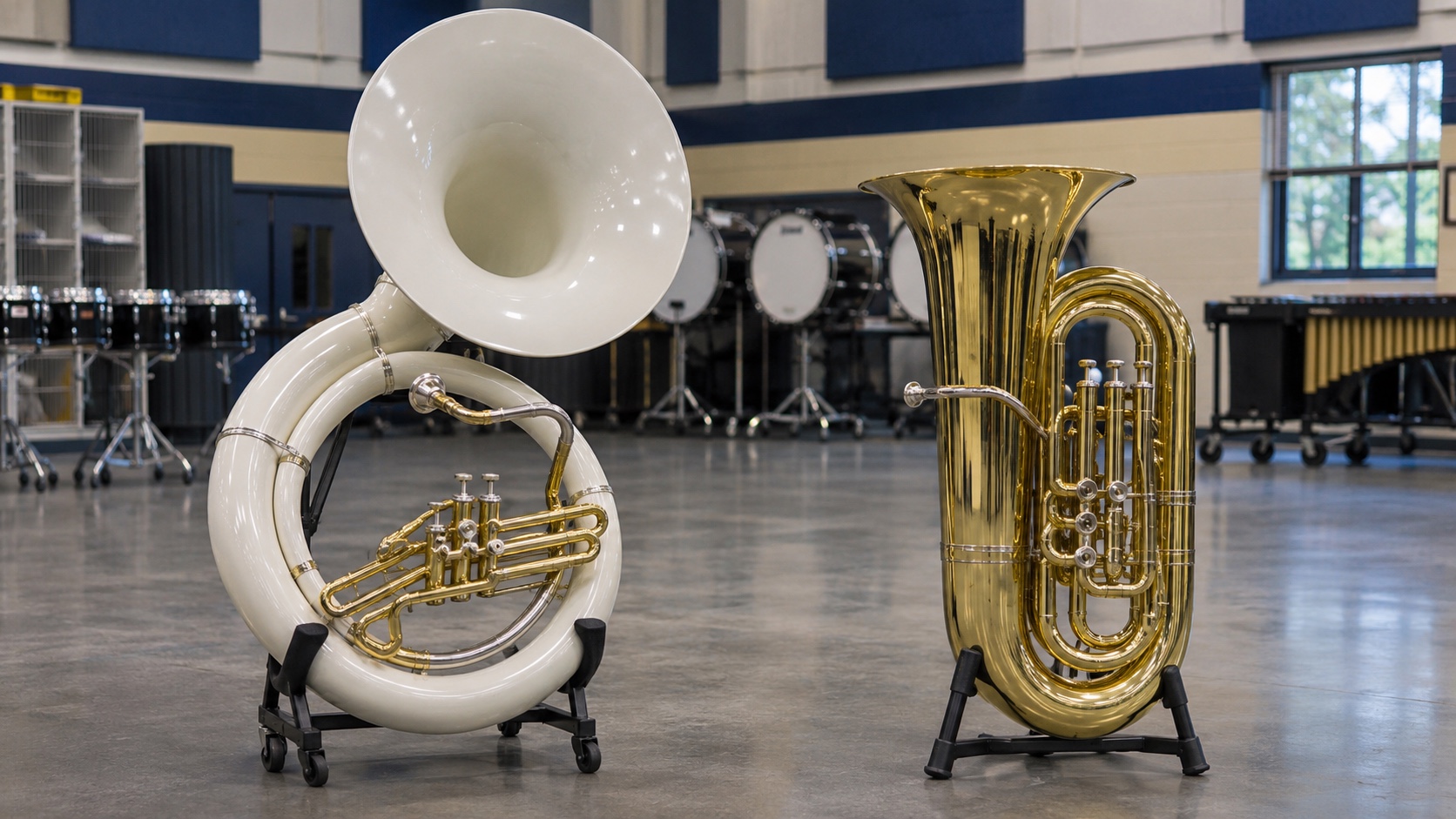
Fiberglass bodies reduce weight and do not dent like thin brass branches. That makes them attractive for first-year marchers, long parade routes, and programs with many students sharing instruments. They can still crack, lose hardware, or suffer valve damage, so “durable” never means careless. Brass sousaphones provide a familiar visual finish and a complex, projecting sound. They are heavier and more vulnerable to dents where the body contacts doors, stands, and neighboring players. A program should choose material consistently enough that visual appearance, carrying demands, and repair procedures remain manageable.
Yamaha YSH-301: A Lightweight School-Oriented Choice
Yamaha’s YSH-301 is a BB-flat fiberglass-reinforced-plastic sousaphone with an ABS resin bell, three front-action nickel-plated pistons, a 0.728-inch bore, and a 26 1/8-inch bell. Yamaha lists a weight near 20.1 pounds in its North American product information, making it notably lighter than many brass alternatives.
This model is a strong candidate for programs prioritizing balance, weather resistance, and a broad dealer network. Test the actual shoulder contact and leadpipe position on the student. Confirm which case or soft-bag configuration is included, because safe storage and transport can change the total purchase decision.
Jupiter JSP1000: Fiberglass With Service-Friendly Features
The Jupiter JSP1000 uses a BB-flat fiberglass body, a 26-inch fiberglass bell, three front-action stainless-steel pistons, and a 0.688-inch bore. Jupiter highlights a removable valve section, which can improve repair access. Published product information also describes hard-shell wheeled and bag configurations. The slightly different bore and balance should be compared in person rather than treated as better or worse on paper. A student should play sustained middle-register notes, simple valve patterns, and a short marching excerpt. Directors should ask the local technician about parts availability and experience with the removable section.
Yamaha YSH-411: A Traditional Brass Step
The YSH-411 uses a yellow-brass body and bell and is offered in lacquered or silver-plated versions. Yamaha describes a 26-inch bell, three pistons, easy playability, and secure intonation. Published weight is roughly 27.6 pounds, so the difference from the fiberglass YSH-301 is significant during a long rehearsal.
Choose it when the program wants brass tone and appearance and has students ready for the load. The player must test it while standing and marking time, not only while seated in a shop. A shoulder pad may improve comfort when approved and installed without interfering with instrument stability.
Jupiter JSP1100: Brass With a Removable Valve Section
Jupiter lists the JSP1100 as a BB-flat yellow-brass sousaphone with a 26-inch bell, three front-action stainless-steel pistons, a 0.688-inch bore, and a removable valve section. Published product-guide weight is about 28 pounds, placing it near other full brass designs. It is worth comparing when local Jupiter service is strong or when a program already maintains compatible instruments. Listen for a stable center at marching dynamics and check whether the leadpipe and bits can be adjusted without placing the mouthpiece off-center. Case wheels and loading dimensions matter as much as the horn’s showroom response.
King KSP411: Ergonomics for High School Programs
Conn Selmer describes the King KSP411 as a lightweight performance sousaphone intended for high school marching band. Current specifications include a 0.730-inch bore, 26-inch bell, three valves, and a wheeled ABS case. Finish variants should be confirmed with an authorized dealer.
Its emphasis on ergonomics makes it a useful trial candidate for older beginners and developing sections. “Lightweight” is relative within brass equipment, so compare actual carrying comfort with fiberglass alternatives. Evaluate valve access, shoulder pressure, bell clearance, and how securely the instrument stays aligned during direction changes.
King 2350: Proven Brass Construction With More Carrying Demand
The King 2350 family uses BB-flat brass construction, a 25.5-inch bell, three pistons, and a 0.687-inch bore. Conn Selmer notes a removable valve section on current product information. It has long been associated with school and marching use, but individual variants differ in finish and package. A used 2350 may be appealing because technicians know the design, yet age and service history matter. Inspect compression, valve alignment, solder joints, main branches, bell collar, leadpipe, and case. A familiar model with worn valves can be a worse beginner instrument than a less famous horn in excellent mechanical condition.
Fit the Leadpipe Before Judging the Player
Sousaphone leadpipes use bits and adjustable sections to bring the mouthpiece to the face. Assemble them in the correct order and adjust the instrument around a tall, neutral posture. The student should not reach forward with the neck or rotate the torso to meet a poorly positioned mouthpiece.
Check vision and bell clearance as well. The rim should not block essential field awareness, and the instrument must clear hats or uniform elements without unstable rotation. Recheck fit after several minutes because shoulder settling and fatigue can reveal problems missed at first contact.
Use a Marching Test, Not Only a Playing Test
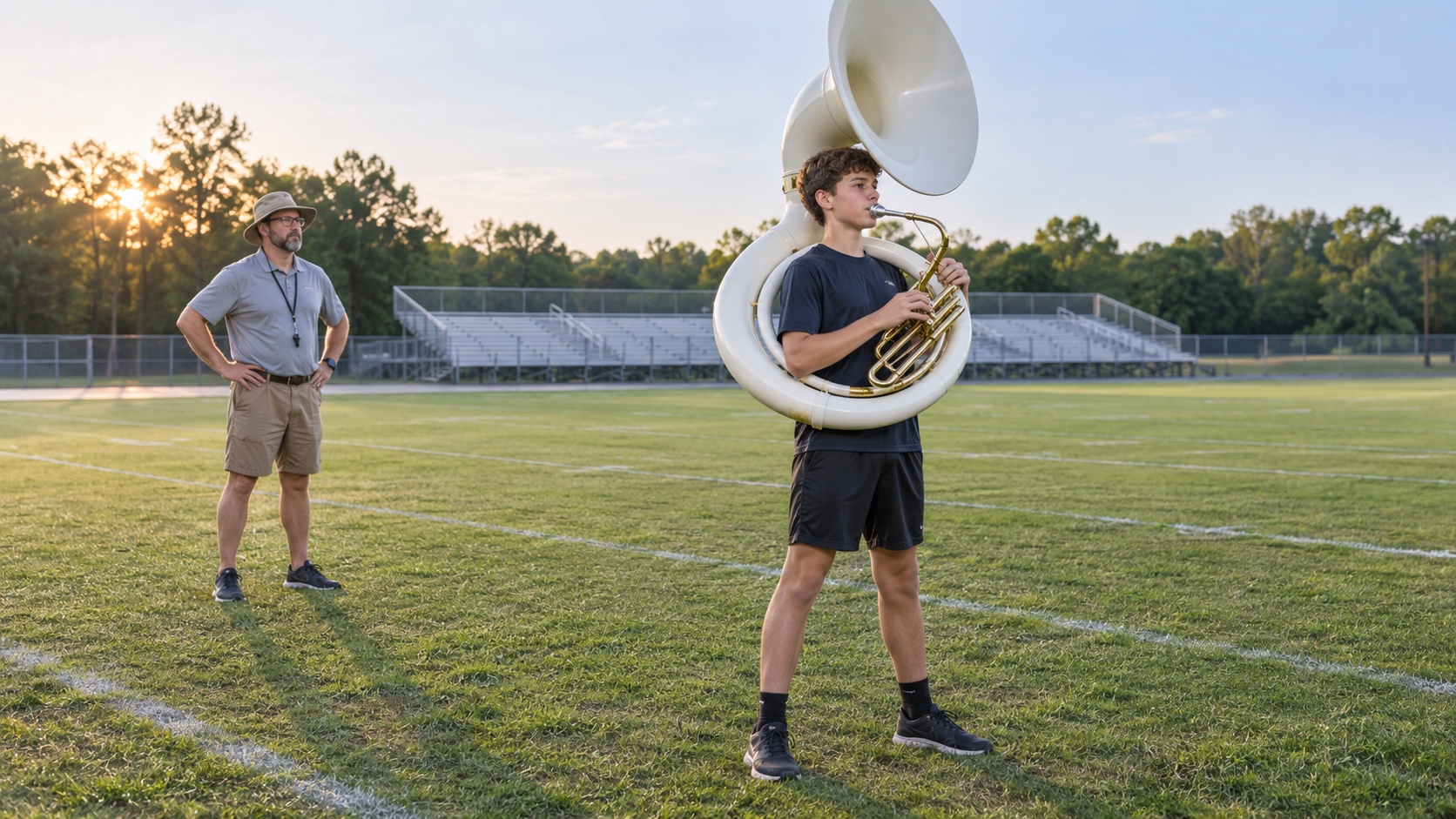
Begin with long tones and a scale, then add marking time, forward steps, a controlled turn, and a brief halt. Listen for pitch and tone changes when the body moves. The instrument should remain stable enough that the player does not clamp the mouthpiece against the lips. Next, rehearse an entrance after eight counts of movement and a release on a halt. This reveals whether breathing, bell control, and foot timing can coexist. A beginner-friendly sousaphone supports those tasks without demanding constant readjustment.
Cases and Storage Can Decide the Winner
A hard case protects well but consumes substantial room and may be difficult on stairs. A soft bag reduces bulk but demands careful loading and may offer less impact protection. Inspect handles, zippers, latches, wheels, and internal supports before choosing a package.
Measure storage doors, shelving, trailer bays, and vehicle openings. Plan separate protected space for bells. A model that cannot be stored safely will accumulate damage regardless of its build quality. Program logistics belong in the evaluation from the beginning.
Budget for a Fleet, Not Just One Purchase
Schools should calculate mouthpieces, cases, pads, oil, slide supplies, annual service, replacement bits, bell hardware, and inventory labeling. Standardizing selected parts can reduce confusion, but compatibility must be confirmed rather than assumed across models. For a single private buyer, insurance and secure home storage add to the cost. Resale is narrower than for smaller instruments. Renting, borrowing, or using school inventory is usually wiser until the player knows that marching low brass will remain a long-term commitment.
Inspect Used Sousaphones Under Real Load
Cosmetic wear is expected, but structural damage can change alignment and response. Have a technician check leaks, valve compression, damaged knuckles, distorted bell collars, loose braces, cracked fiberglass, and repairs around the shoulder branch. Verify that all bits and screws are present.
Then let the intended player carry it. A repaired horn may play well while balancing poorly, and a body that suits one marcher may pressure another. Include any replacement case or bell work in the price before calling the purchase a bargain.
A Practical Ranking by Use Case
For younger or weight-sensitive beginners, compare the Yamaha YSH-301 and Jupiter JSP1000 first. For a program committed to brass, test the Yamaha YSH-411, Jupiter JSP1100, and King KSP411 with the actual students who will carry them. Consider a King 2350 when condition, service history, and local support are strong. No model wins every program. The best beginner sousaphone fits safely, projects a centered bass line, survives the expected schedule, packs into the available system, and returns from the repair shop quickly. Those practical strengths support better musicianship than prestige or finish alone.
Teach Safe Assembly as Part of the Purchase
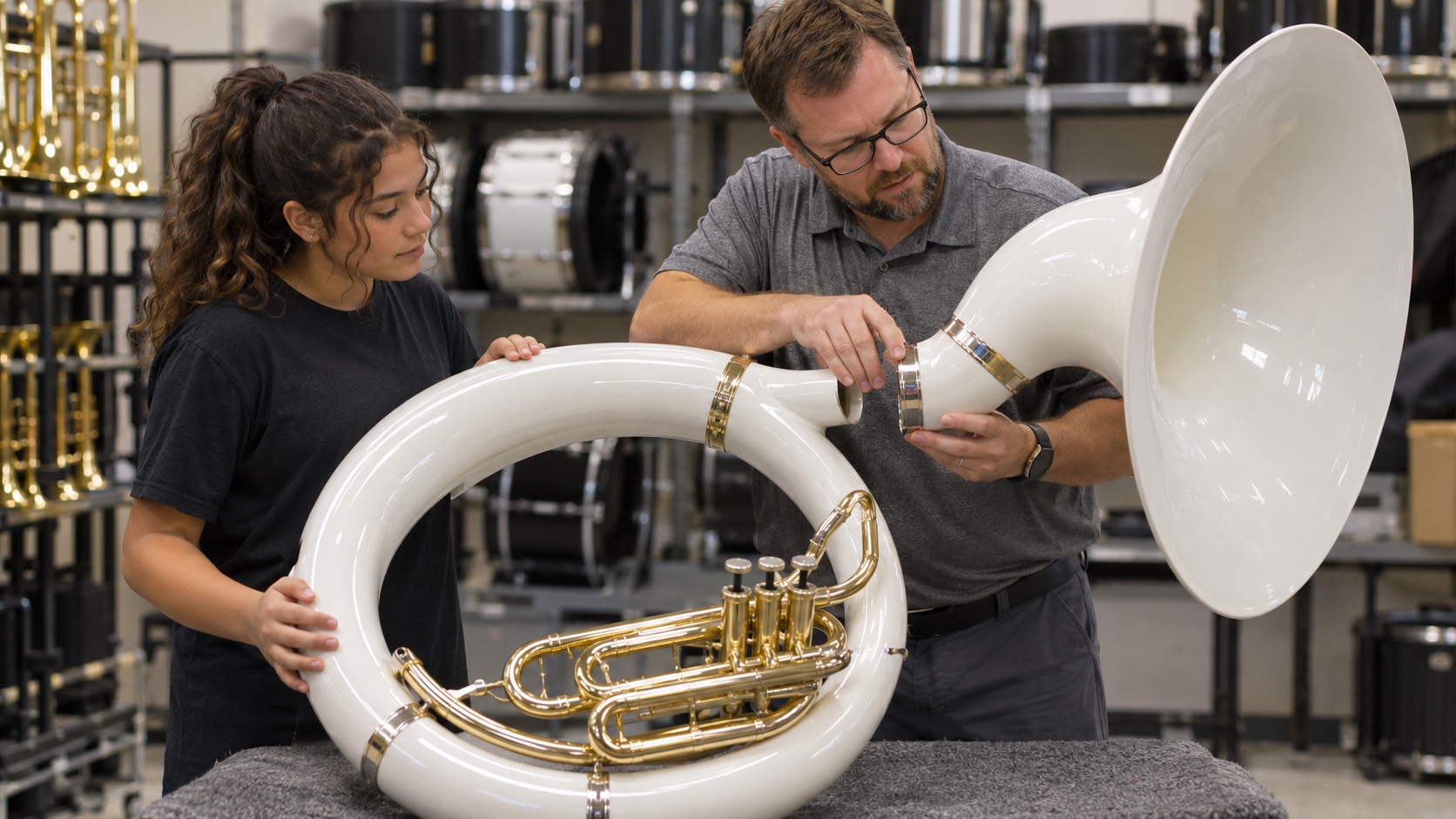
A detachable bell should be lifted by secure areas and seated without forcing the collar. Align it according to the director’s system so the section presents a consistent angle. Leadpipe screws need enough tension to hold position, not excessive force that strips threads. Bits should be removed, dried, and stored where they cannot disappear inside a case pocket.
Assign a numbered station for every body, bell, and case. Students should inspect the instrument before and after rehearsal and report new damage without fear of automatic blame. Early reporting turns a loose brace or bent screw into a small repair instead of a failed performance.
Build Endurance Without Normalizing Pain
Carrying strength develops gradually through well-planned rehearsal. New players can alternate playing and rest blocks, learn choreography without instruments, and use approved stands during music rehearsal. Sharp pain, numbness, tingling, or restricted breathing calls for an immediate adjustment, not encouragement to “push through.” Directors should rotate available instruments when individual balance differs and consider height when assigning parts. Conditioning outside rehearsal can support general fitness, but it cannot correct an instrument that sits badly. Good ergonomics preserve attention for tone, timing, and movement.
Final Recommendation
Start with the lightest program-supported fiberglass model that plays evenly if the section includes young or inexperienced marchers. Move toward brass when the desired sound, appearance, player readiness, and maintenance budget justify it.
Always test multiple examples, because assembly and condition affect performance within the same model line.
Compare Sound at the Distance That Matters
A sousaphone can feel loud to the player because the bell sits close to the head, yet the audience may hear an unfocused or delayed bass line. During trials, place a director or experienced low-brass teacher near the front sideline while the student plays at realistic spacing. Judge the center of the pitch, clarity of entrances, consistency across valve combinations, and whether the tone retains character without being forced. Repeat the same passage with the section when possible. One model may sound impressive alone but resist matching the articulation or color of existing instruments. Another may blend immediately and require less physical effort. Record from a fixed location for comparison, but do not let a phone microphone’s automatic processing replace live listening.
Write a Replacement Plan Before the Warranty Ends
School instruments live through many players, so purchase decisions should include a long view. Record the warranty term, dealer contact, finish, case type, and part numbers for common consumables. Schedule a condition review near the end of the first marching season and again before warranty expiration. Early documentation helps distinguish ordinary wear from a recurring defect.
Set a realistic service life and annual reserve for repairs. A durable fleet still needs valve work, soldering, case hardware, and occasional bell or body repair. When costs begin to approach replacement value, compare downtime and parts availability rather than repairing automatically. Thoughtful replacement keeps beginners from inheriting the section’s least reliable instrument simply because it still looks complete.