A Beginner Classical Guitar Must Fit the Player
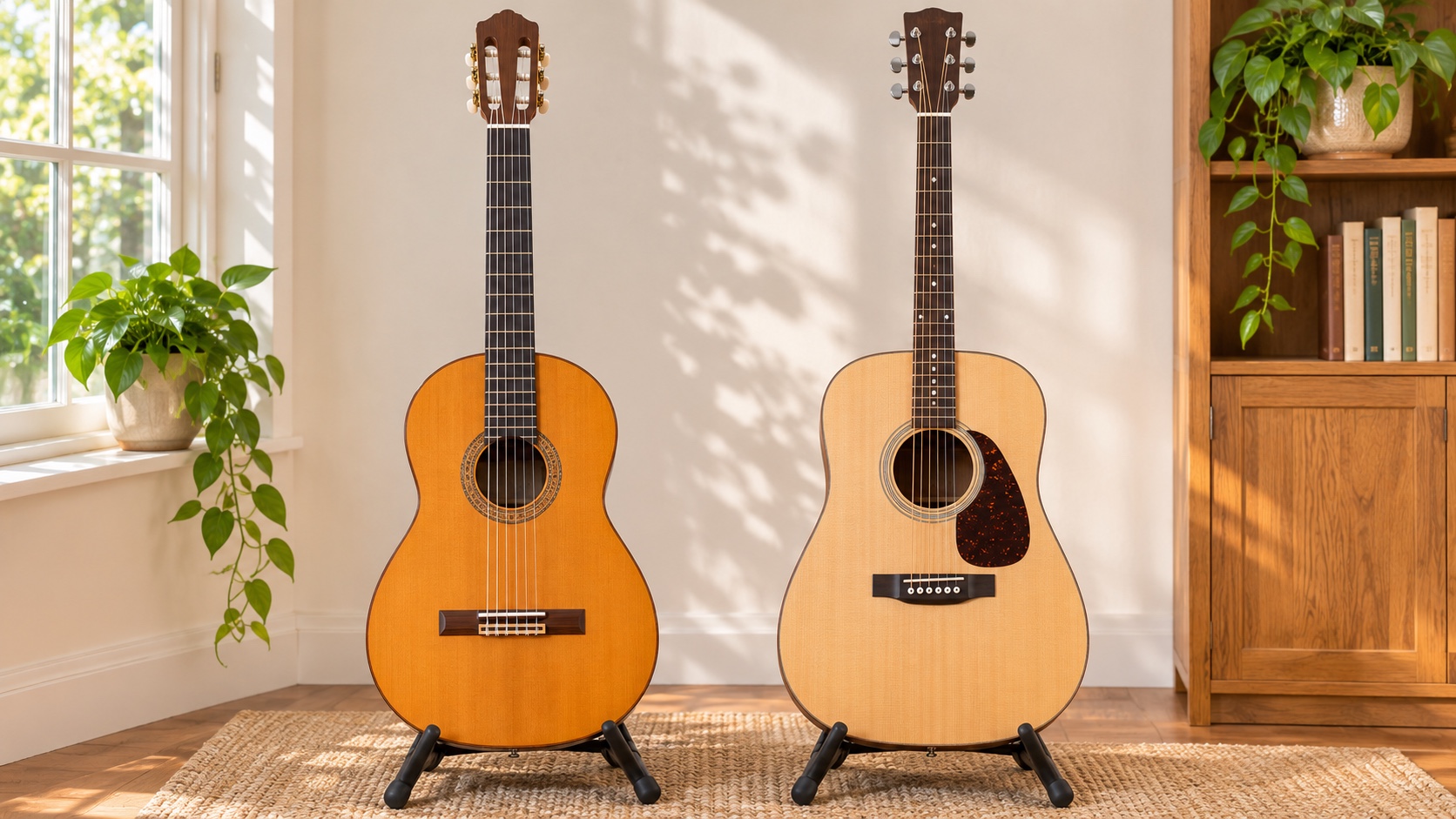
Nylon strings feel gentler than steel, but a traditional classical guitar has a wide, flat fingerboard and a full body that can challenge an unsuitable player. The best first instrument balances correct classical geometry with manageable reach, accurate intonation, stable construction, and action that supports clean notes without excessive effort. A child may need a fractional size; an adult moving from electric guitar may prefer a crossover neck; a dedicated classical student often benefits from traditional dimensions. The models below represent useful paths, but the exact guitar and its setup still decide the result.
A: They feel softer, but the wider neck and classical posture introduce different challenges.
A: No. Reach, torso size, hands, and comfort should decide.
A: It can improve response, but stable construction and setup come first.
A: Never; the instrument is not designed for their tension.
A: It helps upper access but is unnecessary for much beginner repertoire.
A: Classical action is higher than electric action and should be judged by a technician.
A: They commonly require frequent retuning for several days.
A: No. Any player may choose one when the geometry fits better.
A: Usually not; normal tension is a balanced starting point.
A: Size, posture, action, intonation, structural condition, and tonal evenness.
What to Inspect on a First Nylon-String Guitar
Check that the neck is straight enough to adjust, the top and bridge are secure, and the frets do not cut the hand. Classical action is normally higher than electric-guitar action because nylon strings move through a wider arc, yet first-position notes should not require strain. Play every fret and listen for dead notes, persistent buzz, or sharp intonation. Tuning machines should turn smoothly without binding.
Look at the saddle height. A high action with almost no saddle showing may indicate limited correction or a neck-angle issue. Confirm that strings are tied securely at the bridge and wound neatly on the rollers. Beginner instruments are built to a price, but structural stability and usable adjustment are not optional.
Yamaha C40II: Dependable Full-Size Starting Point
The Yamaha C40II is a widely recognized entry classical with traditional full-size proportions, a spruce top, and a straightforward design. It suits adult beginners, school programs, and teachers who want a familiar platform. Its value comes from basic consistency and broad availability rather than premium materials. The neck width encourages classical left-hand placement and gives the right-hand fingers room to address individual strings. Try the exact instrument because setup and fret feel still vary. Smaller players may find the 650-millimeter scale and body too large. Adults planning formal classical study should compare it with the next price tier, but a well-prepared C40II can support technique, reading, accompaniment, and early repertoire without adding unnecessary electronics.
Córdoba Protegé C1M: Traditional Feel With a Matte Finish
The Córdoba C1M pairs classical dimensions with a satin or matte presentation that many beginners find comfortable. The neck and body aim to provide a traditional nylon-string experience, while common fractional variants make the family useful for younger students. Its sound is clear enough for lessons and ensemble work, and the uncluttered design keeps spending focused on the instrument. Check which size and current specification the seller offers.
A matte finish can show handling marks but may feel less sticky against the neck and forearm. Compare nut width, action, and body depth directly with the Yamaha. The C1M is a strong candidate when traditional technique and a lighter visual treatment appeal.
Yamaha CG102: A Step-Up for Serious Study
The CG102 moves beyond the most basic entry level while retaining a conventional classical layout. It can reward a committed student with a more developed response and a platform suitable for graded repertoire, private lessons, and small performances. Paying slightly more makes sense when the instrument demonstrates clearer balance, cleaner workmanship, and a neck that feels dependable across positions.
Do not assume the step-up name guarantees a perfect example. Compare sustain on treble notes, bass clarity, fret finishing, and tuning-machine operation.
Ask a teacher to play it from across the room. Projection heard by a listener can differ from the sound perceived above the guitar.
Córdoba C3M: Solid-Top Growth Potential
The Córdoba C3M is often considered when a beginner wants a solid cedar top and traditional fan-braced character without moving far into professional pricing. Cedar commonly responds quickly to a light touch, helping students hear changes in right-hand placement. The mahogany back and sides and matte finish create a focused, approachable instrument for classical repertoire and fingerstyle accompaniment. Solid wood requires humidity attention.
The advantage matters only if the player stores the guitar responsibly and prefers its sound. Compare the C3M with good layered-top instruments rather than buying the material description alone. A solid top does not excuse uncomfortable action or weak fretwork.
Yamaha CS40II: Compact Dimensions for Smaller Players
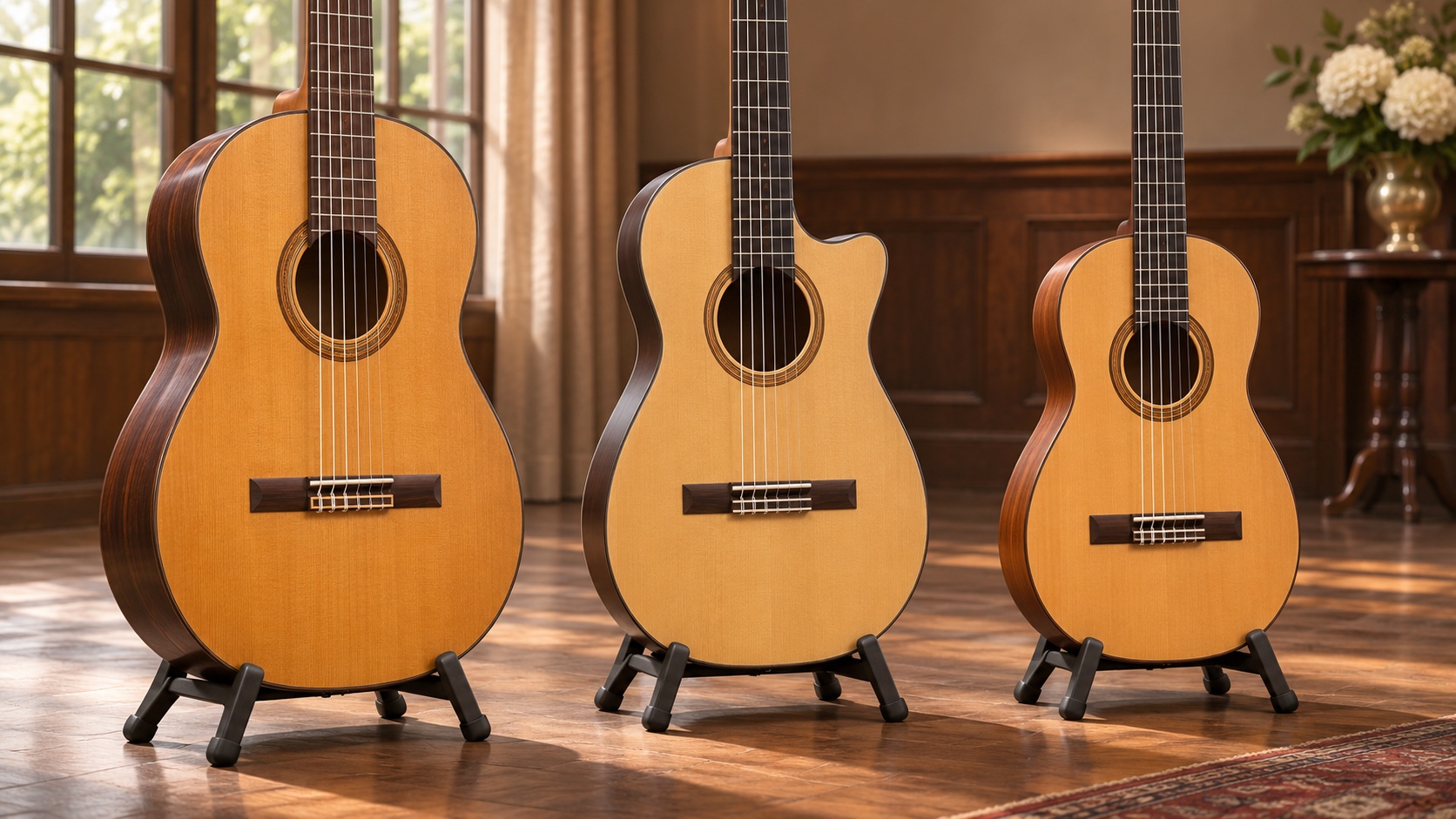
The CS40II uses a three-quarter-size concept with a shorter scale and compact body. It is designed for young learners and can also suit adults who need reduced reach. The smaller geometry makes first position and right-arm placement more manageable, allowing posture and rhythm to develop without an oversized instrument dictating compensations. Size should follow measurements, not age labels. The player must still have adequate string spacing for fingertips and a stable seated position. Children grow, but an instrument that fits now can support healthier technique than a full-size guitar purchased for later. Reevaluate size with the teacher as reach changes.
Córdoba Protegé C1M Fractional Sizes: A Fitted Learning Path
Córdoba’s fractional C1M offerings can provide consistent feel across several sizes, which is helpful for families working with a teacher. Half, three-quarter, or other versions should be chosen by arm reach, torso size, and hand position. A properly fitted body lets the right forearm rest without lifting the shoulder and keeps the left wrist from collapsing near the first fret.
Confirm that the specific fractional model uses suitable strings and has accurate intonation. Very small guitars may use different tension or pitch recommendations. Follow the manufacturer’s guidance and teacher’s plan rather than installing full-size high-tension strings by habit.
Ibanez GA Series: Familiar Options for Crossover Players
Entry Ibanez GA models include traditional and cutaway or acoustic-electric variations. They can appeal to singers, church musicians, and steel-string or electric players who want nylon tone with familiar stage features. Some versions offer narrower-feeling necks or cutaways, while others remain closer to classical dimensions.
The series name covers several purposes, so read the exact specification. Formal classical students should confirm that nut width, body shape, and string spacing support the teacher’s technique.
A cutaway and pickup add utility but not necessarily better acoustic tone. Choose them when amplified accompaniment or upper-fret access is part of the actual work.
Takamine GC1 or Entry G-Series Classical: Practical Build
Takamine’s entry classical offerings provide another established option with straightforward construction and a traditional appearance. They suit students who prefer the neck feel or tonal balance over competing models. The brand also offers electro-classical variants higher in the range, creating a possible progression for performers. Model availability varies by market, so verify current specifications.
Inspect the bridge, neck, and tuning machines carefully. Compare the instrument at matched tuning with the Yamaha and Córdoba candidates. A smaller name difference matters less than the particular guitar’s comfort and even response.
Choose Strings and Tension With Guidance
Normal-tension nylon strings are a sensible baseline. High tension can increase firmness and projection but adds load and fretting resistance. Low tension may feel easy yet require controlled attack to avoid buzz. Carbon treble strings, traditional nylon, and different bass windings alter brightness and response. Beginners should establish technique before chasing many string experiments. New nylon strings stretch for days. Tune frequently and learn correct tying or use appropriate ball-end nylon strings only if the instrument and teacher permit. Never install steel strings on a classical guitar; its top, bridge, and neck are not designed for steel-string tension.
Fit the Guitar to the Student’s Posture
Use a footstool or support if following classical posture, and place the waist securely on the elevated leg. The neck should rise without the left hand holding its weight. The right shoulder should remain low, and the wrist should approach the strings without an extreme bend. Alternative supports can reduce back and hip strain while preserving the guitar angle.
Try first-position scales, simple chords, rest stroke, and free stroke. The instrument must allow both hands to work independently. If the body slides or the neck falls, address support before blaming technique. A stable guitar teaches stable movement.
Make the Purchase With a Teacher-Level Check
A classical teacher can evaluate action, size, intonation, and response quickly. Ask the teacher to play across the dynamic range and listen several feet away. If buying remotely, request current action measurements, photographs of the bridge and neck, and a clear return policy.
Keep all packaging during evaluation. Select the model that fits the student now, remains structurally sound, and produces an even tone that rewards careful touch.
Attractive wood and brand prestige are welcome after those requirements pass. The right first classical guitar makes every correctly placed finger easier to hear.
Learn What Healthy Classical Action Feels Like
A beginner may assume any resistance is a defect, while an electric guitarist may expect nylon strings to sit extremely low. Classical setup balances a wide vibrating arc with clean tone. The bass side commonly needs more clearance than the treble. The player should fret near the wire with minimal excess pressure and hear a full note. If the hand squeezes hard simply to sound first-position chords, the nut slots or action deserve professional review.
Buzz has context. One isolated rattle may indicate a fret or loose component; widespread buzz under strong attack may indicate technique or insufficient clearance. Ask the teacher and technician to separate those causes. Do not sand the saddle at home without understanding how neck, top, nut, and string tension interact.
Buy the Right Support and Chair With the Guitar
Traditional posture uses an elevated leg, but many players prefer a guitar support that raises and angles the instrument without twisting the hips. The support must attach securely and fit the guitar’s finish. A stable, armless chair of suitable height keeps both feet or the chosen support grounded. Sofa practice often collapses posture and makes a correctly sized guitar feel wrong. Try the instrument with the intended support before purchase. A compact player may fit a full-size guitar once the angle is improved; another may still need fractional dimensions. These accessories are part of the fit system, not optional decoration.
Prepare for String Changes and Tuning
Classical strings tie at the bridge and wind on slotted-head rollers. Poor knots can slip, and loose tail ends can damage the top. Ask a teacher or technician to demonstrate a secure method. New strings stretch substantially, so tune often without pulling them violently away from the fingerboard.
Change one string at a time if you want to preserve general tension and simplify bridge tying, unless maintenance requires otherwise. Note the brand and tension installed. When the basses become dull or trebles grow rough and inaccurate, replace the set. Consistent strings make technique comparisons meaningful.
Use the Return Window as a Lesson Period
Schedule a lesson soon after purchase and let the teacher watch posture, first-position reach, right-arm placement, and tuning behavior. Play the same short study each day and note whether fatigue decreases or grows.
Check the bridge, neck, and action after the guitar acclimates to the room. If the instrument remains physically unsuitable, exchange it before compensations become habits.
A return is not failure; it is the purpose of an evaluation period. Keep a guitar only when its size, setup, and response support the student’s actual body and method.