Choose for the Player You Are and the Technique You Are Building
A classical guitar should make correct movement audible. Beginners need stability, suitable size, and an even response that exposes timing without punishing every small error. Intermediate players may need greater dynamic range, clearer separation, and a neck that supports longer repertoire. Advanced performers listen for projection, color, sustain, and the speed with which the top answers a refined touch. Playing style adds another dimension: traditional classical, flamenco, accompaniment, bossa nova, crossover fingerstyle, and amplified stage work place different demands on the same nylon-string foundation.
A: When the instrument limits dynamics, balance, projection, or physical progress.
A: Cedar often responds quickly, but either can work in a well-designed guitar.
A: Sometimes; confirm its spacing and geometry with the teacher.
A: Fast attack, lighter response, appropriate action, and rhythmic clarity.
A: No. Design, bracing, execution, and the player determine projection.
A: Only when the guitar, technique, and desired response support them.
A: Usually not when microphones and acoustic halls are available.
A: Play sustained melodies high on each string and listen from across the room.
A: It is worthwhile when upper-fret access is central to the repertoire.
A: The guitar supports present technique while offering useful room for the next skills.
Separate Skill-Level Needs From Price Labels
A beginner needs an instrument that plays in tune, stays structurally stable, and fits the body. More responsiveness is helpful, but an extremely revealing concert guitar is not required to learn free stroke, rest stroke, position shifts, and reading. An intermediate player begins to use broader dynamics, tone-color changes, upper positions, and longer sustain. The guitar must offer enough contrast for those skills to develop. An advanced player may evaluate projection from the hall, balance in polyphony, rapid response, and the way notes connect across registers. Price can correlate with labor and material selection, yet it does not assign the player’s level. A well-set-up student model can support serious work; a costly instrument that does not fit can obstruct it.
Start With Body Size and Playing Position
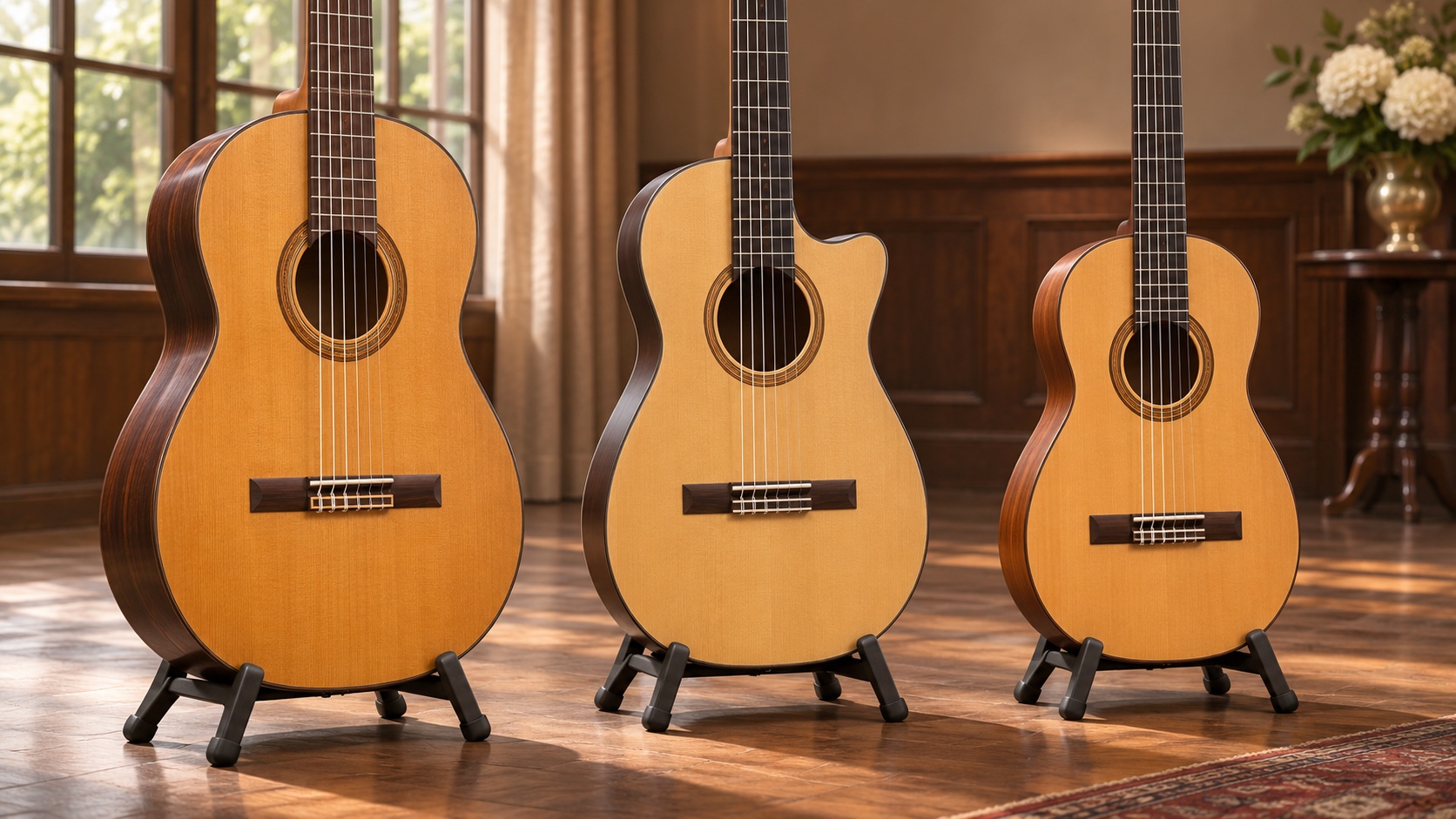
Traditional full-size classical bodies and 650-millimeter scales suit many adults, but not everyone. Fractional models reduce scale, body length, and reach. Compact instruments can help children, smaller adults, or players managing shoulder and hand limitations. The right size lets the waist settle on the leg or support while the neck rises without being held by the fretting hand.
Body depth and lower-bout width affect the right shoulder as much as scale affects the left. Try the intended chair and support. Play for at least fifteen minutes. If posture deteriorates as the player tires, the instrument or support arrangement may need reconsideration.
Compare Traditional and Crossover Necks
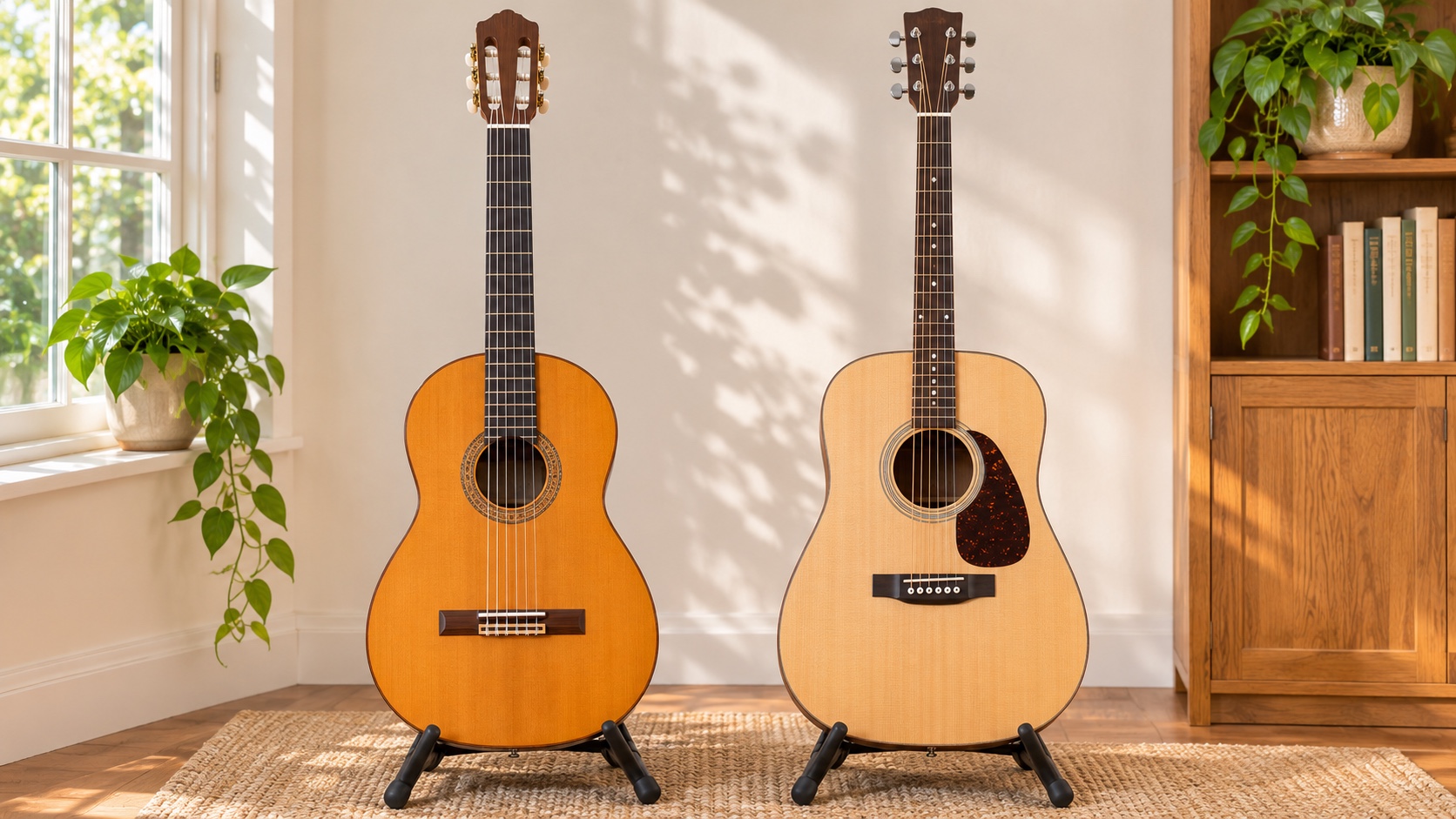
A traditional classical neck commonly uses a nut around 52 millimeters, flat or nearly flat fingerboard geometry, and generous string spacing. This supports independent left-hand fingers and detailed right-hand work. Steel-string and electric players may initially find it broad, yet the spacing is integral to classical technique.
Crossover nylon guitars often use narrower nuts, radiused fingerboards, slimmer profiles, cutaways, and stage electronics. They can suit singer-guitarists, jazz players, worship musicians, and players alternating between guitar types.
A crossover is not an inferior classical guitar; it is a different tool. Formal students should confirm that reduced spacing does not interfere with the teacher’s approach.
Match Top Response to Touch Development
Cedar tops often respond quickly to a light touch and produce warmth early in a note. Spruce can offer a defined attack, broad dynamic headroom, and gradual tonal development. These are tendencies shaped by bracing, thickness, body, and the individual top. Other woods and composite designs can also work well.
Beginners benefit from an instrument that speaks without force. Intermediate players should test whether tone changes near the bridge and fingerboard remain distinct. Advanced players need response through the full dynamic range without the sound compressing under strong attack. Compare complete guitars, not wood names in isolation.
Evaluate Layered, Solid-Top, and All-Solid Construction
Layered bodies offer stability and affordable consistency for lessons, travel, and changing climates. A solid top is often the most meaningful acoustic upgrade because it drives the sound. Solid back and sides can add complexity, color, and sensitivity, but increase cost and humidity responsibility. The design and execution still outweigh a simple material hierarchy. Check whether increased sensitivity serves the player. A responsive solid-top guitar can reward developing touch, while an all-solid concert instrument may be unnecessary for casual accompaniment. Maintenance is part of suitability. An instrument that cannot be stored safely is not a good match, regardless of potential.
Choose Traditional Classical Response for Polyphonic Repertoire
Bach transcriptions, Sor studies, Spanish repertoire, and contemporary concert works demand separation among simultaneous voices. Look for even sustain, clear inner notes, and trebles that remain full above the seventh fret. Bass should support rather than mask counterpoint. Dynamic changes should occur smoothly from very soft to strong playing.
Listen from across the room because projection differs from the sound under the player’s ear. Ask another guitarist to perform repeated passages. An instrument can feel loud nearby yet lose definition at distance. Concert-oriented players should prioritize carried clarity over immediate bass impact.
Choose Flamenco Characteristics for Rhythmic Precision
Flamenco guitars commonly use lighter construction, lower action, quick decay, and a bright, percussive attack. Cypress or related back-and-side choices are traditional, though many variations exist.
The sound supports rasgueado, golpe, rapid scales, and dance accompaniment by clearing space quickly after each event. A protective golpeador is important for tapping techniques.
Low action may include some controlled buzz, which differs from an accidental rattle on a classical instrument. Players focused on flamenco should audition purpose-built models rather than forcing a concert classical into that response through unsuitable setup.
Choose for Accompaniment, Latin Styles, and Songwriting
Bossa nova, Latin accompaniment, and singer-songwriter work often need warm chords, rhythmic clarity, and a neck comfortable for extended harmony. A traditional instrument may provide beautiful separation; a crossover may simplify barre shapes and standing performance. The voice should support singing without excessive bass buildup. Test syncopated chords, thumb-led patterns, and muted strokes.
If microphones are used, listen for handling noise and room resonance. A cutaway is valuable only when arrangements use the upper register. Choose practical features from the repertoire rather than appearance.
Plan Electronics for Amplified Nylon Work
Piezo pickups resist feedback and provide direct attack, but can sound sharp if the saddle pressure is uneven or equalization is excessive. Internal microphones add air and body while increasing feedback risk. Blended systems offer control for stage environments. The guitar’s unplugged sound and amplified function should be evaluated separately. Use a PA or acoustic amplifier with controls initially flat. Play every string softly and firmly, checking output balance. Confirm battery access, tuner function, phase control, and secure jack placement. Formal recital players may prefer external microphones, while touring crossover players often need onboard consistency.
Assess Action, Scale, and String Tension Together
Classical strings move widely, so action must leave room for vibration. A powerful right hand needs more clearance than a light touch. Scale length and string tension affect resistance, attack, and reach. Shorter scales feel softer; high-tension strings feel firmer and may increase projection on a compatible instrument.
Ask a classical technician to judge neck relief, nut slots, saddle, and top geometry. Do not lower the saddle blindly to imitate electric-guitar action. Select string tension after the instrument and technique are understood. Setup should support clean tone and healthy movement, not a numerical target detached from the player.
Use Repertoire to Audition Projection and Color
Bring three passages: a slow melody requiring sustain, a polyphonic section with inner voices, and a rhythmic piece using strong articulation. Play near the soundhole and bridge. Test harmonics, slurs, shifts, and notes above the twelfth fret if the repertoire uses them.
Notice whether the guitar encourages control or requires compensation. Record from several feet away and compare at matched loudness.
The listener’s perspective reveals balance and projection. Return to finalists on another day when possible; ears adapt quickly, and an initially dramatic bass response can distract from weak trebles.
Choose a Guitar That Supports the Next Stage
A beginner’s next stage may be clean first-position technique. An intermediate player may need recital projection and wider color. A working crossover musician may need reliable electronics more than traditional dimensions. Define the next two years of realistic use, not a distant fantasy career.
Buy from a seller who permits careful evaluation and offers knowledgeable setup. Protect solid wood with appropriate humidity control. The right classical guitar gives honest feedback, fits the body, and has enough response to reward the skills now being developed. It should invite attention to sound rather than demand attention for itself.
Compare Lattice, Fan, and Modern Bracing by Sound
Traditional fan bracing remains central to classical design, while lattice and other modern systems can increase projection, sustain, or immediacy. These labels describe structural approaches, not guaranteed personalities. Some modern instruments feel powerful under a light touch; others emphasize balance and color. Advanced players may care deeply about the response, while beginners mainly need an even, stable guitar. Play the same passage at several dynamics and listen from the hall. A loud instrument that compresses early may offer less expressive range than a quieter guitar with clearer gradation. Choose the bracing result that serves the repertoire rather than treating innovation or tradition as a quality ranking.
Evaluate Tone-Producing Details at Intermediate Level
As technique develops, the player should hear distinct colors from nail angle, contact point, rest stroke, and free stroke. A suitable guitar translates those changes without making every experiment harsh. Treble notes should retain body, and bass notes should release cleanly enough for polyphony. Slurs must speak without excessive left-hand force.
Bring a teacher or trusted listener. The player hears vibrations through the body and may overestimate warmth or volume. Record with one microphone position and matched gain. If the guitar reveals more detail while remaining controllable, it offers useful room for growth.
Consider Nail Style and Right-Hand Response
Players using shaped nails often seek clear attack followed by a round tone. Flesh-only players may prefer a top that speaks quickly and maintains definition. Flamenco techniques add rasgueado, golpe, and forceful thumb strokes.
The instrument should respond to the real contact method, not a salesperson’s technique. Use your own nails in their normal condition and avoid testing immediately after a major shape change.
Listen for scratch noise, delayed response, and imbalance among fingers. A good match helps the player refine contact rather than forcing one narrow attack.
Plan for Climate, Travel, and Performance Pressure
All-solid instruments react to humidity and temperature. Touring players need a protective case, reliable hygrometer, and time for acclimation. A delicate finish may show marks quickly; a robust student guitar can be the wiser travel companion even for an advanced player. Some musicians maintain separate rehearsal, travel, and recital instruments for this reason.
Stage pressure favors stable tuners, predictable string choice, and familiar setup. Break in strings before a performance and carry appropriate spares. The guitar’s skill-level match includes the owner’s ability to maintain it under actual working conditions.
Let the Repertoire Settle the Final Decision
Play complete pieces rather than only attractive excerpts. A guitar may impress during a bass-heavy cadence yet become tiring through twenty minutes of counterpoint. Notice tuning stability, left-hand recovery, tonal variety, and whether soft passages still carry. Ask a listener to move around the room. Write down what the instrument does better in musical terms. “Clearer inner voice,” “easier color change,” and “more stable upper-position melody” are useful reasons. “More expensive” and “more ornate” are not. Review those notes carefully with the teacher before making the final payment. The strongest choice remains convincing after the model name is removed from the conversation.