A First Flugelhorn Should Make Warm Playing Easier, Not Hide Weak Technique
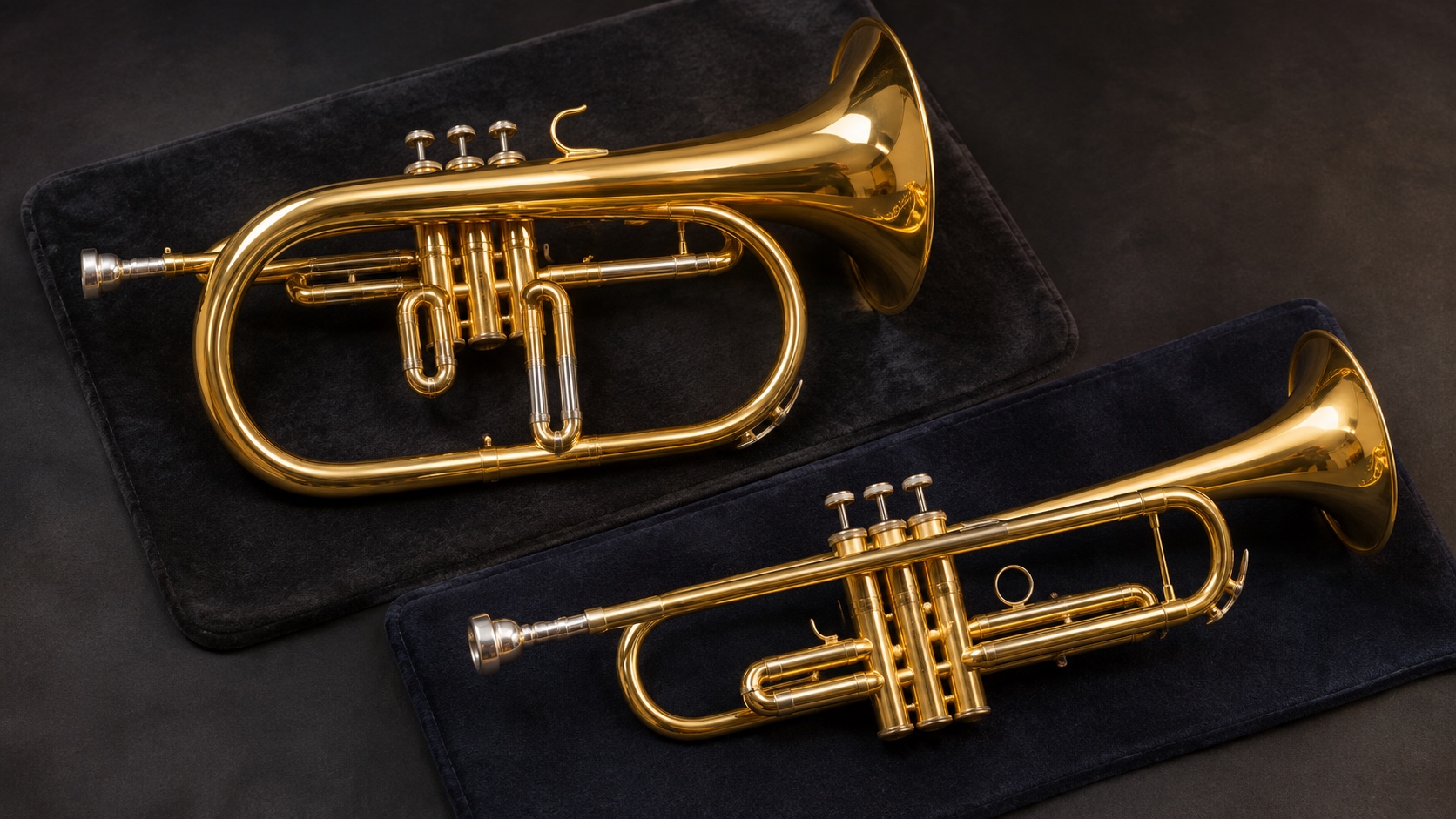
The best flugelhorn for a developing player responds predictably at soft dynamics, centers notes without excessive correction, and supports the rounded color that makes the instrument worth owning. It should also have smooth valves, an effective third-valve tuning system, a mouthpiece receiver the buyer understands, and parts a nearby technician can obtain. Many beginners arrive from trumpet, but a flugelhorn is not merely a softer trumpet. Its conical tubing, larger bell, deeper mouthpiece, and different resistance reward a patient audition. Buy for the player’s actual ensemble and budget, not for finish or a professional endorsement.
A: Usually not; establish basic brass control and confirm an ensemble need first.
A: Receiver and shank standards differ, and a proper flugelhorn mouthpiece usually supports the intended response.
A: No. Warmth must keep enough core, pitch stability, and articulation to function in an ensemble.
A: It permits quick correction of low valve combinations that tend to play sharp.
A: They can be, when the player can evaluate their benefits and the budget remains sensible.
A: Bell material influences the design, but the complete instrument and player determine the result.
A: Often yes, if a technician confirms that the structure and mechanics remain healthy.
A: Compare enough supported options to recognize differences without letting fatigue erase them.
A: Start with soft middle-register notes before scales, slurs, and louder passages.
A: Predictable response, manageable tuning, comfortable mechanics, an inspiring sound, and reliable service support.
Decide Whether It Is Time to Add a Flugelhorn
A new brass player normally benefits from establishing basic trumpet or cornet technique before buying a second instrument. Flugelhorn becomes useful when jazz band, brass band, commercial music, or solo repertoire asks for its distinct color. A teacher can judge whether the player already produces stable attacks and pitch. Adding an instrument also adds maintenance, a case, another mouthpiece, and a new set of tuning habits. Borrowing a school horn for one season may reveal how often it will actually be used. Purchase makes more sense when the player can identify a recurring musical role rather than a passing curiosity.
Understand the Playing Feel Before Comparing Brands
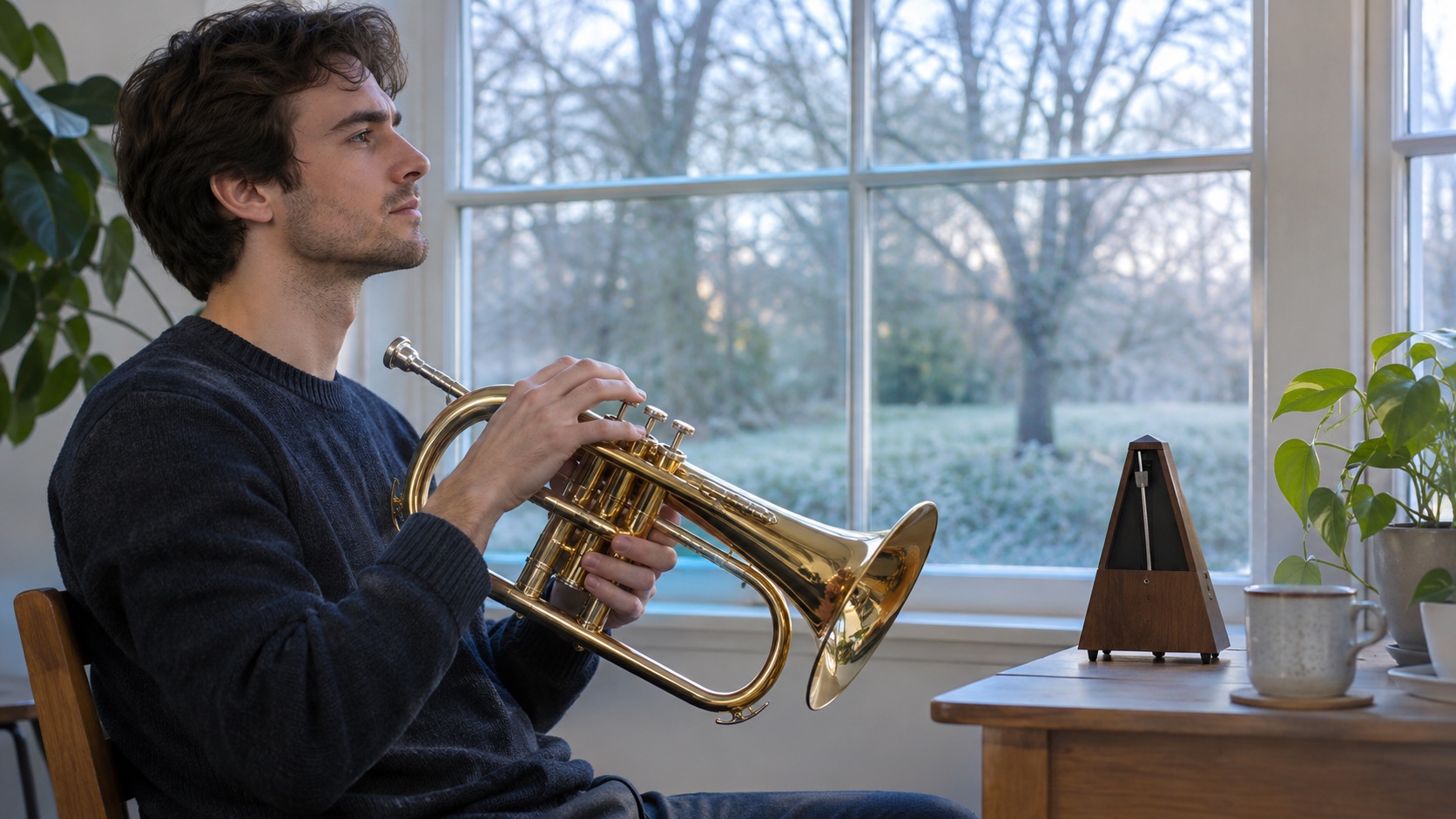
A flugelhorn normally feels broader and less tightly slotted than a trumpet. The air path expands more gradually, and the cup is typically deeper. This combination can encourage a rich sound, but it can also expose unsupported air and vague articulation.
Do not demand trumpet-like brilliance from every note. Start trials at a moderate dynamic and listen for a stable center inside the warmth. The instrument should permit color changes without turning unfocused or resistant when the phrase moves upward.
Receiver and Mouthpiece Fit Matter Immediately
Flugelhorn mouthpiece shanks are not universally interchangeable. Common receiver traditions differ in taper and insertion depth, and a mouthpiece that appears to enter may not seal or tune correctly. Confirm the manufacturer’s intended standard before reusing an existing mouthpiece. Test the horn with the supplied mouthpiece and one teacher-approved alternative. A deeper cup may enrich the low register but make the upper range feel less defined. Choose a combination that keeps attacks clear, pitch manageable, and transitions from the player’s main instrument comfortable.
Yamaha YFH-631G: A Refined Traditional Reference
Yamaha currently lists the YFH-631G as a professional B-flat flugelhorn with a gold-brass bell and a third-valve slide trigger. Yamaha describes a broad, rich tonal range and notes that the larger bore helps players transition from trumpet. It is a serious benchmark rather than a budget beginner model.
It suits an advancing player who already knows the desired sound and wants a long-term instrument. During an audition, test the trigger in low combinations, compare soft attacks, and assess whether the resistance supports rather than overwhelms the embouchure. Confirm current package and finish with an authorized dealer.
Yamaha’s Current Custom Models Belong in a Separate Tier
Yamaha’s current lineup includes the YFH-8310ZII and YFH-8315IIG custom flugelhorns. These designs target experienced players who can evaluate nuanced differences in resistance, bell response, and register connection. Their price and specialization exceed what most first-time buyers require. An intermediate player may still audition them to establish a reference. Play the same phrases on every horn and record from across the room. A premium model earns consideration only if its advantages remain audible and physically useful after the excitement of a showroom trial.
Jupiter JFH1100R: A Practical Intermediate Candidate
Jupiter describes the JFH1100R as an intermediate performance-series flugelhorn with a rose-brass bell and a third-valve tuning-slide trigger. The warmer bell concept and tuning control address two qualities developing players commonly seek when moving beyond a basic shared instrument.
Local dealer and repair support should decide whether it belongs on the shortlist. Check valve speed, trigger travel, slide alignment, and the consistency of response through the middle register. Specifications cannot show whether the particular example feels balanced in the player’s hands.
Consider a Used Professional Horn Carefully
A used instrument from an established maker can offer stronger construction and resale value than a new unknown brand. Age alone is not a defect. Worn valves, poor compression, damaged slides, leaking water keys, and distorted leadpipes are the issues that affect response. Have a brass technician inspect the horn before the return period closes. Ask about previous bell work and valve replating. Cosmetic lacquer loss may be harmless, while hidden mechanical wear can make a beautiful bargain exhausting to play.
Judge Intonation as a Pattern
Warm up, then sustain comfortable notes at normal volume with a tuner. Note recurring tendencies instead of chasing each display movement. Test open notes, second valve, first valve, first-plus-second, and first-plus-third combinations across more than one register.
Use the third-valve trigger or slide where intended, but do not accept an instrument that demands constant heroic correction. A teacher should listen to scale fragments and slow melodies. Manageable tendencies are normal; unpredictable centers make ensemble playing unnecessarily difficult.
Test Soft Entrances Before Loud Playing
Flugelhorn is often chosen for intimate phrases, so pianissimo response matters. Begin several middle-register notes without a scoop or air noise. The tone should appear cleanly while retaining body. Then crescendo through a sustained note and return to soft. Listen for a sudden color break or pitch shift. Loud showroom playing can make almost any horn feel exciting, but quiet control reveals how useful it will be in actual arrangements.
Check Valve and Trigger Ergonomics
Keep the right wrist neutral and fingers curved. Pistons should descend straight and return quickly without side pressure. The third-valve control must be reachable while the hand remains relaxed.
Play a slow chromatic passage and a repeated-note figure. Mechanical noise, sticky action, or an awkward trigger becomes distracting in exposed music. A technician may correct setup, but the basic hand geometry must suit the player.
Listen From Beyond the Bell
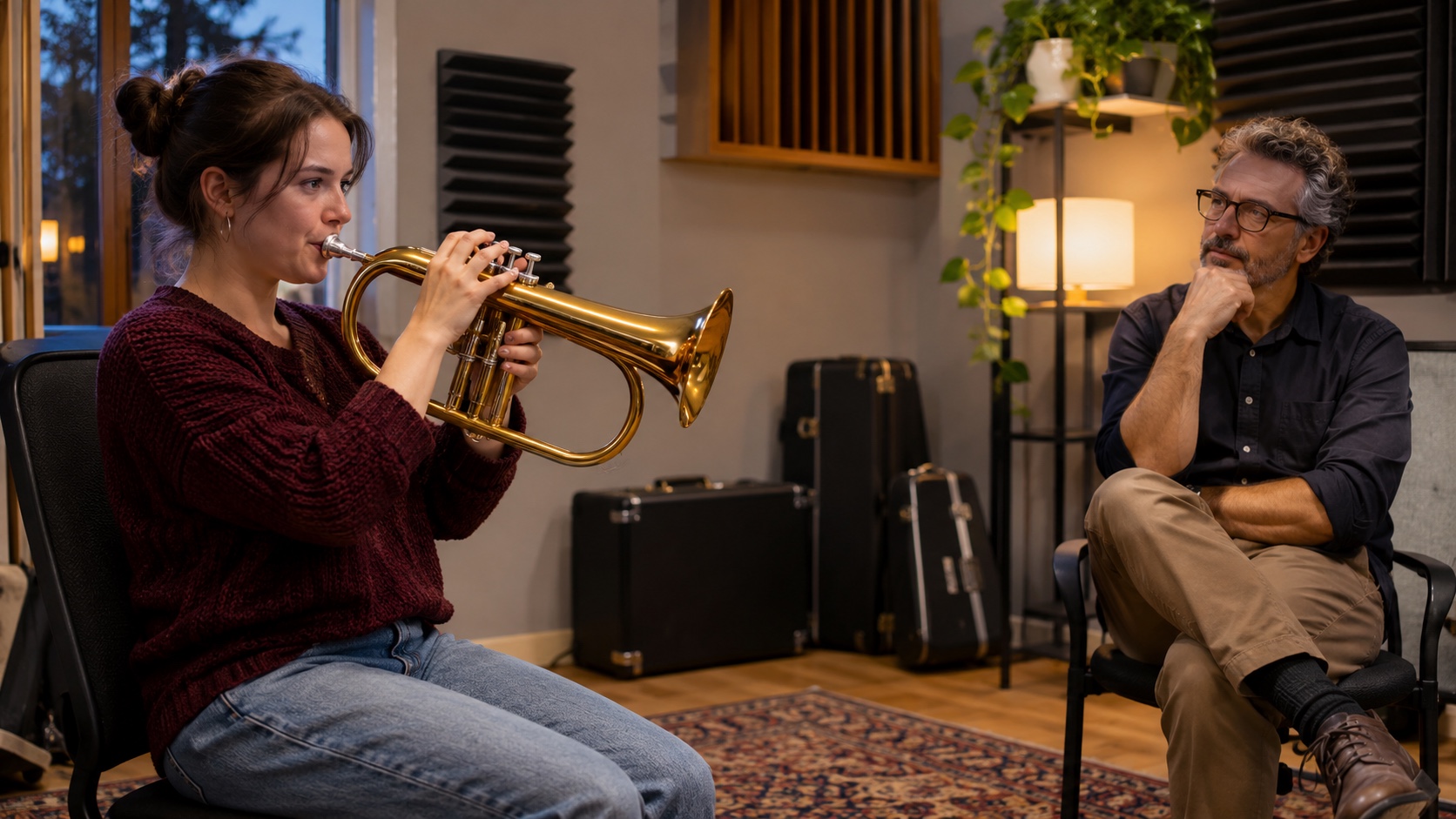
The player hears a different mix of vibration and room reflection than the audience. Ask a teacher to play each candidate while the buyer listens several yards away. Then reverse roles. Compare clarity, core, and projection rather than equating darkness with quality. A very soft-edged sound may disappear in an ensemble. The strongest choice keeps warmth while preserving a recognizable center at listening distance.
Make the Trumpet-to-Flugelhorn Switch Deliberate
Use separate mouthpieces and avoid grabbing either instrument without a short reset. Play relaxed long tones, easy slurs, and a familiar melody when switching. Notice the different air resistance and avoid forcing the flugelhorn to respond like a trumpet.
Mark instrument changes in the music and plan enough time to set down one horn safely. Pitch can shift as the ear recalibrates. Practicing the switch itself prevents the first flugelhorn entrance from becoming the weakest note of the phrase.
Include the Case and Maintenance in the Price
A protective case should secure the bell, valves, mouthpiece, and trigger without pressure. Check handles, latches, and storage space. Flugelhorn bells are broad and vulnerable to impact. Budget for suitable valve oil, slide grease, cleaning supplies, and periodic service. Confirm replacement parts and warranty procedures before purchase. An inexpensive horn that spends weeks waiting for a model-specific valve guide offers poor value.
Use a Repeatable Audition
Bring the same mouthpiece options, tuner, and short music excerpts to every trial. Include a soft lyrical phrase, a scale, a low-register line, several slurs, and a moderate articulated passage. Rest between horns so fatigue does not select the winner.
Write observations immediately: response, pitch pattern, valve feel, balance, sound at distance, and service terms. Return on another day if possible. The instrument that remains predictable usually serves longer than the one that produces one spectacular moment.
Choose by Player Stage
A true beginner should first use a school or borrowed flugelhorn that a technician has made reliable. An intermediate player ready to own can compare a supported Jupiter JFH1100R, a well-inspected used professional horn, and other teacher-approved models available locally. An established player seeking a permanent instrument can add the Yamaha YFH-631G and current custom models to the audition. The final choice should reflect real repertoire, a comfortable receiver and mouthpiece, manageable tuning, and service access.
Be Skeptical of Unusually Cheap New Instruments
Online listings may promise professional features at a fraction of established pricing. Photographs cannot demonstrate compression, alignment, solder quality, or parts availability. A return policy is useful only if the buyer can obtain a prompt teacher and technician evaluation.
Unknown branding is not automatically poor, but the seller should identify the maker, warranty administrator, replacement-parts channel, receiver standard, and service process. If those answers remain vague, rent longer or buy a verified used instrument instead.
Plan the First Month After Purchase
Schedule a teacher check during the return period. Track tuning tendencies, sticky valves, hand discomfort, and changes after the instrument warms. Practice at several dynamics and use the horn in rehearsal before assuming the first impression was accurate. Keep packaging, receipts, serial-number photographs, and warranty records. Address faults promptly instead of adapting technique around them. By the end of the month, the horn should feel predictable enough that musical decisions replace equipment troubleshooting.
Match the Horn to the Ensemble Chair
A player covering occasional jazz-ballad passages may value quick switches from trumpet, familiar hand position, and a case that carries both instruments. A brass-band specialist may prioritize a deep traditional color and secure low-register blend. Commercial players may need projection that survives microphones and rhythm sections without becoming trumpet-like. The same flugelhorn can serve several roles, but the audition should include the music that will occupy most rehearsal time.
Ask the director how the instrument will be scored. A solo chair may need flexible color and exposed soft attacks, while a section part rewards easy matching with neighboring horns. If the ensemble already owns several flugelhorns, compare their pitch and receiver setup before introducing a model that behaves very differently.
Separate Setup Problems From Design Problems
A new or shipped horn may arrive with dry valves, displaced felts, or slides that need routine setup. A qualified dealer can correct those issues. Persistent poor compression, misaligned tubing, unstable receiver fit, or notes that refuse to center across mouthpieces point to deeper concerns. Do not reshape technique around a fault that belongs on a repair bench. Likewise, one uncomfortable mouthpiece does not condemn the instrument. Repeat the test with an appropriate alternative after confirming the shank. Change one variable at a time and keep notes. Systematic testing prevents a buyer from paying for a different horn when the true problem is setup, while also preventing endless adjustments to a fundamentally unsuitable instrument.
Protect the Bell During Everyday Use
The broad bell that helps create flugelhorn color is also easy to strike against stands, chairs, and door frames. Set the instrument on a stable stand designed for its shape or return it to the case. Never balance it on the bell or leave it on a chair. During instrument changes, place both cases where players can move without stepping over them.
After playing, remove moisture, wipe contact points, and inspect the trigger and water keys. Routine care preserves the smooth response evaluated at purchase. A strong buying decision continues through daily handling; even the best model becomes frustrating when minor maintenance is postponed.