They Share Fingerings, but They Do Not Speak With the Same Voice
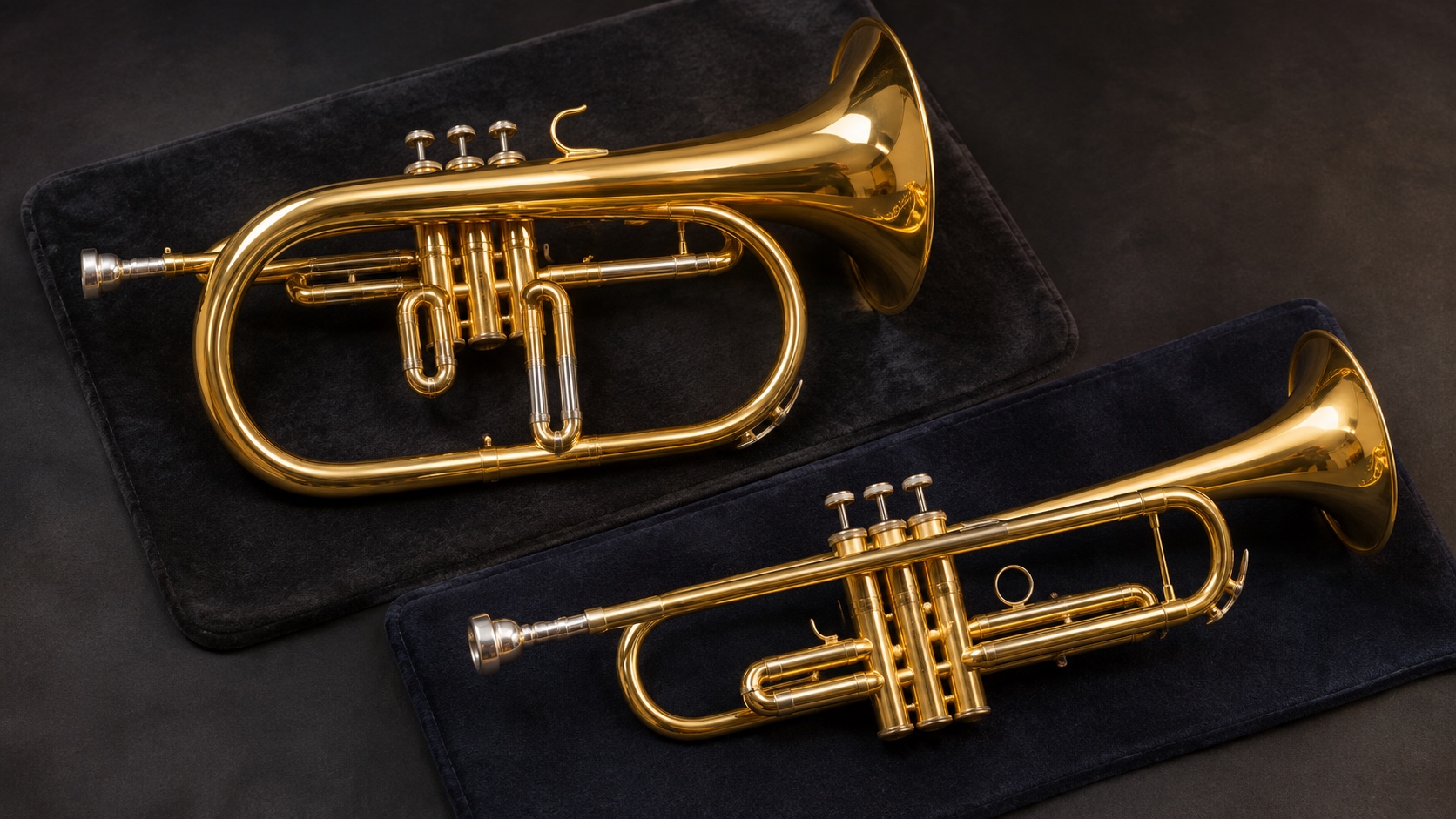
Flugelhorn and trumpet are both usually pitched in B-flat, use three piston valves, and place familiar notes under the same fingers. Their personalities separate as soon as air moves through them. The trumpet’s more cylindrical design, compact bends, and smaller bell support a brilliant, focused sound that projects with precision. The flugelhorn expands more conically, turns through a rounder body, and ends in a wider bell, producing a broad, mellow color that blends readily. A trumpeter can learn flugelhorn quickly, but playing it convincingly requires different air, articulation, tuning awareness, and musical judgment.
A: It may feel different, but it still demands controlled air, embouchure, articulation, and tuning.
A: Standard B-flat models share basic fingerings and written pitch relationships.
A: Sometimes rims feel similar, but cup and shank must suit the specific receiver.
A: Their ranges overlap, though trumpet generally supports demanding upper work more naturally.
A: Its more conical expansion, larger bell, and deeper mouthpiece soften upper overtones.
A: A third-valve mechanism helps manage low-note tendencies common to the design.
A: Only when the director wants its softer projection and color.
A: Usually not; establish fundamentals on the program's main instrument first.
A: No. It appears in brass bands, concert works, commercial music, and solos.
A: Trumpet usually projects more directly, but usable volume depends on player and context.
Construction Creates the First Real Difference
A trumpet keeps much of its tubing near a consistent diameter before the bell flare. Its long straight sections and compact wrap produce a visibly angular profile. A flugelhorn begins expanding earlier and more gradually, with broad curves that place the bell closer to the player. Neither instrument is perfectly cylindrical or conical from end to end. The useful distinction is proportion. More gradual expansion encourages a softer envelope around the sound, while the trumpet’s design preserves a compact core and quick directional energy.
The Bells Shape Color and Projection
Flugelhorn bells are normally larger and flare more generously than trumpet bells. The broad flare disperses energy and helps soften upper overtones. Listeners often describe the result as velvety, dark, intimate, or vocal.
A trumpet bell supports clarity and brilliance across a wide dynamic range. It can cut through drums, amplified instruments, or a full orchestra. Projection does not simply mean greater loudness; it means the tone remains defined as distance and texture increase.
Mouthpieces Are Related but Not Interchangeable by Default
A flugelhorn mouthpiece generally has a deeper cup and a different shank from a trumpet mouthpiece. The depth supports the instrument’s rounded color, while shank standards vary among makers. Forcing the wrong taper can damage the receiver or create an air leak. Some players choose a rim similar to their trumpet mouthpiece to preserve comfort while using a deeper flugelhorn cup. That can ease switching, but the fit must match the instrument. A knowledgeable dealer or teacher should confirm the receiver standard.
Resistance Changes the Way Air Feels
Trumpets often provide a defined resistance that helps notes slot securely. The player can lean on that feedback for crisp attacks and upper-register precision. A flugelhorn may feel more open, diffuse, or flexible, depending on bore, mouthpiece, and leadpipe.
The response tempts some trumpeters to blow too broadly. Effective flugelhorn air remains supported and directed even when the sound is warm. The goal is not to remove the center; it is to surround a stable center with a gentler spectrum.
Articulation Needs a Lighter Edge
Trumpet repertoire frequently rewards immediate, brilliant attacks. The tongue releases cleanly against a focused air stream, allowing repeated notes and fanfare figures to remain distinct. The flugelhorn can articulate clearly, but heavy tonguing may sound blunt against its softer character. Players often use a rounder syllable and keep air moving through connected phrases. That does not require vague beginnings. A good flugelhorn attack is precise without sounding percussive, especially in ballads and quiet ensemble writing.
Range Overlaps More Than Musical Function
Both instruments share a practical written range, and experienced performers can play high or low on either. The trumpet generally maintains brilliance and stability more comfortably in demanding upper-register work. The flugelhorn feels most characteristic in its middle and lower registers.
Using flugelhorn only for low notes understates its capacity, but treating it like a trumpet with a larger bell misses its purpose. Its strength lies in color, phrasing, and blend rather than in winning a range contest.
Intonation Requires Different Habits
Flugelhorns can have pronounced tuning tendencies, especially on low combinations such as first-and-third or all three valves. Many models include a third-valve trigger or slide mechanism so the player can lengthen tubing while sustaining a note. Trumpets also require slide adjustment and embouchure awareness, but their familiar slotting may conceal poor habits. On either instrument, use a tuner only after warming up. Listen to the ensemble and learn each horn’s map instead of forcing every note with the lips.
Trumpet Leads; Flugelhorn Colors
In concert band and orchestra, trumpet supplies brilliance, rhythmic definition, fanfares, and climactic power. Its sound can sit at the front of the brass choir without losing identity. Multiple trumpet parts create a range of colors, but projection remains central.
Flugelhorn often enters when a composer or arranger wants warmth. It may double a trumpet player for a lyrical solo, soften a jazz section, or blend with horns and saxophones. Its rarity in some ensembles makes its appearance especially noticeable.
Jazz Shows the Contrast Clearly
A trumpet can ride above a rhythm section with compact energy and respond quickly to sharp accents. Flugelhorn favors spacious lines, quiet entrances, and rounded endings. Players such as Art Farmer and Clark Terry demonstrated that mellow color can still carry rhythmic authority. Improvisers should let the instrument affect phrase design without copying another player’s mannerisms. Longer shapes, lower dynamics, and breath-led articulation often reveal the flugelhorn, while trumpet may invite more pointed rhythmic language.
Brass Bands and Commercial Sections Use Them Differently
Traditional brass bands use cornets rather than trumpets in many upper parts, while flugelhorn occupies a distinct bridge between cornets and tenor horns. Its single part must blend into the section while remaining expressive enough for exposed melodies.
Commercial horn sections may use flugelhorn as a doubling color. A player might switch within one set, so stand placement, mute storage, and mouthpiece organization matter. Fast changes are safer when each instrument has a stable stand.
Physical Balance Feels Different in the Hands
A trumpet extends forward and can feel nose-heavy with certain accessories. The flugelhorn’s compact round wrap brings mass closer to the torso, but the larger bell and valve angle create their own balance. Hand comfort varies widely among models. Keep the wrists neutral and bring either mouthpiece to the face. Do not lift the bell to manufacture confidence. During a trial, hold the horn long enough for fatigue to reveal pressure points that are invisible during a few showroom notes.
Switching Successfully Takes Deliberate Practice
Begin the flugelhorn session with middle-register long tones at moderate volume. Listen for a centered sound with soft edges. Add slow slurs, gentle articulation, and a lyrical melody before exploring range.
When returning to trumpet, reset the air and articulation rather than expecting the smaller mouthpiece and bell to do all the work. Short alternating sessions teach the body that each horn has a separate response while preserving shared fundamentals.
Which Instrument Should a Beginner Learn First?
Most beginners should start on trumpet because school programs, method books, teachers, and ensemble parts support it broadly. The instrument teaches clear articulation and offers many performance paths. Flugelhorn usually becomes a double after basic brass habits are stable. A learner whose ensemble specifically assigns flugelhorn can begin there with suitable instruction. The important requirements are correct mouthpiece fit, a serviceable instrument, and opportunities to play with others. Labels matter less than consistent guidance.
Buying One Does Not Replace the Other
A flugelhorn cannot supply every trumpet function without losing definition, and a trumpet cannot recreate the flugelhorn’s broad color merely by using a deeper mouthpiece. Equipment can move tone, but the underlying geometry remains.
Players who need both should budget for two reliable instruments rather than one compromised hybrid. Test them in the musical settings that matter, and choose mouthpieces that support recognizable differences without destabilizing technique.
Recording Exposes Their Envelopes
Close microphones can make both horns sound brighter than they do in a room. A flugelhorn microphone placed too near the bell may capture mechanical noise and an artificially hard edge. A little distance allows the broader tone to develop. Trumpet placement depends on whether the engineer wants direct attack or room blend. Record the same melody on both instruments with unchanged microphone position and normal playing effort. Compare the beginning, body, and release of each note rather than only frequency balance. The flugelhorn often blooms after the attack, while trumpet defines the front more sharply.
The Practical Answer
Choose trumpet when the music needs brilliance, projection, fast response, and extensive ensemble versatility. Choose flugelhorn when warmth, intimate phrasing, and blend are the priority.
A player who respects those jobs will sound more convincing than one who treats the flugelhorn as a quiet trumpet or the trumpet as a bright flugelhorn.
Breath Shape Changes the Character
Trumpet players often learn to send a compact, energized stream toward a clearly defined target. Flugelhorn rewards equal support with a less aggressive shape. Imagine carrying the air through the bell rather than striking the note at the mouthpiece. The breath stays active even when the phrase sounds relaxed. Test the difference with a slow eight-count tone. On trumpet, preserve brilliance from attack to release. On flugelhorn, let the sound open after the start without losing pitch center. The exercise should reveal two colors, not one technique performed loudly and softly.
Mutes Do Not Behave Identically
Trumpet has an extensive mute vocabulary, including straight, cup, harmon, plunger, and practice designs. Flugelhorn mutes exist, but its larger bell requires compatible dimensions and produces a different response. Never force a trumpet mute into a flugelhorn bell or assume that a familiar model seals safely.
A mute adds resistance and can shift pitch. Warm up unmuted, check tuning after insertion, and use the color requested by the music. For home practice, remember that a practice mute changes feedback; it should supplement normal open playing rather than define the player’s everyday air.
Maintenance Reveals Small Design Differences
Both instruments need valve oil, clean slides, moisture removal, and periodic professional service. Flugelhorn wraps can collect water in less familiar places, and trigger mechanisms add moving joints that must remain aligned. Learn every water key and slide rather than rotating the horn until moisture happens to escape. Store each instrument in its fitted case. The flugelhorn’s wide bell and compact tubing can contact a poorly seated accessory, while a trumpet can be damaged by loose mutes or mouthpieces. A case is protective only when its contents are secured.
Develop Two Musical Identities
Doublers sometimes try to keep one sound concept for convenience. A more persuasive approach assigns each horn a distinct emotional and ensemble role. Practice a bright ceremonial phrase on trumpet and a quiet vocal melody on flugelhorn, then reverse them to discover which adjustments the less natural pairing demands.
The exercise expands control without erasing difference. Eventually the player can bring warmth to trumpet or brilliance to flugelhorn when the score requires it, yet the default voices remain recognizable. Versatility comes from choice, not from making both instruments neutral. A teacher should hear the player switch in real musical context. Balance, intonation, articulation, and fatigue can change after several minutes, so a quick showroom comparison is incomplete. With deliberate practice, the shared fingering system becomes convenient while the separate sound concepts remain clear to both performer and listener. Evaluate both across a complete rehearsal.