Violin Value Comes From Playability, Response, and Support Rather Than Decoration
At every price, the best violin for the money is an instrument that is structurally healthy, professionally adjusted, and musically capable enough for the player’s next stage. Entry budgets should buy stable fittings and an easy response. Step-up money should bring a broader dynamic range, better materials, and more careful workmanship. Higher prices may deliver complexity, projection, provenance, or rarity, but they do not guarantee a better match. Because bows, cases, strings, service, and resale policies alter the real cost, compare complete working systems and individual examples instead of ranking price tags alone.
A: A reputable rental often provides better setup and support than the lowest-priced purchase.
A: When an optimized starter still limits dynamics, response, or the repertoire’s demands.
A: Some do, but age brings no guarantee and makes condition assessment essential.
A: Yes. Its handling and energy transfer directly affect tone and articulation.
A: They involve skilled handwork divided among makers, though methods vary by workshop.
A: Absolutely, especially when sound and support matter more than rarity.
A: No. Read the eligible models, condition rules, and required upgrade amount.
A: They can refine a sound violin, but setup problems should be corrected first.
A: It matters, but most players should prioritize years of useful musical service.
A: It is the lowest-cost healthy instrument that meets present needs and provides suitable room to grow.
Under the Lowest Viable Budget, Renting Usually Wins
Extremely cheap marketplace violins often save money by omitting the skilled labor that makes the instrument playable. Bridges may be generic blanks, pegs may slip, fingerboards may be misshaped, and strings may sit painfully high. Correcting several faults can cost more than the purchase, while a thick or molded body still limits response.
A specialist rental distributes the cost of a prepared instrument, bow, case, maintenance, and size exchanges. For a growing child or an uncertain beginner, that service may represent the strongest value in the entire market. The relevant comparison is not rent versus a low sticker price; it is months of usable lessons versus avoidable frustration.
Entry Student Outfits: Pay for Setup First
In the common beginner range, look for carved spruce and maple, a stable fingerboard, functioning pegs, an integrated fine-tuner tailpiece, a straight bow, and a protective case. Models such as the Yamaha AV5-SC, Samuel Eastman VL100 outfits, and workshop-prepared Franz Hoffmann lines illustrate the category. Dealer preparation can matter as much as the name on the label. Ask whether the displayed price includes final fitting, shoulder support, rosin, and a warranty. Some model listings describe only the violin; others bundle accessories of very different quality. A complete package with accountable service can be worth more than a nominally superior body paired with an unusable bow.
Good Student Value Is Measured in Reliable Days
A first violin earns value every time it tunes promptly, responds to a centered bow, and returns from school without a new mechanical problem. Durable varnish and a secure case may matter more than complex tone for daily transport. A child who will change sizes needs an exchange policy, not an investment-grade back.
Track total ownership for the likely period. Include strings, bow rehair, repairs, and resale or trade-in credit. A shop that applies rental payments or guarantees a percentage on trade-up can make a higher initial price cheaper over several years.
Early Step-Up Instruments Should Expand the Palette
Moving beyond a starter makes sense when the player can produce consistent tone and hears the instrument compressing their gestures. A worthwhile step-up should respond more clearly at low volume, retain core under a stronger bow, and offer better transitions between strings. More selective wood and refined graduations may support these changes, but the ear must confirm them.
Do not upgrade simply because a calendar says it is time. First have the current violin optimized with appropriate strings and setup.
If limitations remain across lessons and repertoire, compare candidates using the same bow. The step should be obvious in musical behavior, not merely visible in varnish.
Midrange Workshop Violins Often Deliver the Sweet Spot
Workshop instruments made in coordinated teams can offer careful carving, good materials, consistent models, and dealer support without the price of a single named maker. This range often serves advancing school players, community orchestra musicians, and serious adults for many years. Individual selection still matters because wood varies.
Value increases when the shop has several examples and allows a home trial. Compare response, evenness, projection, and comfort, then obtain an independent condition check. A well-chosen workshop violin with a suitable bow can outperform a more expensive instrument selected for reputation alone.
Handmade and Contemporary Instruments Shift the Value Equation
As more work is performed by one maker, price reflects skilled time, design decisions, material selection, finishing, and a traceable professional relationship. Contemporary makers may offer excellent performance relative to older instruments with comparable musical ability. Direct communication and clear documentation can add practical value. A maker’s reputation, waiting list, and resale market vary. Commissioning reduces the ability to compare a finished instrument before committing, while buying an existing example permits direct evaluation. Treat authorship as meaningful provenance, not proof that the voice suits you.
Older Violins Require a Condition Budget
An older instrument may combine mature materials, attractive character, and established repair history. It may also carry cracks, edge wear, neck resets, patches, replaced parts, or arching distortion. Expert restoration can be entirely acceptable, but the work must be stable, documented, and reflected in price. Independent inspection is essential.
Ask about open seams, soundpost and bass-bar cracks, neck projection, block condition, worm damage, and previous regraduation. Reserve money for immediate setup and insurance. Romance should never conceal a repair liability.
Provenance Becomes More Expensive Than Sound
At the upper end, attribution, maker history, rarity, condition, and certificates can dominate price. Those factors matter to collectors, insurers, and future resale, but they are not a linear measure of musical superiority.
A less famous contemporary violin may suit a performer better than a costly historical object. When provenance drives the purchase, use recognized experts and written documentation.
Separate the playing decision from the asset decision. A player seeking maximum musical utility should spend only for the historical premium they understand and actually value.
The Bow Deserves a Parallel Price Ladder
A basic violin paired with a stable bow can teach more than a better body controlled by a warped, unbalanced stick. Entry carbon-fiber bows may provide consistency and durability. Better wood or carbon bows can add articulation, spring, tonal focus, and nuanced handling, while fine historical bows carry their own provenance premiums.
Set aside bow money before choosing the violin ceiling. Compare bodies with one familiar bow, then audition bows on the finalist. A bow that complements the violin may reduce the need to chase a more expensive instrument and will remain useful through future upgrades.
Cases, Strings, and Fittings Affect Real Value
A secure case prevents losses that erase any purchase savings. It should immobilize the violin safely, suspend the scroll, protect the bridge, hold bows without contact, and suit the climate and travel routine. Lightweight cases help commuters; rigid weather-resistant shells benefit demanding transport. Strings and fittings shape response but should be selected intelligently. Premium strings can refine a healthy instrument, while fashionable tailpieces and chinrests are not automatic upgrades. Spend first on comfort, setup, and maintenance. Decorative replacement parts have poor value when fundamentals remain unresolved.
Used, Consignment, and New Purchases Have Different Advantages
New instruments offer clear condition, warranty support, and predictable availability. Used instruments can provide more workmanship for the budget and may already have a settled voice. Consignment expands variety but can limit negotiation and warranty terms. Private sales may be attractive only when inspection and ownership are clear.
Compare net value after service. A used violin needing fingerboard work, bridge, pegs, strings, and bow rehair may cost more than a ready new outfit. Request written estimates before committing, and never assume a verbal maker attribution will hold resale value.
Price Bands Should Guide, Not Blind, the Audition
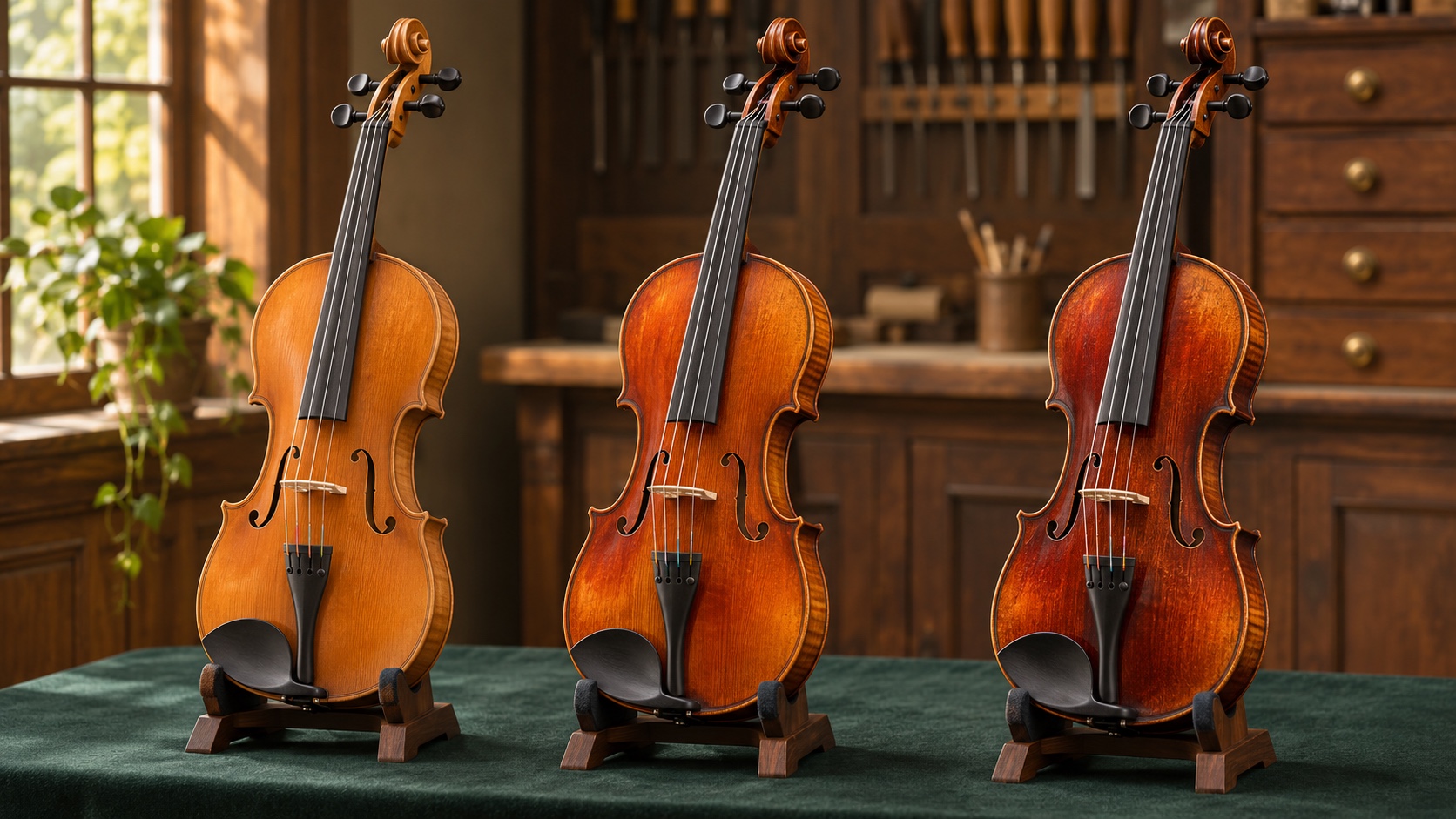
Ask a shop to include candidates slightly below, within, and slightly above the target. Use neutral labels and identical excerpts. If the more expensive instrument does not produce an audible, controllable benefit, the premium is not serving you.
Conversely, a clear improvement may justify waiting rather than buying an intermediate compromise. Rooms and bows influence perception, so repeat the comparison on another day and at a distance.
The best value is the lowest-cost option that meets the performance requirements with enough headroom for growth. It is not automatically the cheapest candidate in the room.
Resale and Trade-Up Terms Can Preserve Capital
Student shops often offer trade-in credit when customers advance within their inventory. Read exclusions for damage, accessories, maintenance, and outside brands. A generous-sounding percentage may apply only against a much more expensive purchase, while a modest transparent policy can be genuinely useful.
Fine instruments require documentation, condition records, and realistic market expectations. Dealer commissions and slow sales affect liquidity. Buy primarily for playing unless you have specialist investment advice; most musicians gain value through use, not speculation.
Watch for False Economy
Unplayable action, unstable pegs, open seams, poor bow hair, and an unsafe case turn a bargain into a project. Free accessories have little value if they must be replaced. Online urgency, inflated list prices, and unsupported claims of handcraft or age should not rush due diligence. False economy also appears at higher levels when players pay for fame they cannot hear, select an instrument too demanding for current technique, or leave no budget for a bow. Value remains a relationship between function, goals, support, and total cost.
Build a Five-Year Ownership View
Estimate how long the size and capability will remain suitable. Add likely maintenance, insurance, interest if financed, and expected trade-in or resale. Then consider educational value: will the violin provide useful feedback, support ensembles, and encourage practice? Those benefits are real even though they do not appear on a receipt.
A durable student outfit may be the best value for one year of rapid growth. A midrange workshop violin may be the better value for a committed adult’s decade of community performance. Time horizon changes the answer more than a universal price chart can.
Make the Final Selection Musically
After condition and cost are understood, return to sound. Play soft, strong, slow, fast, low, and high. Ask whether the violin follows the bow, whether colors are controllable, and whether the body remains comfortable through a full session.
Listen across the room and in the intended ensemble when possible. Choose the least expensive instrument that fully satisfies those tests and still offers meaningful room to grow.
That discipline respects the budget without reducing music to a bargain hunt. A violin is good for the money when its useful life and musical response justify every supporting cost.
Financing Should Not Hide the Full Price
Payment plans can make a durable instrument accessible, but compare interest, fees, insurance requirements, and the effect of a return or trade-in. A manageable monthly number is not automatically good value. Calculate the total paid and preserve enough cash for strings, bow service, and unexpected repairs.
Schools, foundations, and shops sometimes offer scholarships or loaner programs. These can provide a stronger instrument during an important educational period without forcing an early permanent purchase. Ask teachers and local ensembles before assuming retail credit is the only path.
Documentation Protects Future Options
Keep the bill of sale, serial or inventory records, maker information, photographs, appraisals, and repair invoices together. Good records help with insurance, warranty work, consignment, and honest resale. They also show whether maintenance has preserved the condition that supported the original price. For valuable instruments, update appraisals on an insurer’s recommended schedule and disclose travel or professional use. For student violins, a simple dated condition record and clear trade-in terms may be sufficient. Documentation is inexpensive leverage because it keeps a playable asset easier to understand and transfer.
Spend Where the Player Can Hear and Feel It
Setup, bow control, structural health, and responsive sound produce daily returns.
Labels and ornament should enter only after those essentials are secure.