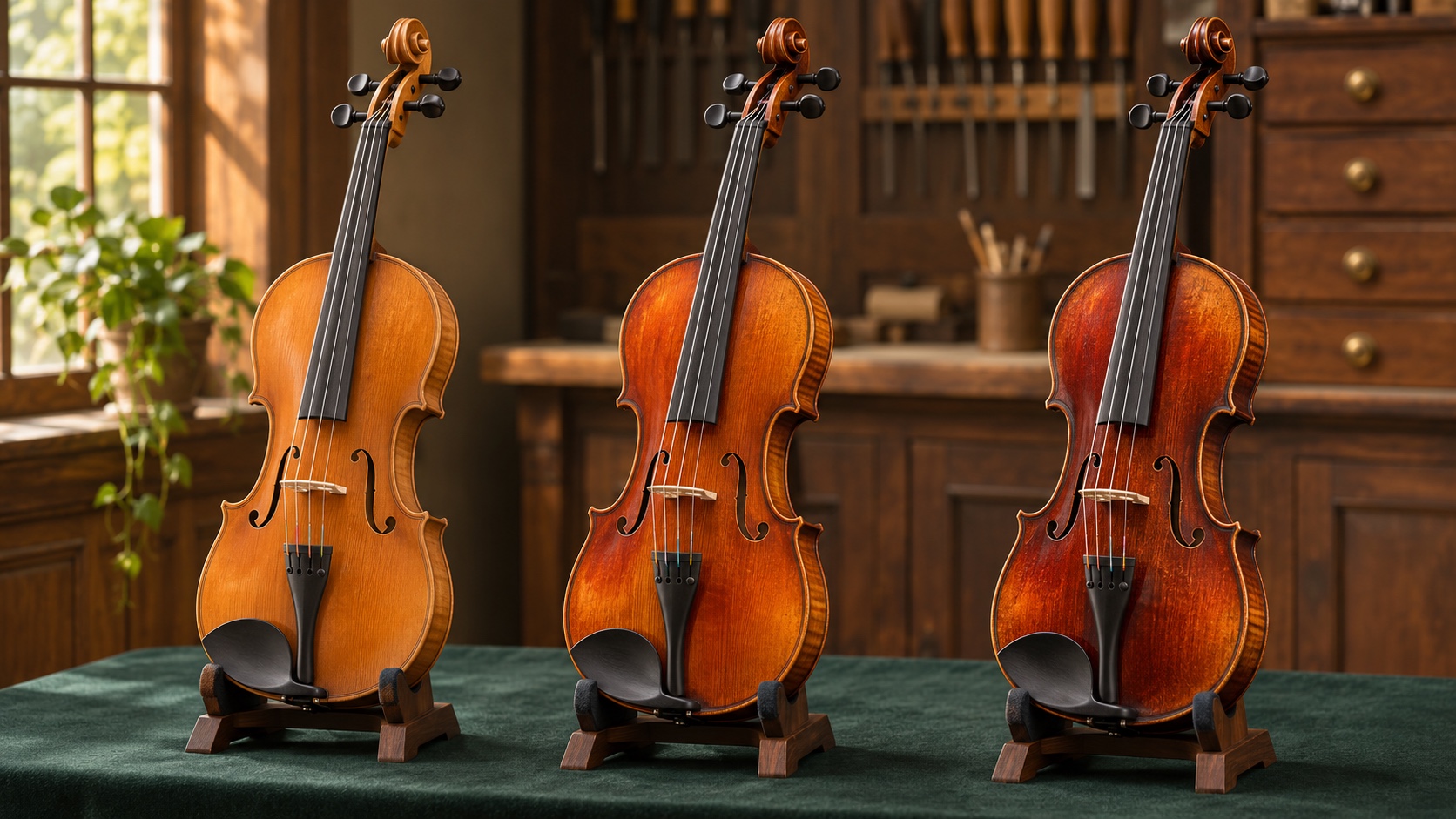
A Beginner Violin Must Remove Obstacles Before It Adds Prestige
The best student violin is the one that arrives in the correct size, holds tuning, responds without excessive bow pressure, and has been adjusted by someone who understands bowed strings. Fancy flame, antique-looking varnish, and a long accessory list cannot compensate for a warped bridge, poorly cut nut, slipping pegs, or strings set painfully high. Strong beginner choices come from makers and shops that pair sound construction with consistent setup and practical support. The models below represent useful starting points, but every individual violin should still be measured, played, and inspected before the return window closes.
A: Adults may benefit from buying, while growing children often gain flexibility from a quality rental.
A: A teacher or fitter considers reach, hand size, shoulder width, and posture rather than age alone.
A: They make small pitch corrections much easier during early study.
A: Carved spruce and maple are useful baselines, but workmanship and setup remain decisive.
A: It is convenient, although fit may require a different rest or pad.
A: It can offer durable consistency, but balance and straightness still need testing.
A: Growth varies, so fit should be reassessed periodically rather than predicted by age.
A: Better strings may help a sound instrument, but they cannot repair flawed setup or construction.
A: A specialist has evaluated the bridge, soundpost, pegs, nut, fingerboard, strings, and playability.
A: Return it promptly when fit, structural condition, or setup cannot be corrected reasonably.
Professional Setup Is Part of the Instrument
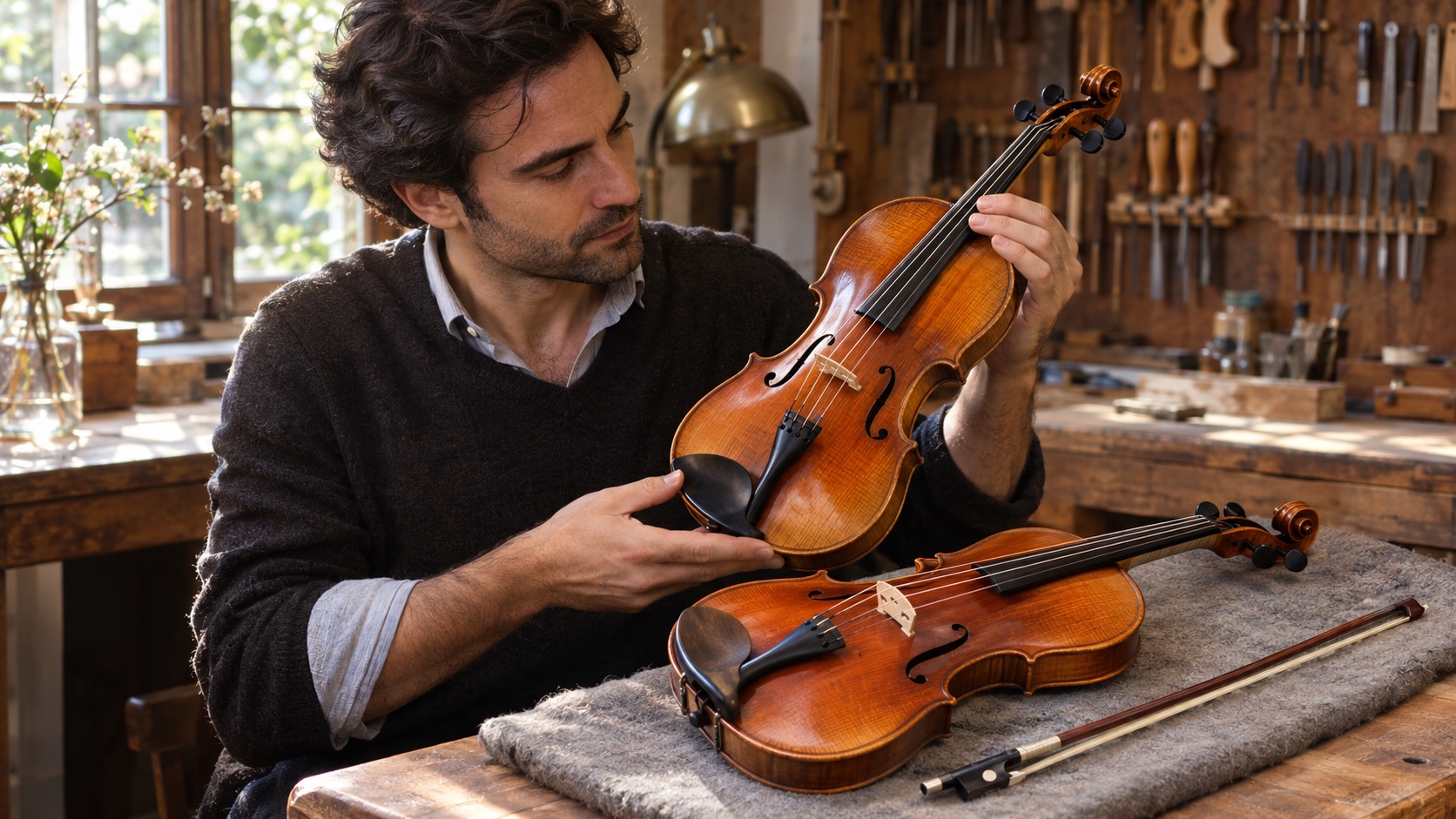
A violin leaves the workshop as a collection of interacting parts. The bridge must fit the top and stand at the correct angle; the soundpost must support response without choking it; the nut and fingerboard determine how readily notes stop; and the pegs must turn smoothly while holding securely. Small errors create squeaks, uneven strings, tuning frustration, and hand tension that a beginner may wrongly blame on talent. Buy from a violin shop or a retailer with a documented string-instrument setup process.
“Ready to play” should mean more than placing the bridge upright. Ask who fitted the bridge, checked the soundpost, dressed the pegs, and evaluated string height. A local teacher can often identify reliable regional sources and inspect the result.
Yamaha AV5-SC: A Consistent Complete Starting Point
Yamaha’s AV5-SC student outfit uses a carved spruce top, maple back and neck, ebony fittings, and a tailpiece with four fine tuners. It is offered in a broad range of fractional sizes and supplied with a bow, case, and rosin. That combination suits families who want an integrated package from a large maker with predictable specifications and dealer support. The AV5-SC is valuable for consistency rather than a dramatic soloist personality. Check the exact setup performed by the selling dealer, since shipping can move the bridge or soundpost. Compare the included bow with a shop alternative; the bow is half the playing system, and a straight, balanced stick can make early articulation markedly easier.
Eastman VL100: Durable Craft for School Programs
The Samuel Eastman VL100 is fully carved from spruce and maple, uses genuine ebony fittings and hand-inlaid purfling, and is available from full size down to very small fractional instruments. Its durable amber-brown varnish and broad size range explain why the model appears frequently in school programs. The design aims to offer a clear, stable response for beginning and advancing players rather than the hollow edge of bargain pressed instruments. Eastman instruments are often sold through specialist shops that create their own outfits, so the case, bow, strings, and final adjustment may vary.
That is an advantage when the dealer selects components thoughtfully. Ask for the installed string brand, bow material, and trade-up policy. Compare two examples if possible because carved wooden instruments always possess individual voices.
Franz Hoffmann Amadeus Outfit: A Shop-Prepared Value
The Franz Hoffmann Amadeus outfit combines a solid spruce top, maple back, ebony fittings, a composite tailpiece with fine tuners, bow, foam case, rosin, and shoulder support. Its attraction is the complete package and final workshop attention rather than an exotic specification. Fractional sizes allow a growing child to remain within the same familiar model family. Confirm current package contents and availability before ordering because retailer bundles change. Use the trial period for lessons, not merely visual inspection. A teacher should listen to all four strings, test shifts, and watch the student’s bow response. If the size or setup is wrong, an easy return is more valuable than a slightly lower purchase price.
Yamaha AV7-SG: A More Refined Student Step
The AV7-SG occupies a step above basic entry models, with upgraded materials and finish intended for young players who need more tonal room. It remains an outfit, preserving the convenience of matched essentials. A responsive instrument can help a committed beginner hear dynamic contrast and bow speed changes sooner, which supports better technique.
Do not assume the higher model is automatically appropriate. A child likely to change sizes soon may gain more from renting a well-maintained fractional violin and investing later at full size. The AV7 makes the strongest case for an adult beginner, a player nearing full size, or a student whose teacher has confirmed sustained commitment.
Franz Hoffmann Concert: More Color for a Developing Ear
The Concert line is positioned as a premium beginner or early step-up choice, with spruce and maple construction, ebony fittings, a composite fine-tuner tailpiece, and upgraded strings on current examples. Its voice is intended to provide greater complexity and projection than the simplest starter instruments. For a motivated learner, that extra response can expose finer differences in contact point and bow weight. Some listings sell the violin alone while others offer an outfit, so compare complete costs. A case, bow, shoulder rest, rosin, and setup can change the budget materially. The Concert makes sense when a player already has suitable accessories or can select them deliberately with a teacher rather than accepting whatever a package happens to include.
Rental Programs Can Beat a Purchase
Growing children may move through several fractional sizes before reaching a full violin. A reputable rental program supplies a properly adjusted instrument, allows size exchanges, includes maintenance, and may apply part of the rent toward a later purchase. This can deliver a better playing experience than buying the cheapest instrument repeatedly. Read the agreement carefully.
Learn what damage protection covers, whether strings and bow rehair are included, how quickly exchanges occur, and whether purchase credit is restricted to certain models. Inspect rental inventory with the same care as new stock. A healthy used student violin is often preferable to a poorly prepared new one.
Size by Reach, Not by Birthday
Age charts are rough screening tools. A fitter normally considers arm length, hand size, shoulder width, and whether the student can support the scroll without locking the elbow. When the violin rests correctly, the player should reach around the scroll comfortably while maintaining a natural shoulder. An oversized instrument encourages gripping, a collapsed wrist, and poor bow alignment. If a child falls between sizes, choose with the teacher rather than automatically sizing up for growth. A slightly smaller violin is often safer for technique than one that forces extension. Recheck fit every few months during growth spurts. Adult beginners usually use full size, but a seven-eighths violin can be a legitimate ergonomic choice.
Spruce, Maple, and Ebony Are Useful Baselines
Traditional student violins use a spruce top for longitudinal stiffness, maple for the back, ribs, and neck, and ebony for the fingerboard and pegs. Solid carved plates generally respond more naturally than molded or thick laminated bodies. Real purfling can help arrest edge cracks, though its presence alone says little about tone. Wood names are not a quality certificate.
Arching, graduation, seasoning, workmanship, and setup determine whether the violin works as a system. Dark fingerboard material may be stained hardwood rather than ebony; that is not automatically unusable, but it should remain smooth and stable. Evaluate function before ornament.
A Beginner-Friendly Tailpiece Simplifies Tuning
Four fine tuners let a new player make small pitch corrections after the pegs bring strings close. Integrated composite tailpieces keep added mass controlled and avoid the awkward geometry of four heavy bolt-on tuners. The mechanism should turn freely without reaching the end of its travel or touching the top. Pegs remain essential for larger changes and new strings. They should move without jerking and stay where placed. Geared pegs can be helpful, especially for adults with hand limitations, but proper traditional pegs work well. Do not accept constant slipping as normal beginner inconvenience.
The Included Bow Deserves Its Own Inspection
Sight down the stick to check that it is straight when relaxed and does not twist badly when tightened. The screw should operate smoothly, the frog should sit securely, and the hair ribbon should spread evenly. An excessively heavy or tip-heavy bow makes basic crossings and stopped strokes harder to coordinate. Carbon-fiber student bows offer durability and consistency; wood bows can feel lively but vary widely at entry prices.
Neither material guarantees balance. Try long open-string strokes at the frog, middle, and tip. The bow should track without forcing the hand into a correction on every stroke.
Strings Can Transform a Capable Student Violin
Very cheap steel strings may sound harsh and resist subtle bowing. Many beginners benefit from stable synthetic-core strings that produce a warmer response while settling reasonably quickly. Steel-core sets can be appropriate for fiddle styles, fractional instruments, and players who prize immediate stability. The teacher can recommend a set that suits the violin and climate. Replace strings individually unless a technician has secured the bridge and soundpost. Check that the bridge remains upright as tuning tension rises. Wipe rosin dust from strings and varnish after playing. Fresh strings cannot fix a structural problem, but they can reveal the potential of a properly adjusted instrument.
Audition With Open Strings and a Simple Scale
Begin with slow bows on each open string. Listen for a clean start, stable core, and a manageable transition near the bridge. A wolfy or markedly weak string deserves attention. Then play a one-octave scale, checking whether notes speak with comparable effort and whether the left hand can remain relaxed.
Have an experienced player perform while you listen several feet away. Violins sound brighter under the ear than they do across a room. Compare finalists with the same bow if possible, then compare bows on the preferred violin. This separates the character of each component and prevents a strong bow from disguising a weak instrument.
Budget for the Entire First Year
The purchase price is only one part of ownership. Allow for setup review, replacement strings, bow rehair, a shoulder rest or pad, music stand, mute if appropriate, and occasional maintenance. A protective case must hold the instrument securely without pressing the bridge. Humidity control may be necessary in very dry winters or changing climates. Insurance or damage coverage matters when the instrument travels to school daily. Label the case without placing identifying information where strangers can see it. Teach the student to loosen bow hair, wipe rosin, secure case latches, and never leave the violin in a hot car. These habits protect both value and reliability.
Red Flags That Justify Walking Away
A painted fingerboard with rough patches, plastic-looking molded body, badly leaning bridge, open seams, severe peg slipping, crooked neck, or action that makes first-position notes painful indicates trouble. An online listing that avoids naming size and setup provider shifts too much risk to the buyer. Decorative accessories do not offset these faults.
Buzzing may have a simple cause, but it should be diagnosed before purchase. Likewise, a tiny crack can require skilled repair. If the seller cannot explain who prepared the instrument or how returns work after a teacher’s inspection, choose a more accountable source.
Let the Student Participate in the Final Choice
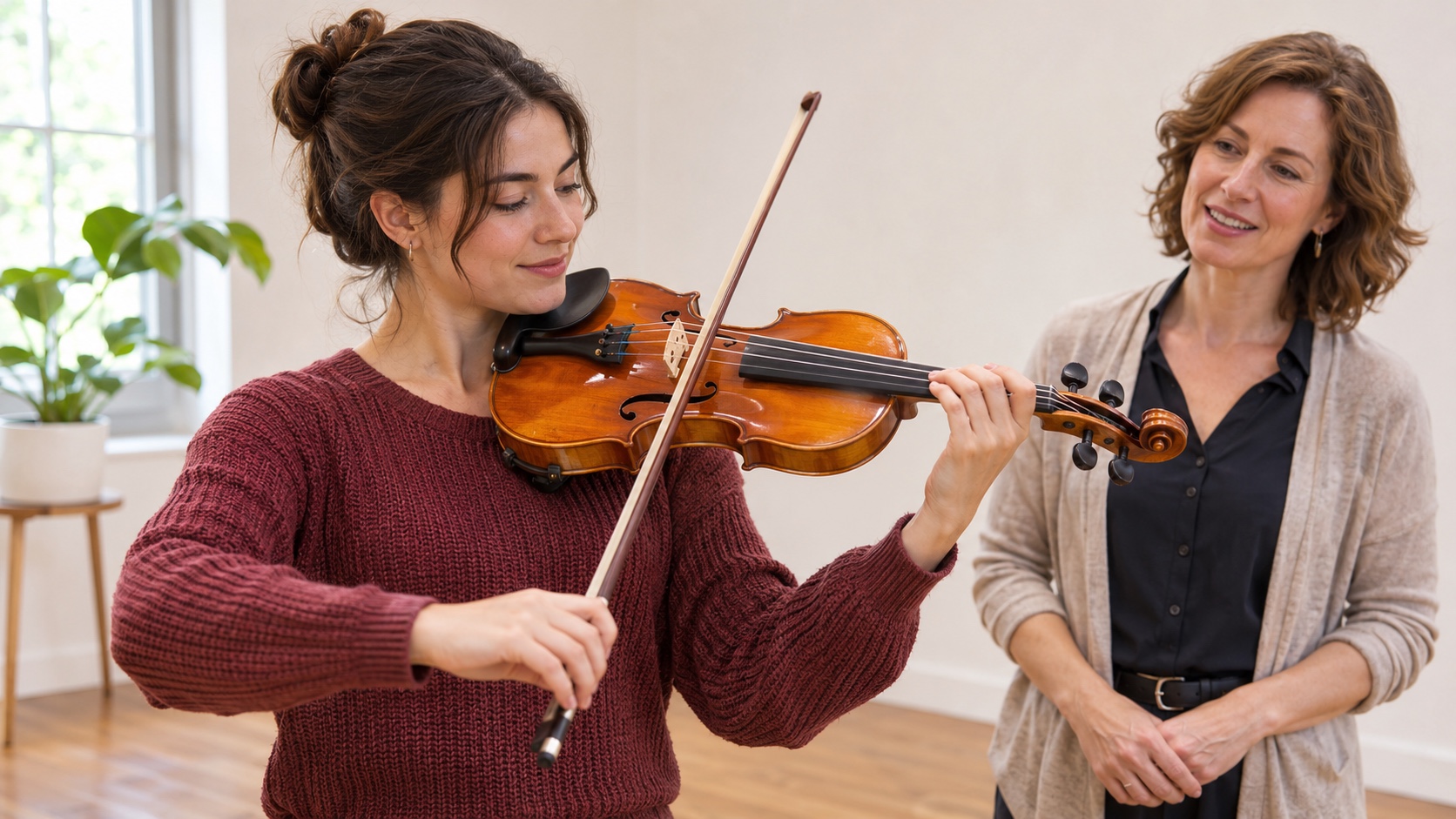
Once a teacher has narrowed the field to correctly sized, mechanically sound options, the beginner should respond to appearance and voice. Affection for an instrument encourages ownership and daily practice. The choice need not be mystical; it simply acknowledges that motivation is part of value. Use a short home trial to observe tuning stability, shoulder comfort, and willingness to play. The best beginner violin is not necessarily the cheapest model or the one with the richest showroom tone. It is a dependable, responsive partner supported by people who can keep it working.
A Strong Start Sounds Like Curiosity
When size, setup, bow, and support are right, the student can spend lessons learning music instead of fighting equipment.
That is the standard every first violin should meet.