The Right Violin Gives Your Current Technique Room to Become More Musical
Choosing a violin is less about earning a prestigious label than finding an instrument whose response, size, projection, and color support the work ahead. A beginner needs dependable setup and an easy start to the note. An advancing player needs wider dynamic contrast and enough tonal feedback to refine bow control. A performer may need projection, complexity, and a voice that occupies a particular ensemble space. Price loosely tracks labor and material selection, but it does not choose the instrument for you. Define the next several years of playing, then compare individual violins under consistent conditions.
A: Upgrade when technique exceeds its dynamic range or persistent limitations remain after expert setup.
A: Seek controllable color and even response rather than one fashionable tonal adjective.
A: Three to six per round is usually enough to reveal differences without exhausting attention.
A: No. Age can accompany value, but condition, design, setup, and the individual voice decide performance.
A: Yes, a luthier may adjust curvature for style while preserving safe string clearance.
A: The player should decide with technical guidance and an independent condition check.
A: Not by itself; listen from across a room because carrying focus behaves differently.
A: Enough to obtain a stable, balanced partner that brings out the violin’s response.
A: They can work with a genuine trial, specialist setup, clear returns, and local inspection.
A: The violin repeatedly translates musical intention without creating needless physical or acoustic resistance.
Begin With a Written Playing Profile
List your present level, weekly practice, ensemble commitments, repertoire, physical concerns, performance settings, and realistic budget. Note whether the violin must survive school travel, blend in an orchestra, cut through an acoustic jam, accept a pickup, or support auditions. These requirements turn an overwhelming showroom into a purposeful search. Separate needs from preferences. Correct size, structural health, stable pegs, and playable action are needs. Dark varnish, dramatic flame, country of origin, and an especially warm voice are preferences. Preferences matter, but they should operate only among instruments that satisfy the functional baseline.
A Beginner Should Prioritize Immediate Response
New players are still learning to coordinate bow speed, weight, and contact point. A resistant violin can encourage pressing and tightness, while an unstable setup makes every mistake ambiguous. Look for a clean start at moderate bow speed, even response across all strings, manageable action, and tuning hardware that works without a struggle.
Four fine tuners, a straight serviceable bow, and a correctly fitted shoulder solution reduce distractions. A reputable rental or workshop-prepared outfit often makes more sense than an anonymous bargain. The beginner’s violin does not need a huge concert voice, but it should reward a centered stroke with a clear, pleasant note.
Intermediate Players Need More Dynamic Range
As shifting, vibrato, articulation, and faster string crossings develop, a basic violin may begin to compress every gesture into the same color. An intermediate instrument should speak softly without losing focus and accept stronger input without turning coarse. It should reveal changes in contact point and bow speed rather than concealing them. Bring excerpts that test sustained lyrical playing, quick détaché, string crossings, and upper positions. Listen for a usable E string, supportive G string, and consistent transitions through D and A. A violin with one spectacular register and one reluctant register may become frustrating as repertoire broadens.
Advanced Goals Demand Projection With Complexity
Projection is not the same as loudness under the ear. A refined violin carries a focused core through a hall while retaining color at distance.
Advanced players also need response at the extremes: a controlled pianissimo, articulate off-string work, high-position clarity, and headroom under a full bow. Have a trusted listener move around the room or hall.
Some violins that seem sweet beside the player’s head disappear at twenty feet; others sound edgy nearby yet organize beautifully in space. Recordings help, but an experienced listener provides immediate comparisons and can identify when technique, bow, or room is influencing the result.
Classical Orchestra Playing Rewards Blend and Focus
An orchestral violin must articulate precisely while joining a section sound. Excessive surface brightness can fatigue the player and protrude awkwardly, while an unfocused dark violin may vanish. Seek a centered middle register, clear high positions, and the ability to change color without losing pitch definition. Test common audition material and quiet accompaniment figures as well as solo passages. A concertmaster may need greater carrying power than a section player, but both require predictable response. Ask colleagues to listen within an ensemble if a trial permits; solo-room impressions cannot fully predict blend.
Chamber Music Needs Conversational Flexibility
Quartet and small-ensemble work expose articulation and timbral balance. The violin must move between foreground and background roles, match attacks with other strings, and retain identity at low volume. A broad palette is more useful than a single impressive color.
Bring passages with exposed entrances, rapid dialogue, and sustained inner voices. If possible, trial the violin with regular partners. Their instruments occupy acoustic space that a showroom cannot recreate, and they can tell whether your sound has become clearer or simply louder.
Fiddle Styles May Favor Speed, Clarity, and Stability
Old-time, bluegrass, Celtic, jazz, and other fiddle traditions place different demands on attack and setup. Some players prefer a direct, bright response that keeps fast ornaments and double stops distinct. Steel-core strings may provide stability and a quick edge, while a slightly flatter bridge curve can aid rapid crossings when adjusted by a knowledgeable luthier. Do not let the word “fiddle” justify poor construction. The instrument still needs healthy arching, secure seams, stable fittings, and a properly fitted bridge. Test the rhythms, tunings, chopping techniques, and amplification you actually use. A classical-oriented shop can still serve a fiddler when it listens to those goals.
Amplified Work Changes the Evaluation
A pickup introduces feedback behavior, string-balance concerns, cable management, and another tonal filter. Decide whether you want a removable bridge pickup, a replacement bridge system, a body-mounted transducer, a microphone, or a purpose-built electric violin. Each preserves a different amount of acoustic character.
First judge an acoustic violin unplugged so you know the source sound. Then test the intended pickup through a neutral preamp and realistic stage system.
Check every string, aggressive bowing, quiet passages, and movement. A beautiful acoustic instrument may not be the easiest amplified tool, so weigh installation risk and performance needs carefully.
Size and Ergonomics Remain Nonnegotiable
Children require measurement and regular reassessment as they grow. Adults usually use full size, yet hand span, neck length, prior injury, and shoulder mobility may make a seven-eighths violin or alternative chinrest valuable. The player should support the instrument without squeezing and reach first position without locking joints. Chinrest height and shape can transform comfort without changing violins. Shoulder rests and pads alter angle, stability, and reach. Evaluate the instrument first with a familiar setup, then let a trained fitter explore changes. Do not dismiss a promising violin because an unsuitable chinrest created tension.
Tone Words Need Musical Examples
“Warm,” “bright,” “dark,” “open,” and “focused” mean different things to different listeners. Tie each word to a passage and location. Perhaps warm means the A string remains rounded in first position, or focused means high notes remain centered across the room. Concrete examples make comparisons reliable.
Contrast is often more important than a favorite default color. Ask whether the violin can move from soft and veiled to brilliant and direct without losing core. An instrument locked into one attractive voice may suit a narrow style, but a versatile player needs controllable alternatives.
Construction Details Inform but Do Not Decide
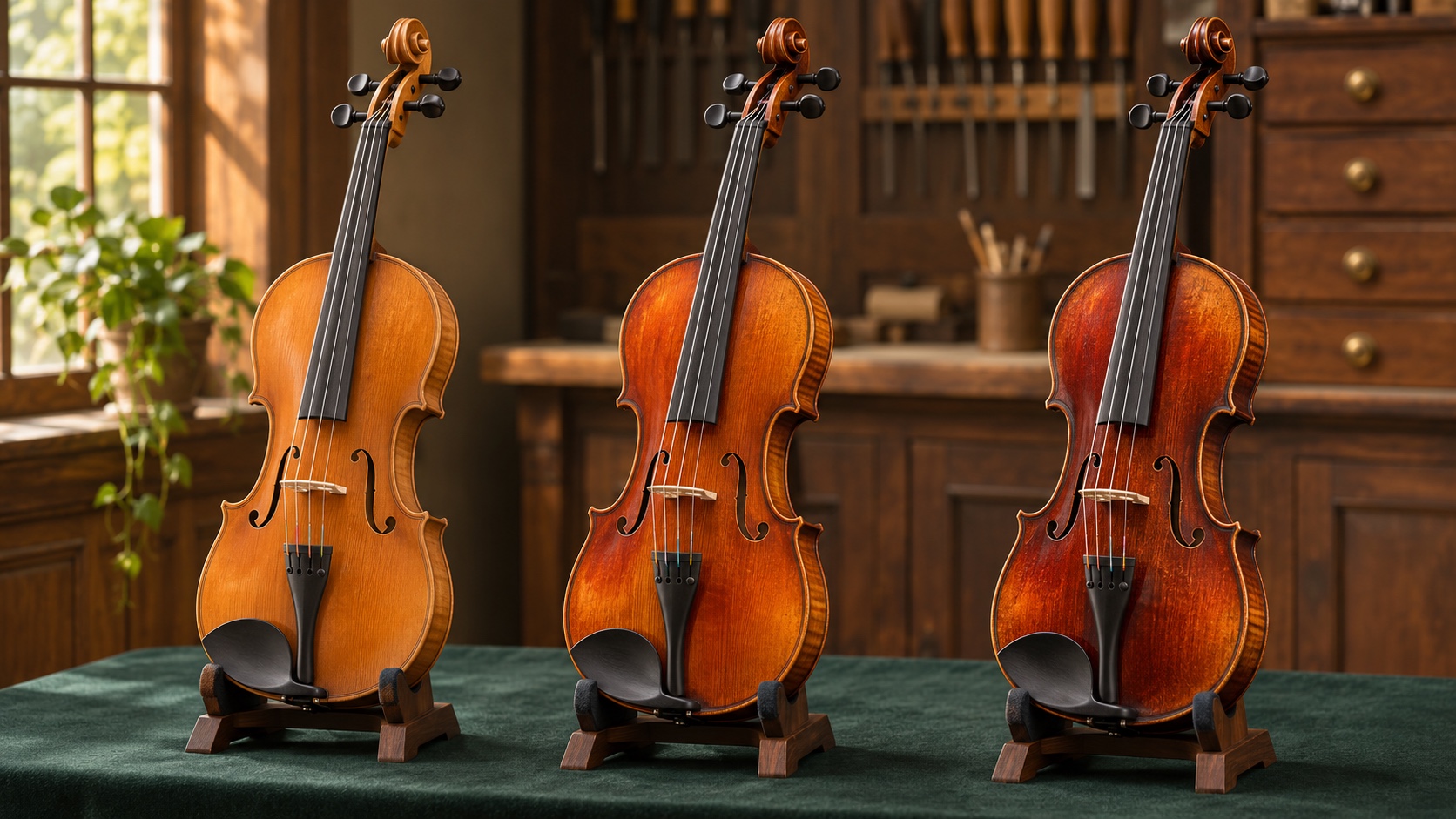
Healthy spruce and maple, stable arching, appropriate graduations, sound seams, and a well-fitted bass bar support performance. Ebony fittings provide durable working surfaces. Older wood, visible flame, and hand-applied varnish may accompany careful work, yet none guarantees a superior voice. Country labels and workshop names describe provenance, not compatibility. Two violins by the same maker can differ. Let a luthier inspect repairs, neck angle, plate condition, and previous alterations before a significant purchase. Structural evidence protects the budget; the ear completes the choice.
The Bow Can Change the Ranking
A bow controls articulation, stability, and how energy enters the string. A violin that feels reluctant with a soft bow may become vivid with a stronger stick; another may become harsh.
Compare violins first with one familiar bow, then test a few bows on the finalists. Balance, stiffness, camber, weight distribution, and hair condition matter more than material alone.
Wood and carbon fiber both offer worthy options at many levels. Reserve enough budget for a bow that lets the chosen violin reveal its strengths rather than treating it as an afterthought.
Set a Total Budget and a Useful Ceiling
Include the violin, bow, case, adjustment, strings, fittings, insurance, and tax. Decide what improvement would justify moving beyond the target range. Without that threshold, price can create an expectation that colors listening. Ask the shop to include one less expensive candidate in blind comparisons. Trade-in policies can make a strong student instrument sensible for a developing player. Consignment and private sales may offer value but require independent inspection and clear ownership documentation. Never stretch the budget so far that maintenance or a suitable bow becomes impossible.
Use a Structured Shortlist
Ask the shop to present three to six instruments that meet the profile. Tune them consistently, use the same room and bow, and play identical excerpts. Eliminate obvious mismatches, then take two or three on approval if possible. Too many choices dull the ear and make memory unreliable.
Record brief clips at equal distance and label them neutrally. Write observations immediately: response, comfort, G-string depth, E-string quality, transition between registers, projection, and emotional connection. A simple scorecard supports memory without pretending musical judgment is mathematical.
Home Trials Reveal Everyday Truth
Play at the times and places where practice normally occurs. A violin that sounds generous in a carpeted room may feel aggressive in a reflective studio. Check tuning over several days, test rehearsal repertoire, and notice fatigue after a full session. Invite a teacher to evaluate before the deadline. Follow the shop’s trial rules, maintain stable humidity, and avoid changing strings or fittings without permission. If the violin repeatedly draws you back and solves the requirements on the written profile, that pattern matters. Novelty fades; useful responsiveness becomes more convincing.
Finish With Independent Inspection
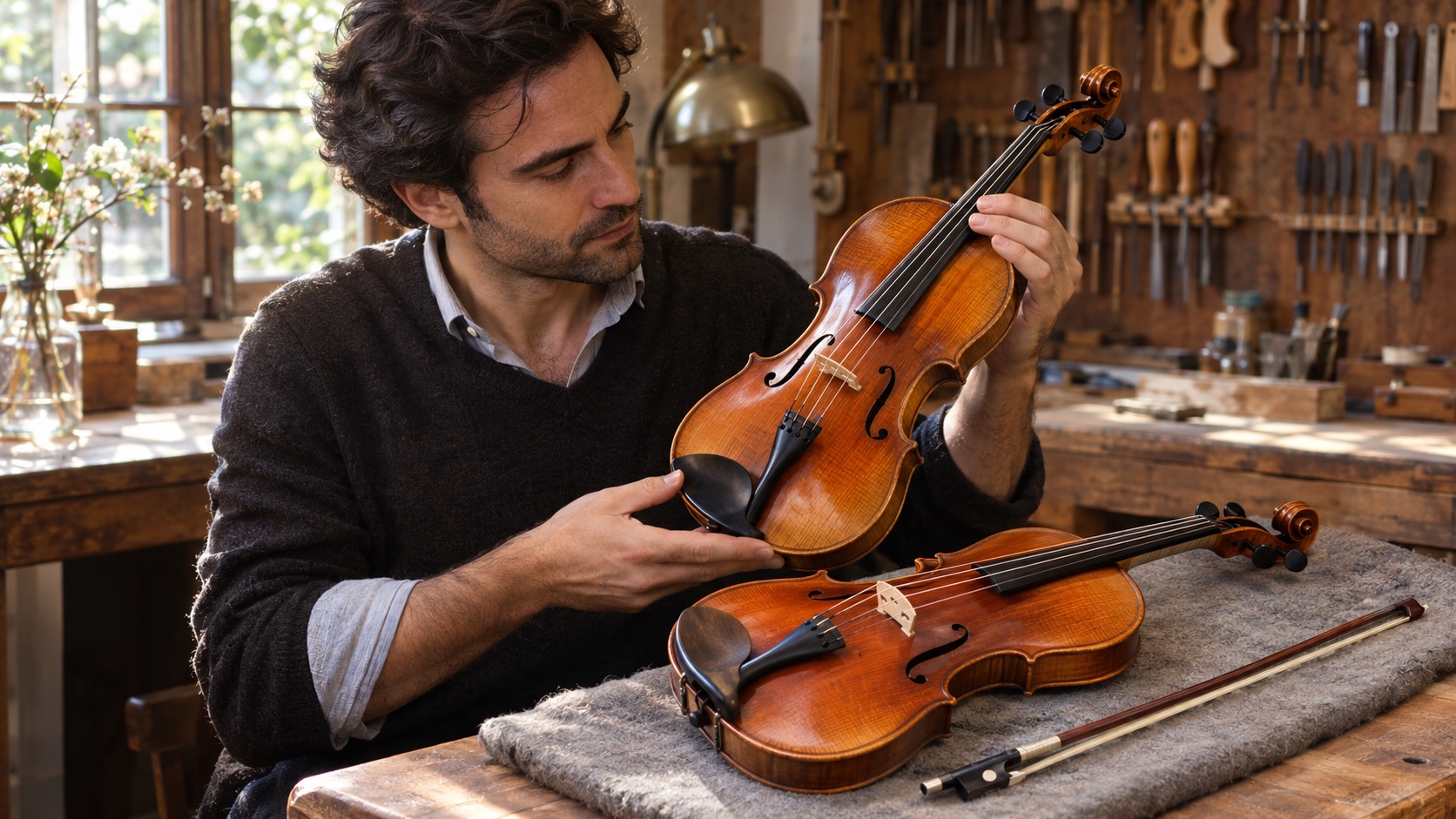
Before buying an expensive violin, ask a luthier who is not invested in the sale to assess condition, repairs, authenticity claims, and setup. Obtain written details for insurance and future resale.
A certificate or appraisal should come from a qualified party and match the instrument precisely. Then make the musical decision.
Choose the violin that turns your intentions into sound with the least unnecessary resistance, fits your body, and remains financially sustainable. Skill level sets the required floor; musical goals determine which strengths deserve priority.
Use Adjustments to Separate Fit Problems From Voice
Before rejecting an otherwise compelling violin, ask whether chinrest height, shoulder support, string choice, bridge condition, or soundpost adjustment is distorting the experience. A removable fitting can change jaw pressure and left-hand reach dramatically. A luthier can also identify an instrument that is playing below its potential because of neglected setup. Make only reversible, shop-approved changes during a trial, and compare again after the work settles. Adjustments have limits. They cannot make an oversized body appropriate, reverse major structural weakness, or turn an inherently one-dimensional voice into a complex one. The point is to reveal the violin accurately, not to rationalize a poor match. Written before-and-after observations help keep that distinction clear.
Plan the First Season With the New Instrument
Schedule a check after the violin acclimates to the player’s environment. Monitor bridge angle while new strings stretch, note changes in humidity, and keep the audition setup documented. Continue using familiar repertoire for several weeks so the player learns which new colors come from the violin and which require technique changes.
A new instrument can briefly encourage overplaying because its stronger response feels exciting. Alternate demanding passages with relaxed tone work, and let the teacher watch for tension. The choice proves itself when musical control expands without creating a physical burden.
Allow the Choice to Be Specific
The best violin for an orchestral student may not suit an amplified fiddler, and that is exactly the point. A focused choice serves progress better than a universally impressive specification.