Breath Control Starts Before the Trombone Speaks
Breath control exercises for trombonists should build calm inhalation, steady air release, phrase length, dynamic control, and musical timing. The trombone rewards air that feels full but not forced, focused but not tense, and connected to the sound from the first note to the release. Good breathing is not only taking a bigger breath. It is knowing when to breathe, how to release air, how to support long phrases, how to recover between entries, and how to keep the body open while the slide and embouchure do their work.
A: It is the ability to inhale calmly, release air steadily, and support musical phrases.
A: No. The breath should fit the phrase and remain relaxed enough to release.
A: Yes. They help players feel relaxed inhalation and steady exhalation without note distractions.
A: They reveal whether air, tone, pitch, and release stay steady over time.
A: It starts a note with air alone and helps test whether the air is ready.
A: You may be overblowing, holding tension, wasting air early, or using poor phrase planning.
A: Yes. Connected air helps the slide and embouchure move between notes smoothly.
A: Practice quick, quiet breaths that refill without tightening the body.
A: Yes. Soft trombone playing needs steady air, not weak air.
A: Practice a drill, then immediately use the same air idea in a real phrase.
Begin Away From the Instrument
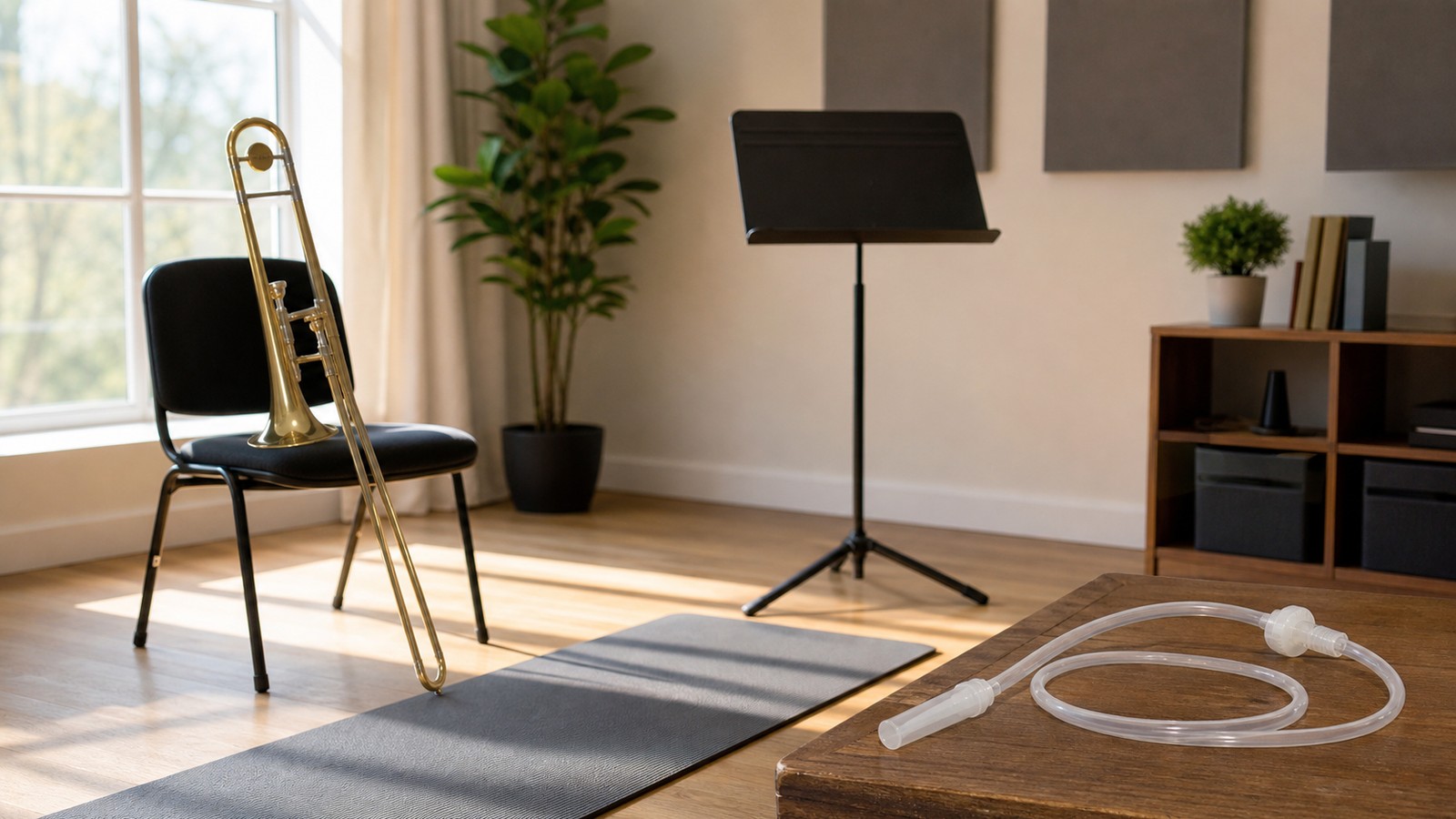
Breath control is easier to feel before the trombone is on the face. Stand or sit tall, release the shoulders, and take a quiet breath without raising the chest dramatically. The body should expand comfortably, then release air without grabbing. This simple check can reveal whether the player begins practice already tense or restricted.
No-horn breathing removes the distraction of notes. Students can notice whether the inhale is tense, whether the shoulders jump, or whether the exhale stops suddenly. Those habits often return when the instrument is added.
A few calm breaths before practice can reset the body. This is not a performance ritual for show; it is a way to remind the player that sound begins with air. When the body starts calmly, the first notes usually need less correction and less physical effort.
Use Counted Inhales and Exhales
Counted breathing gives structure. Inhale for four counts, exhale for four, then try four in and eight out. Keep the air smooth, not squeezed. The goal is control over time, not a dramatic breath that makes the body tense. Use a metronome or quiet foot pulse if the counts drift.
As control improves, vary the counts. Try two in and eight out for quick preparation, or four in and twelve out for long phrase support. The counts should feel musical and steady. If the exhale shakes or collapses near the end, shorten the count and rebuild the steadiness.
Keep the Throat Open
A tight throat can make breath control feel difficult even when the lungs have enough air. Imagine a relaxed, open inhale and a warm release. The sound should not feel pinched before it reaches the instrument. Students often notice that an easier throat makes attacks feel less forced and more consistent.
Add the Mouthpiece Gently
Mouthpiece-only work can connect breath to vibration without the full instrument. Use easy glides or simple sustained tones, but keep the sound relaxed. The mouthpiece should not become a place for forcing loud buzzing. A small, steady buzz is usually more useful than a dramatic one.
Short mouthpiece practice can reveal whether the air starts smoothly. If the buzz needs pressure or a harsh attack, return to no-horn breathing and reset. The goal is coordination, not volume.
After a minute or two, move back to the trombone. Mouthpiece work should support playing, not replace musical practice. If the mouthpiece exercise creates tension, use less volume and a smaller range.
Long Tones Train Air Release
Long tones are classic breath-control exercises because they reveal steadiness. Choose a comfortable note, breathe calmly, and hold the sound with even tone and pitch. Listen for bumps, sagging, shaking, or sudden changes in color.
Start with moderate lengths. A beautiful eight-count tone is better than a strained twenty-count note. Increase duration only when the sound stays alive. Players should end the note before the tone becomes desperate, because the final seconds teach as much as the beginning.
Use Crescendo and Diminuendo
Dynamic shapes teach the player to manage air, not just spend it. Start at a comfortable volume, grow gradually, then return softer without losing pitch or tone. The body learns to change intensity while the sound stays connected. This is useful preparation for ensemble music, where trombonists often support quietly and then grow into stronger lines.
Practice Breath Attacks Carefully
A breath attack starts the note with air rather than tongue. It can reveal whether the air is ready and whether the embouchure is balanced. Use it softly and only in a comfortable register at first.
Breath attacks are not meant to replace tonguing. They train the air start behind the articulation. Once the air speaks clearly, add light tongue and keep the same openness. This makes later articulation feel less like a substitute for air.
If breath attacks feel impossible, the setup may be too tense or the air may be hesitant. Slow down and choose easier notes. The exercise should feel like removing obstacles, not like proving that the tongue is unnecessary.
Plan Breaths in Real Music
Breath control is not complete until it appears in phrases. Mark breaths in music where they support the line, not only where the player runs out of air. A planned breath sounds more musical than an emergency breath.
Look for commas in the phrase, harmonic arrivals, rests, and repeated patterns. The best breath spots often match the music's structure. When in doubt, ask a teacher or listen to strong recordings. Marking breath spots in pencil can turn a vague plan into something repeatable. Once the breath is marked, practice taking it in tempo so it becomes part of the phrase.
Use Flow Studies
Flow studies are simple lyrical exercises that keep air moving through connected notes. They are excellent for trombonists because the slide, air, and embouchure must coordinate smoothly. Play them at a tempo where the phrase can breathe.
Focus on carrying the sound from note to note. Do not let the air stop at each slide movement. The slide changes pitch, but the phrase should remain connected.
A flow study should feel like singing through the trombone. If it becomes stiff, slow down and reduce the range. The exercise is working when the player hears one connected line instead of separate notes linked by effort.
Train Quick Breaths
Some music gives very little time to breathe. Practice quick, quiet inhales that refill the body without panic. A fast breath should still feel open, not like a gasp. This skill is especially useful in band parts where the entrance after a rest arrives sooner than expected.
Avoid Overfilling
Taking too much air can create tension. If the player fills beyond comfort, the first note may feel stiff or explosive. A good breath is full enough for the phrase and relaxed enough to release.
Experiment with different breath sizes. A short phrase may need a smaller breath than a long chorale line. Breath control includes choosing the right amount, not always the maximum amount.
Coordinate Air With Slide Motion
Trombone slide movement can interrupt air if the player thinks of each position as a separate event. Practice slow phrases where the air continues while the slide moves. The sound should not stop between positions unless the music asks for separation.
This coordination is especially important in legato playing. The slide must move cleanly, but the air provides the line. If the air drops, the phrase can feel bumpy even when the positions are correct.
Use simple two-note patterns at first. Smooth air across a small slide change, then expand to longer phrases.
Use a Metronome for Breath Timing
A metronome can train breath timing as much as rhythm. Set a slow pulse, inhale on a specific count, play on the next count, and release together. This prevents the breath from being late or rushed. It also teaches that breathing is part of tempo, not a scramble before the note.
Build Phrase Length Gradually
Longer phrases should grow from successful shorter ones. If an eight-count phrase sounds steady, try ten or twelve. If the tone fades, return to the shorter version and make it better. This gradual approach keeps phrase building musical instead of turning it into a contest of who can hold air longest.
Phrase length is not only lung capacity. It involves efficiency, embouchure balance, posture, dynamic choice, and musical pacing. A player who wastes air in the first measure may struggle later even after a big breath. Learning to spend air evenly gives the phrase shape and reduces panic near the end.
Connect Breathing to Dynamics
Loud playing uses air differently from soft playing. Practice the same phrase at several dynamic levels and notice how breath use changes. Soft playing still needs supported air, while loud playing needs openness without blasting.
Dynamic breath control helps ensemble playing. Trombonists often move between background support, chorale blend, accented figures, and strong climaxes. Each role needs a different air plan. A section player may need to breathe silently and support blend, while a solo entrance may need a more deliberate preparation.
Do not confuse quiet with weak. A soft note with steady air can carry beautifully.
Recover Between Phrases
Breath control includes recovery. After a long phrase, release tension before the next inhale. If the player stays tight, the next breath may be shallow even if there is enough time. Practice relaxing the shoulders and jaw during rests so the next breath can enter freely.
Make Breathing Musical
The best breath-control exercises eventually disappear into music. The listener should hear connected phrases, steady tone, clear dynamics, and confident releases, not the mechanics of breathing. Exercises are tools for that musical result.
Practice one technical exercise, then play a phrase from real music and apply the same idea. This keeps breathing work connected to the reason trombonists practice in the first place. If the exercise improves the phrase, keep it. If it remains separate from music, adjust the exercise.
Record Phrase Breathing
A phone recording can reveal breaths that sound noisy, late, rushed, or disruptive. Players often do not notice those details while playing because they are focused on making the next entrance. Listening from the room gives a clearer picture. It can also show whether a marked breath actually improves the phrase.
Adjust Exercises on Tired Days
Breathing work should respond to the player's condition. After a long rehearsal, choose gentler long tones, easier flow studies, and shorter counts. The goal is to reinforce efficient air, not to turn every day into a stamina test.
On stronger days, expand phrase length or dynamics gradually. Alternating heavy and light work keeps breathing practice sustainable and connected to real playing demands.
The Best Breath Control Takeaway
Breath control for trombone begins with an open body, calm inhale, and steady release. No-horn drills, counted breaths, long tones, dynamic shapes, flow studies, and phrase planning all train different parts of the same skill.
The goal is not to take the biggest possible breath every time. It is to choose the right breath, release it efficiently, and keep the sound alive through the phrase from beginning to end.
When breath control improves, the trombone feels easier. Tone becomes steadier, slurs connect better, high notes feel less desperate, and musical phrases have more direction. Air becomes the partner of the slide, not a separate problem to solve. That is why breath work belongs in daily practice, even on days focused on notes or technique.