
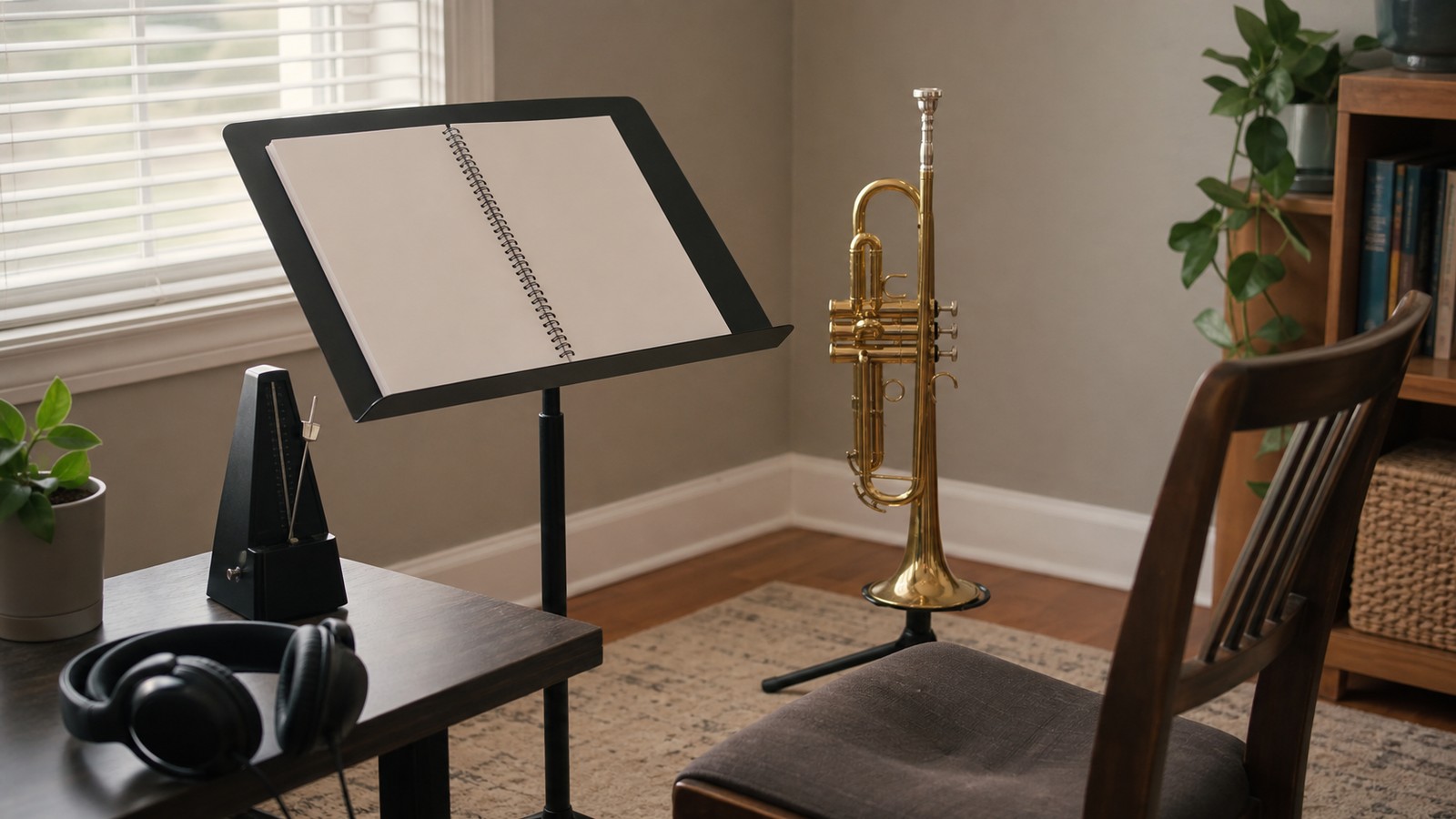
Self-Taught Trumpet Works Best With Feedback
You can teach yourself to play the trumpet to a basic level, but the instrument rewards feedback more than guessing. A motivated beginner can learn note names, fingerings, simple songs, basic rhythm, practice routines, and early tone production at home. The harder part is knowing whether the sound, breathing, embouchure, articulation, posture, and practice habits are developing in a healthy way. Self-teaching works best when it combines patient independent practice with occasional outside ears, whether that comes from a teacher, band director, experienced player, recording, or carefully chosen learning resource.
A: Yes. Adults can learn basics independently if they practice patiently and seek feedback.
A: Short daily sessions with rest are usually better than long, tiring sessions.
A: A beginner method book helps organize notes, rhythms, fingerings, and musical progress.
A: No, but they give valuable feedback and make self-practice more honest.
A: Start with relaxed sound, breathing, easy notes, simple rhythm, and basic fingerings.
A: Chasing range too soon can create pressure habits and poor tone.
A: Have it checked if valves stick, slides leak, notes feel unusually resistant, or response is unreliable.
A: Yes. Reading opens method books, band music, etudes, and more reliable practice.
A: Take one when tone, range, pain, rhythm, or setup problems do not improve.
A: Yes, but ensemble playing becomes easier with feedback on tuning, time, and balance.
The Short Answer Is Yes, With Limits
A beginner can absolutely start trumpet independently. Many players begin with a method book, online lessons, recordings, tuner, metronome, and a steady practice schedule. That can be enough to learn early notes, simple melodies, and the basic feel of the instrument. The key is to treat the first stage as foundation building, not a race toward difficult solos or high-note displays.
Trumpet Gives Immediate Feedback
Trumpet is honest. If the air is weak, the sound may not speak. If the embouchure is tense, tone and range may suffer. If the valves are wrong, the note changes instantly. That feedback can help self-taught players notice problems quickly.
The difficulty is interpretation. A beginner may hear a bad sound but not know whether the cause is breath, mouthpiece pressure, tongue placement, posture, valve choice, or fatigue. Without guidance, the player may fix the wrong thing. This is why self-teaching should include simple experiments, short recordings, and occasional check-ins rather than endless repetition of the same problem.
Start With Sound Before Range
Self-taught trumpet players often chase high notes too soon because range feels like visible progress. A better first goal is a centered, relaxed sound in a comfortable register. Good tone, steady air, and clean attacks are the foundation for everything else.
Early practice should include easy long tones, simple mouthpiece awareness, relaxed breathing, and short melodies. These may feel plain, but they teach the body how trumpet playing should feel before tension becomes a habit.
High notes will come more safely when the middle register is stable. A beginner who forces range before building control may create pressure habits that take much longer to undo.
Use a Beginner Method Book
A structured beginner book gives self-teaching a sequence. It introduces notes, rhythms, rests, fingerings, articulation, and simple songs in an order that usually makes sense. Random videos can be helpful, but they may jump between levels too quickly. A book also gives the player a way to measure progress without inventing a new plan every day.
Learn Fingerings Slowly
Fingerings are one of the easiest parts to self-study because a chart can answer many early questions. Still, students should connect fingerings with sound, not only valve numbers. Play slowly, name the note, press the valves, and listen.
A tuner can help, but it should not replace the ear. Beginners may play the right fingering on the wrong partial, especially with open notes. Matching pitch with a piano, drone, or reliable recording can make the chart more meaningful. The goal is not only to make the needle look right; it is to recognize when the note feels and sounds centered.
Keep Practice Sessions Short
Trumpet uses small muscles that tire quickly for beginners. Long practice sessions can turn into pressure, swelling, and frustration. Short daily sessions are usually better than one exhausting session on the weekend.
A new player might begin with ten to fifteen minutes, including rest. As endurance improves, practice can grow gradually. Resting before the sound collapses teaches better habits than pushing until the lips feel exhausted. This is difficult for motivated beginners, but stopping while the sound is still decent usually leads to better progress the next day.
Self-taught players should treat fatigue as information. If the sound becomes thin, the mouthpiece feels heavy, or range disappears, stop and reset. More pressure is rarely the answer.
Record Yourself Often
Recordings are a self-teacher's best substitute for outside ears. A phone recording from across the room can reveal tone, rhythm, pitch, and articulation habits that are hard to judge while playing. Listen for one thing at a time. If you try to fix tone, rhythm, range, posture, and expression all at once, the recording becomes overwhelming instead of useful.
Do not use recordings only to criticize yourself. Notice what improved, what stayed consistent, and what needs the next practice goal. A calm listening habit keeps self-teaching from becoming guesswork.
Use a Metronome Early
Rhythm can drift when players practice alone. A metronome helps build steady pulse before bad timing feels normal. Start slowly enough that the notes, fingers, and breathing stay organized. Beginners should also count rests out loud sometimes, because silence is part of trumpet music and not simply waiting.
Watch for Pressure Habits
One of the biggest risks of teaching yourself trumpet is using too much mouthpiece pressure. Pressure may make a note speak in the moment, but it can limit tone, flexibility, endurance, and range later. A beginner may not recognize the habit until it feels normal.
Look for warning signs such as deep mouthpiece marks, lips feeling crushed, tone thinning quickly, or needing to press harder for every higher note. If those signs appear, reduce range work and focus on easier, more relaxed playing.
A teacher can spot pressure habits quickly, but self-taught players can still protect themselves by practicing softly, resting often, and avoiding high-note challenges before the basics are secure.
Learn Basic Music Reading
Trumpet self-teaching becomes much easier when the player learns notation. Reading rhythms, rests, key signatures, and simple articulation marks opens far more music than copying fingerings by ear. It also makes method books more useful.
Start with small reading goals. Learn a few notes, then play short exercises that use them. Add rhythm gradually. Reading should support playing, not become a separate wall.
Play Along With Good Models
Listening matters. Play along with recordings, teacher demonstrations, method-book audio, or simple drones when possible. Good models help beginners hear tone, pitch center, style, and phrase shape.
Be selective with online examples. Some videos are excellent, while others demonstrate poor habits or jump into advanced tricks too soon. Look for clear beginner pacing, healthy sound, and explanations that match your current level.
Playing along also makes practice less lonely. It gives the self-taught player a reference point and a sense of musical context, even before joining a band or ensemble.
Do Not Skip Articulation
Many beginners focus on notes and forget how notes start. Tonguing should be clear, light, and coordinated with air. If every note begins with a thud, splat, or delay, melodies will feel harder than they need to.
Get Occasional Human Feedback
Even if you prefer learning independently, occasional feedback can save months of frustration. One lesson, band-director check, or conversation with an experienced player can catch posture, embouchure, breathing, or equipment issues early.
Feedback does not have to mean weekly private lessons forever. Some self-taught players use a teacher for occasional checkups, specific problems, audition preparation, or technique resets. That hybrid approach is often very effective.
Know When You Need a Teacher
Consider getting help if sound does not improve, range feels forced, pain appears, rhythm is confusing, or you cannot tell whether you are playing the right notes. These are normal beginner problems, but they are easier to solve with guidance.
A teacher is also helpful when you want to join a school band, community ensemble, jazz group, or audition setting. Ensemble playing adds counting, balance, tuning, style, and listening demands that are difficult to learn alone successfully.
Seeking help is not a failure of self-teaching. It is a smart way to protect your progress. A single correction at the right moment can make the next month of independent practice more productive.
Choose Equipment That Does Not Fight You
A damaged trumpet, stuck valves, leaky water key, poor mouthpiece fit, or badly maintained instrument can make self-teaching much harder. Beginners may blame themselves for problems caused by equipment. Have the trumpet checked if it feels unusually resistant or unreliable. A working student trumpet should not feel effortless, but it should respond consistently when basic air and fingerings are correct.
Use Online Lessons Selectively
Online lessons and videos can be useful when they match your level. Look for clear beginner explanations, moderate tempos, healthy tone, and teachers who emphasize breath, rest, and sound instead of tricks. Save advanced range and speed content for later.
Follow one main sequence at a time. Jumping between too many teachers can create conflicting advice, especially about embouchure and warmups. If a resource makes your playing feel tense or confused, step back and return to simpler material.
Join Musical Situations Gradually
Self-teaching does not have to mean playing alone forever. Once you can read simple rhythms and play a few notes reliably, look for easy duets, beginner ensemble opportunities, church music, community classes, or a school band pathway. Playing with others teaches skills that solo practice cannot fully cover by itself.
Start with low-pressure situations. A beginner duet with a friend or teacher can teach counting, balance, and recovery without the pressure of a full ensemble. The goal is to learn how your sound fits beside another sound.
Group playing also exposes habits quickly. If you rush, play too loudly, or miss rests, the music will show it. That feedback can be uncomfortable, but it is one of the fastest ways to become more musical.
Protect Motivation
Self-taught players need visible wins. Keep a few easy songs polished, record progress monthly, and revisit older exercises to hear improvement. Motivation grows when practice shows evidence, not only new problems.
Build a Simple Practice Routine
A practical routine might include breathing, easy long tones, lip slurs, fingerings, a scale, a method-book exercise, and one short song. Keep the order predictable so practice begins quickly. Change the details as skills grow.
Write down what you practiced and what to try next. A small journal can prevent repeating the same easy material every day while avoiding the opposite problem of jumping randomly between topics. It also makes occasional teacher feedback more specific because the practice history is visible.
The Best Self-Teaching Takeaway
You can teach yourself trumpet basics if you are patient, organized, and honest with feedback. Start with tone, breath, easy notes, short practice sessions, reading, rhythm, and simple music. Avoid rushing range or volume.
Use tools that help you hear clearly: recordings, a tuner, a metronome, method-book audio, and good models. Then add occasional human feedback before small problems become fixed habits. Expect progress to arrive in layers rather than all at once, especially with tone and endurance.
Self-teaching works best when independence and humility stay together. Practice on your own, but keep checking the sound against reality. That balance gives a beginner the best chance to grow into a confident trumpet player.


