Trumpet Polishing Starts With the Finish
The best polishing tools for silver and brass trumpets are the ones that match the instrument's finish and clean gently. A silver-plated trumpet, lacquered brass trumpet, raw brass area, mouthpiece, and valve casing do not all need the same treatment. The goal is to remove fingerprints, dullness, and light tarnish without scratching, wearing plating, pushing residue into tight spaces, or confusing polishing with deeper cleaning. A small set of good cloths, careful technique, and restraint will usually protect a trumpet better than a shelf full of harsh products.
A: A clean microfiber cloth is the safest everyday choice for fingerprints and light dust.
A: No. Use tools intended for lacquered instruments unless a technician advises otherwise.
A: Wipe it often, but use stronger tarnish products only occasionally and gently.
A: Not for daily playing, but they help when handling a freshly polished instrument.
A: Mouthpieces need hygiene cleaning, and dirty polish cloths should not go inside them.
A: No. Polishing can reveal wear, but it cannot replace missing silver.
A: No. A stuck slide needs careful repair attention before cosmetic polishing.
A: Slim polishing cloths work better than bulky cloths in tight trumpet areas.
A: No. A trumpet can look shiny while still needing internal cleaning.
A: Ask a technician when finish wear, corrosion, loose parts, or stubborn residue appears.
Identify the Finish Before Buying Tools
A silver-plated trumpet needs different polishing habits from a lacquered brass trumpet. Silver plate can tarnish and may benefit from a silver cloth or silver-safe polish used carefully. Lacquered brass usually needs a soft cloth that cleans fingerprints without cutting through the protective finish safely.
If you are not sure what finish you have, ask a teacher, repair technician, or reputable shop before using polish. A product that is safe for one finish may be wrong for another. Guessing can create wear that is much harder to fix than fingerprints.
This finish-first approach keeps the shopping list simple. Start with the instrument's surface, then choose the gentlest tool that solves the actual problem. A trumpet with only fingerprints does not need the same treatment as one with heavy tarnish, sticky residue, or visible finish wear.
Microfiber Cloths Are the Daily Tool
A clean microfiber cloth is the safest everyday choice for most trumpet owners. It removes fingerprints, light dust, and handling marks without needing liquid polish. Wiping the instrument after playing can reduce buildup before it becomes stubborn. This is especially helpful around contact points where the left hand, right thumb, and valve fingers touch the horn repeatedly.
Keep the cloth clean. A dirty cloth can carry grit, dried polish, or oil residue back onto the finish. Wash or replace cloths when they stop feeling soft, and do not use the same cloth for greasy slides and polished outer surfaces.
Silver Cloths Belong on Silver Plate
A silver polishing cloth is useful for silver-plated trumpets because it can lift tarnish and restore shine with less mess than liquid polish. Use light pressure and let the cloth do the work. Heavy rubbing is not a sign of better care. If tarnish remains in a tight corner, return to it patiently rather than grinding the surrounding plating.
Use Slim Cloths for Tight Areas
Trumpets have many narrow spaces around valve casings, braces, water keys, tuning slides, and finger hooks. A slim polishing cloth can reach those areas more safely than a bulky rag. It also reduces the temptation to force a tool into a delicate gap.
Work slowly around solder joints and moving parts. If a cloth catches, stop and reposition it. Pulling hard can bend small parts or leave fibers behind.
Slim cloths are especially useful for silver instruments where tarnish develops in crevices. They can clean awkward spots without flooding the area with liquid polish.
Be Cautious With Liquid Polish
Liquid polish can be helpful for tarnished silver, but it should not be treated as a weekly routine. Overuse can leave residue, reach places that are hard to clean, or encourage aggressive rubbing. Use only products intended for the finish in front of you.
Apply polish to a cloth or gauze rather than pouring it directly on the trumpet. Keep it away from felts, corks, valve ports, and tight mechanical areas. After polishing, remove residue carefully so it does not dry in seams. Residue left near valve caps or water keys can collect grime and make later cleaning more difficult.
Lacquered Brass Needs Gentler Care
A lacquered trumpet is usually protected by a clear finish. The goal is to clean the lacquer, not polish the brass underneath. Use a soft cloth designed for lacquered instruments or a clean microfiber cloth, and avoid abrasive metal polish unless a repair professional tells you otherwise. Lacquer can look less shiny over time from tiny scratches, cloudy wear, or finish aging, and aggressive polishing usually makes those problems worse.
Raw Brass Areas Tarnish Differently
Some trumpets have worn spots, raw brass trim, or unlacquered areas that darken naturally. These places may react differently from the rest of the horn. Polishing them aggressively can make the color uneven or widen a worn patch.
If raw brass is part of the instrument's design, the owner may prefer a natural patina. If raw brass appears because lacquer or plating has worn through, polishing will not restore the missing finish. That is a repair or refinishing question, not a cloth problem.
Treat mixed-finish instruments with extra care. Use the correct cloth on each area and avoid dragging residue from one surface to another.
Soft Brushes Help, but They Are Not Polish
A soft brush can remove dust from around braces, valve caps, and engraving without rubbing the finish hard. Choose a brush that feels gentle and clean. It should lift loose debris, not scrape the trumpet. Brush before polishing if dust or lint is visible, because rubbing loose grit across a shiny surface is a simple way to create fine marks.
Mouthpieces Need Separate Attention
Mouthpieces collect skin oils, moisture, and buildup in ways the trumpet body does not. Use a separate mouthpiece brush and clean it as part of regular hygiene. Polishing the outside is only one small part of mouthpiece care.
Avoid using a dirty trumpet cloth inside the mouthpiece. Interior cleaning should remove residue, not add polish compound or grit. Rinse and dry the mouthpiece properly before returning it to the case. If the mouthpiece has stubborn buildup, use proper mouthpiece-cleaning tools rather than poking at it with sharp objects.
Cotton Gloves Can Reduce Fingerprints
Cotton gloves are useful when handling a freshly polished silver trumpet, photographing an instrument, or preparing it for display. They keep skin oils from returning immediately to the surface. They are not necessary for every practice session, but they can help during careful cleaning.
Gloves should be clean and dry. If they become damp or dusty, they can spread marks instead of preventing them. Store them with the cleaning kit rather than loose in the case.
Players should still hold the trumpet normally when practicing. Gloves are a polishing aid, not a playing requirement.
Avoid Abrasive Household Products
Household cleaners, rough pads, paper towels, and mystery metal polishes can damage trumpet finishes. An instrument is not a sink fixture or kitchen pan. The surface is thin, detailed, and connected to moving parts that should not be filled with cleaner.
Separate Polishing From Deep Cleaning
Polishing improves the outside appearance. Deep cleaning removes internal buildup, slide residue, valve grime, and mouthpiece deposits. Both matter, but they use different tools and different levels of caution.
A trumpet can look shiny and still need internal cleaning. It can also be mechanically healthy while looking dull from fingerprints. Do not assume one kind of care replaces the other. If valves feel slow or slides are stuck, a prettier outside will not solve the playing problem.
Build a Small, Finish-Safe Kit
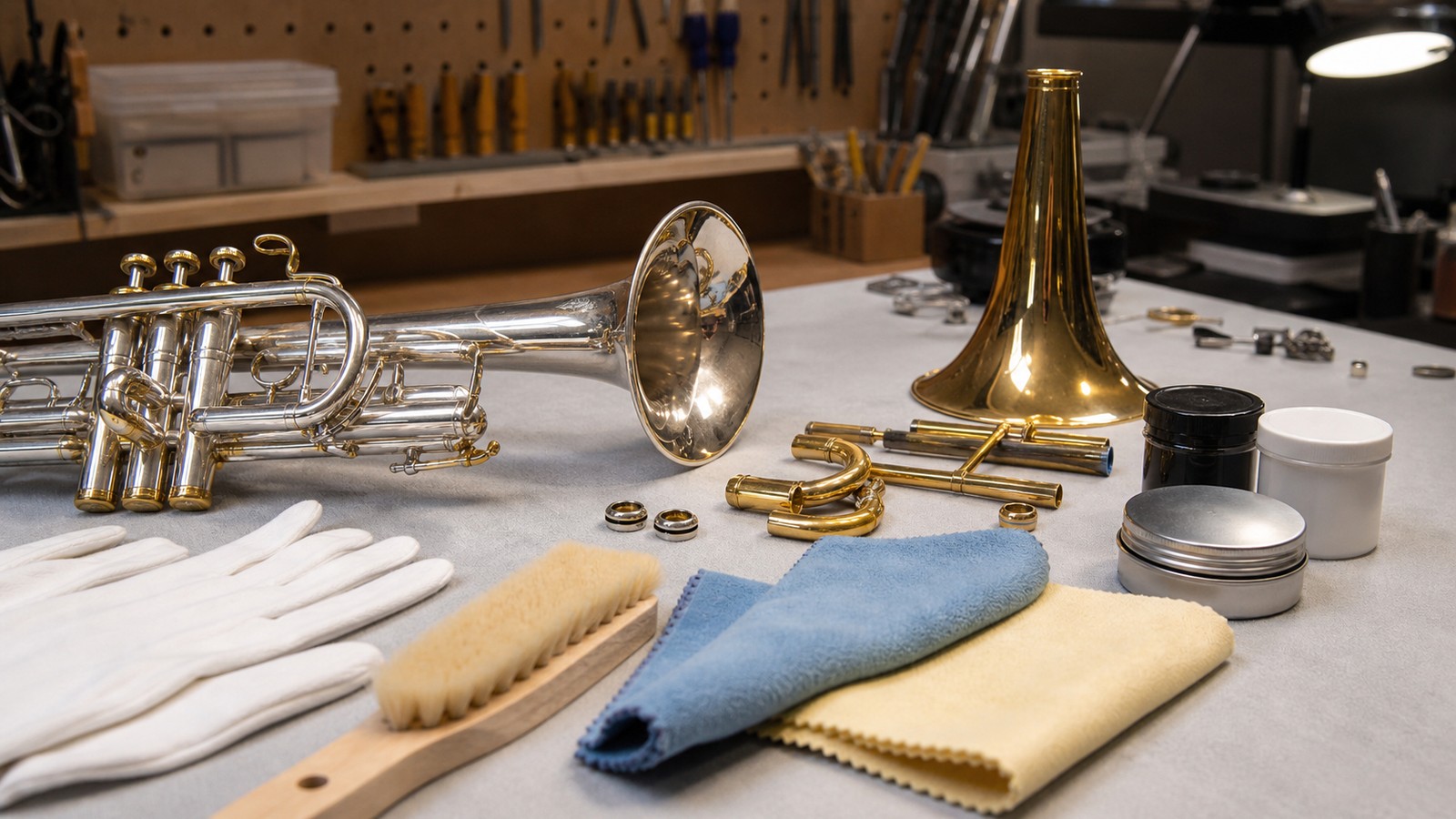
A practical polishing kit might include a clean microfiber cloth, a finish-specific polishing cloth, slim cloths for tight areas, a soft brush, cotton gloves, and separate mouthpiece-cleaning tools. Silver players may add a silver-safe polish for occasional use. Keep the kit simple enough that the safest tool is the easiest one to grab.
Label or separate cloths by purpose. One cloth for outer surfaces, another for slides or oily areas, and another for silver touchups can prevent cross-contamination. This small habit keeps the kit cleaner.
Store polishing tools dry. Damp cloths can smell, carry residue, or encourage tarnish and corrosion. Let cloths air out before sealing them in a bag or case pocket.
Polish Less Than You Think
Frequent gentle wiping is better than rare aggressive polishing. Fingerprints are easy to remove soon after playing, while stubborn tarnish encourages heavier rubbing. A quick wipe after rehearsals can protect the finish with very little effort.
Silver instruments may need more visible tarnish care than lacquered brass, but even silver should not be attacked every time it looks slightly dull. Shine is nice, but preserving plating and detail matters more. A little softness in the finish is normal on instruments that are played often.
Know When to Ask a Repair Technician
If you see worn plating, damaged lacquer, green residue, stuck slides, loose braces, or dark spots that do not respond to gentle cleaning, stop polishing and ask a professional. Some problems need repair knowledge, not stronger pressure. A technician can also clean areas safely that a player should not fill with polish, such as tight joints, valve passages, and stubborn slide sections.
Store the Kit Away From the Horn
Polishing tools should be easy to reach, but they should not press against the trumpet inside the case. Bottles, brushes, and metal tins can dent, scratch, or leak if they are packed loosely beside the instrument. Keep them in a separate pouch when possible.
Dry storage also slows new problems. A cloth that is damp from cleaning or playing can carry moisture into the case. Let it dry before closing it up with the trumpet.
Teach Young Players a Safe Routine
Young trumpet players should begin with simple wiping, careful handling, and knowing when to ask for help. They do not need to manage strong polish alone. A parent, teacher, or repair shop can guide deeper cosmetic work until the student understands the finish.
Match Shine Goals to Real Use
A trumpet used daily in band, lessons, and practice will not look like a display instrument every hour of the week. That is normal. The goal is a clean, protected horn that is pleasant to hold and presentable for performances.
Before concerts, photos, auditions, or resale pictures, a more careful polishing session can make sense. For ordinary daily use, a quick wipe and clean storage are usually enough. Over-polishing for constant shine can create more risk than reward. A horn that is clean, functional, and handled with care is usually better protected than one that is repeatedly rubbed for mirror brightness.
The Best Polishing Tool Takeaway
The best polishing tools for a trumpet are gentle, clean, and matched to the finish. Microfiber handles daily fingerprints. Silver cloths help silver plate. Lacquer-safe cloths protect lacquered brass. Slim cloths and soft brushes help with detailed areas.
Use liquid polish sparingly and only when it suits the finish. Keep it away from mechanical parts and remove residue carefully. If a problem looks like finish wear, corrosion, or mechanical damage, polishing harder is the wrong answer.
Good trumpet care is mostly consistency and restraint. Wipe the instrument after playing, use the right cloth for the right surface, and let a technician handle anything that feels risky. That approach keeps the horn cleaner, safer, and better looking over time. It also teaches players to respect the instrument as a working musical tool, not just a shiny object.