
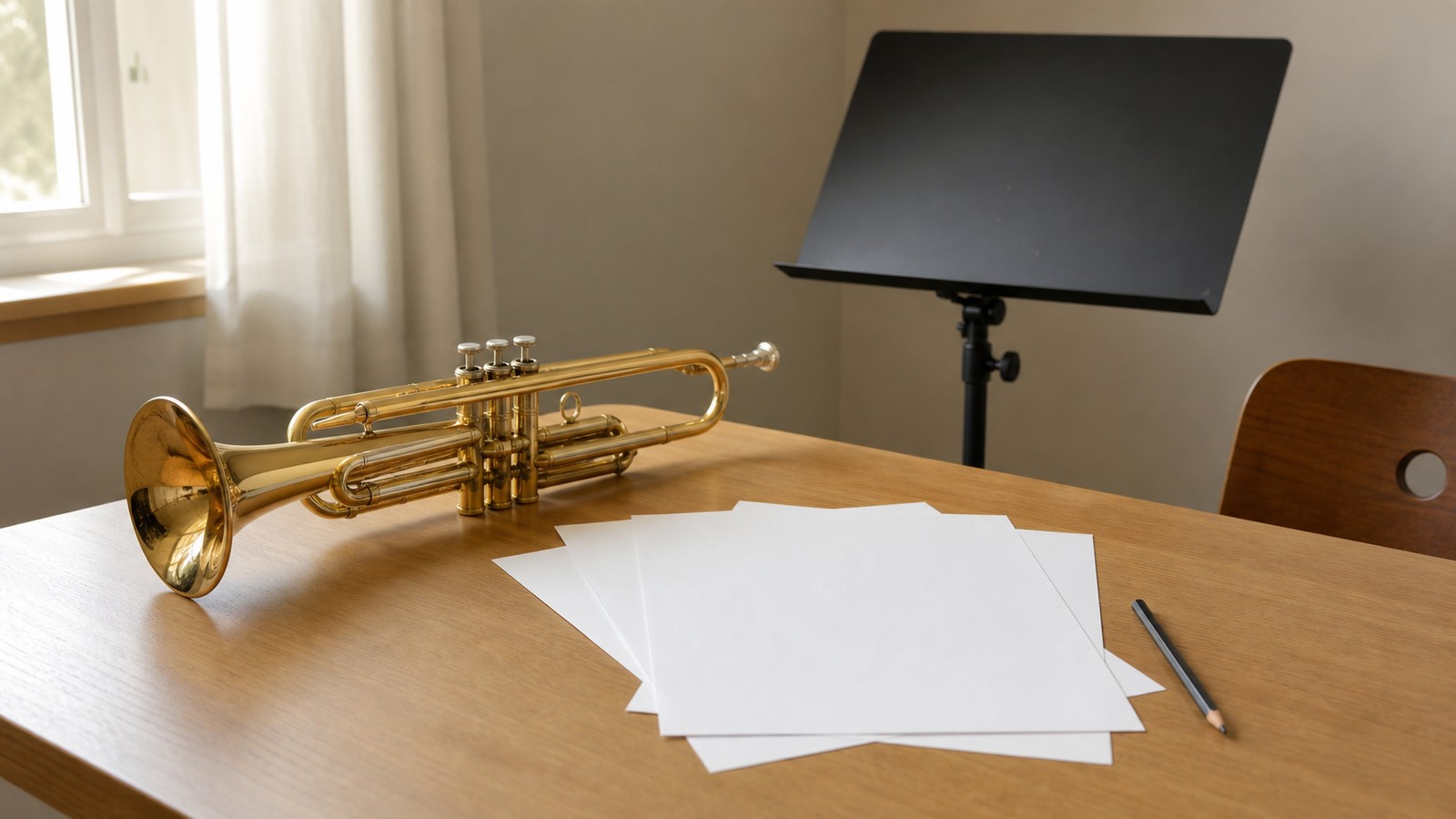
Free Trumpet Music Works Best When It Fits the Player
Free printable trumpet sheet music can be useful for beginners, but only when the music matches the student's range, rhythm skills, reading level, and instrument transposition. A page that looks easy may still include notes that are too high, rhythms that are too complex, or key signatures that create frustration. The best beginner printables are clear, legal to use, easy to read, and small enough to support steady progress. Parents and students should treat free music as practice material to choose carefully, not as a random stack of pages.
A: Yes, if it is legal, readable, trumpet-specific, and matched to the student's level.
A: They should stay inside the notes the student can play comfortably with good tone.
A: Sometimes, but B-flat trumpet transposition and range must be handled correctly.
A: Briefly, when helpful, but students should still learn note names and reading.
A: Look for public-domain status, creator permission, school resources, or clear usage terms.
A: Usually no. They are best as supplements to lessons or a sequenced method.
A: Beginners need to count steadily before adding complex rhythm and trumpet technique together.
A: Yes, as long as the arrangement fits trumpet range, breathing, and reading level.
A: Check source safety, page clarity, level, trumpet transposition, and whether the teacher approves.
A: A few well-chosen pages are better than a large folder of random music.
Beginner Music Should Start Narrow
A first trumpet player usually needs music with a small range, simple rhythms, and plenty of space to breathe. Many beginners are still learning how to make a stable sound, read note names, coordinate valves, and count steady beats. Music that moves too quickly can overload all of those skills at once.
Good beginner sheets often use stepwise motion, repeated notes, familiar tunes, or short exercises. They should let the student focus on tone and time rather than survival. A simple page played well is more valuable than a harder page played with tension.
Range is especially important. Early trumpet music should avoid pushing high notes before the player has healthy fundamentals. If a printable spends most of its time above the student's comfortable range, it is not beginner-friendly for that player.
Check That the Music Is for Trumpet
Trumpet is usually a B-flat transposing instrument, so music written for piano, flute, violin, or concert-pitch instruments may not sound in the expected key when played from the page. Beginner trumpet students should use music labeled for B-flat trumpet or reviewed by a teacher who understands transposition.
Legal Free Music Matters
Free does not always mean legal. Some printable music is shared with permission, some is public domain, and some may be uploaded without the right to distribute it. Students and families should look for music from legitimate educational sources, composer pages, public-domain collections, school resources, or sites that clearly explain usage rights.
This matters even for beginners. Respecting copyright teaches young musicians that music has creators. It also helps families avoid unreliable files, poor engraving, and downloads that may not be safe or useful.
Readable Printing Helps Practice
A beginner sheet should print clearly. Notes, rests, barlines, dynamics, and fingerings should be easy to see. If the page is blurry, cropped, covered in clutter, or squeezed too small, the student may make reading mistakes that have nothing to do with musicianship.
Use clean paper, full-size printing, and a stable music stand. Avoid reading from wrinkled pages, phone screenshots, or tiny printouts when possible. Good visual setup makes practice calmer.
Parents can help by organizing pages in a folder. Beginners often lose music or mix up loose sheets. A simple folder turns free printables into a usable practice library.
Fingerings Can Help or Hurt
Some beginner printables include fingerings under the notes. Fingerings can help early reading, but too many written fingerings may prevent the student from learning note names. A teacher can decide when fingerings are useful and when they should be removed.
Rhythm Level Is as Important as Notes
A piece with easy notes can still be too hard if the rhythms are complex. Beginners need music with clear steady values before syncopation, dotted rhythms, ties, and fast rests become frequent. Counting should feel achievable.
Students should clap or count a printable before playing it. If the rhythm cannot be spoken steadily, adding trumpet technique will make it harder. Rhythm-first practice keeps easy music from becoming guesswork.
Familiar Tunes Are Useful, With Care
Familiar melodies can motivate beginners because the student knows what the piece should sound like. That can help with phrasing and pitch recognition. Simple folk tunes, holiday songs, school melodies, and public-domain tunes can all be useful when arranged at the right level.
The risk is that students may play by memory instead of reading. That is not always bad, but it should not replace learning the page. Ask the student to name notes, count rhythms, and follow the measure numbers while playing.
Familiar tunes should still fit the trumpet. A melody that works easily on piano may need adjustment for trumpet range, breath, and key. A trumpet-specific arrangement is usually better than a direct copy from another instrument.
Free Exercises Can Build Fundamentals
Not every printable needs to be a song. Short note-reading exercises, rhythm lines, lip slur patterns, articulation drills, and scale fragments can be excellent for beginners. These pages may look less exciting, but they often build the skills that make songs easier later.
Avoid Pages That Jump Too Fast
Some free music collections mix levels without clear labels. A beginner may download a piece that starts simply but suddenly includes high notes, key changes, fast rhythms, or long phrases without rests. Look through the whole page before printing or assigning it.
A good beginner page should have reasonable phrase lengths. New trumpet players need places to breathe and reset the embouchure. Long nonstop lines can create pressure and poor habits.
Teacher Review Saves Time
A trumpet teacher can quickly judge whether a printable fits the student's current level. They can check range, rhythm, key, transposition, fingerings, and musical value. This saves students from spending a week fighting a page that was never appropriate.
Teachers can also suggest how to use the music. One page might become a tone study, another a counting exercise, and another a duet or performance piece. The right assignment turns free material into structured learning.
Students without private teachers can still ask a school band director, experienced player, or trusted music educator. A quick review is better than guessing.
Printing Does Not Replace a Method Book
Free printables are helpful supplements, but they rarely replace a well-sequenced method book or lesson plan. A method gradually introduces notes, rhythms, range, and musical skills. Random free pages may skip steps or repeat only what the student already knows.
Use Printables for Small Goals
A printable works best when it has a clear purpose. One page might practice the first five notes, another steady quarter notes, another slurs, and another a short performance melody. Naming the goal keeps the student from collecting pages without improving.
Small goals also make practice feel successful. A beginner can master one eight-measure tune, record it, or play it for family. That success builds confidence for the next page.
Watch for Unsafe Download Habits
Families should be cautious with unknown download buttons, file-sharing pages, and sites that hide the actual source of the music. A legitimate music page should make the file easy to identify and should not require strange installers. Safety matters as much as musical usefulness.
When possible, use trusted educational, public-domain, school, library, or composer sources. Keep files organized by title and level. This makes it easier to return to good pages instead of searching from scratch every week.
If a page looks suspicious or cluttered, skip it. There is enough beginner music available that students do not need to take risks for one tune.
Beginner Duets Are Especially Valuable
Simple duets can make free sheet music more engaging. A teacher, parent, sibling, or another student can play a second part while the beginner plays the melody. Duets teach listening, steady tempo, tuning, and ensemble awareness early.
The Best Free Pages Feel Clear
The best free printable trumpet music is clear in level, legal in source, readable on paper, and useful for a specific practice goal. It should help the student sound better, not just fill a folder. A beginner does not need hundreds of pages; they need the right few pages at the right time.
Choose music that supports tone, rhythm, reading, and confidence. If a printable creates strain or confusion, save it for later or replace it. Beginner progress depends on steady wins.
Organizing Pages by Skill Level
A useful printable folder should be organized by skill, not only by title. One section might hold first-note pages, another simple rhythms, another easy melodies, and another duet or performance pieces. This helps students choose the right kind of practice instead of grabbing the newest page.
Skill labels also help parents understand progress. A student may not need harder music every week; they may need a clearer tone on the same note group or steadier counting with familiar rhythms. Organization makes that development visible.
Keep a separate section for later pages. If a tune is too high or too rhythmically advanced, do not throw it away immediately. Save it for a future month so the student can return when the skills are ready.
Printing for Repeated Use
A page that will be practiced for more than a day should be printed cleanly and stored well. Hole-punching, folders, or page protectors can keep music from disappearing or tearing. Beginners practice more calmly when the page looks stable and familiar.
Why B-Flat Transposition Needs Attention
B-flat trumpet does not sound the same pitch that appears on the written page. Beginner trumpet music accounts for that so students can play with piano, backing tracks, or other instruments correctly. A random melody from another instrument may need transposition before it works.
This is one reason trumpet-specific printables are safer for beginners. The student can focus on tone, valves, and rhythm instead of accidentally learning a part that clashes with accompaniment. Transposition becomes a valuable skill later, but early music should remove unnecessary confusion.
Turning a Printable Into a Lesson
A free page becomes more valuable when it is used with a plan. First, count and clap the rhythm. Next, say note names or fingerings. Then play slowly for tone, and only after that add tempo or expression. This sequence teaches students how to practice rather than merely how to play one tune.
Teachers can also assign different goals on different days. Monday might focus on clean attacks, Tuesday on counting, Wednesday on breath marks, and Thursday on playing the piece for someone else. The same page can support several skills.
This approach keeps free music from becoming disposable. A printable is not only a download; it is a small practice environment. The student learns to notice details instead of rushing through the page once.
A Careful Final Filter
Before printing, ask four questions: is it legal, readable, trumpet-appropriate, and useful for the student's current goal? If the answer is unclear, choose another page. Free music should make practice easier to begin, not harder to organize.
Balance Fun With Fundamentals
Beginners often want recognizable songs, and that motivation is valuable. The best printable choices combine enjoyment with a clear skill, such as steady quarter notes, first slurs, repeated valve patterns, or comfortable breath marks.
A page can be fun and still teach something specific. When the goal is named, the student can enjoy the tune while also improving tone, rhythm, reading, or confidence. That balance keeps practice cheerful, focused, and useful for beginners daily.


