Intermediate Etudes Should Build Skill and Musicianship
The best trumpet etudes for intermediate players are not just harder pages with more notes. They are studies that build tone, rhythm, articulation, flexibility, endurance, reading, and musical judgment without pushing the player into constant strain. An intermediate trumpeter is usually ready for more structure than beginner songs, but not every advanced etude book is appropriate yet. A strong top 10 list should therefore include varied study types, not only famous titles. The goal is steady growth across the whole trumpet skill set.
A: It challenges one or two skills while still allowing healthy tone, rhythm, and control.
A: Usually yes, but the category and length should rotate with the student's needs.
A: No. Famous studies can be too advanced unless a teacher selects manageable sections.
A: One or two focused studies are usually better than several rushed pages.
A: They teach breath, tone, phrase shape, and musical expression.
A: They should be. Dynamics, direction, and sound quality matter in every study.
A: If slow practice cannot preserve tone, rhythm, and relaxed control, it is probably too hard right now.
A: Yes, especially for flow, articulation, rhythm, and sight-reading studies.
A: Yes. They isolate skills that appear in band, orchestra, jazz, and chamber music.
A: Use a balanced set of study types rather than chasing one famous difficulty list.
Lyrical Line Etudes
A lyrical etude teaches the student to play phrases, not just notes. Intermediate players need music that asks for smooth air, clean slurs, shaped dynamics, and expressive releases. This kind of study builds the sound that carries into solos, band parts, auditions, and ensemble playing.
Choose lyrical etudes that stay mostly within a comfortable range but include enough motion to challenge breath control. If the range is too high, the student may focus on survival instead of phrase shape. The best lyrical study leaves room for musical decisions.
Teachers often use vocal-style studies or adapted melodic material for this purpose. The exact source matters less than the assignment: play beautifully, breathe intelligently, and keep tone alive through the entire line.
Clear Articulation Etudes
Intermediate players should practice etudes that focus on clean starts, consistent note length, and matching articulation styles. Tonguing can become uneven when students move from simple quarter notes into faster repeated patterns. A good articulation etude exposes that unevenness in a manageable way.
Clarke-Style Flow Studies
Flow studies teach the fingers, air, and tongue to cooperate. They often use moving patterns that should sound even and relaxed rather than muscular. Intermediate players benefit from this because technical passages in real music require smooth motion, not panic.
The student should practice slowly enough that every note has a center. Speed is a result, not the first goal. If the sound becomes bumpy or the fingers tense, the tempo is too fast for that day.
Flexibility and Slur Etudes
Lip slur and flexibility etudes help players move between partials without squeezing. Intermediate students often discover that range and endurance improve when slurs become efficient. The study should ask for controlled motion through registers without encouraging pressure.
Good flexibility work sounds connected. The player should avoid jerking from note to note or letting pitch sag in the middle of a slur. Smooth air carries the phrase, while the embouchure adjusts with minimal drama.
These etudes should be used carefully. More is not always better. A short, focused flexibility study played well can be more useful than a long session that leaves the face tired.
Minor-Key Musical Etudes
Minor-key studies are useful because they teach color, intonation, and expressive contrast. Students who spend most of their time in bright major melodies may play minor music without enough character. An intermediate etude in a minor key asks the player to listen differently.
Interval Control Etudes
Trumpet players need to move cleanly across skips. Interval etudes train the ear and embouchure to find notes without sliding, guessing, or overblowing. They are especially useful for students preparing for honor band, jazz ensemble, or more exposed concert music.
The best interval studies combine accuracy with phrase shape. A page full of leaps should not sound like a mechanical drill. The player should hear where every interval is going and keep the tone connected.
Syncopation and Rhythm Etudes
Intermediate players often need targeted rhythm work. Syncopation, ties, offbeats, dotted rhythms, and rests can cause more trouble than the notes themselves. A rhythm etude helps the student build independence between counting and playing.
Students should count aloud, clap, subdivide, and use a metronome before playing. If the rhythm is not secure away from the trumpet, it will not become secure with valves added. Good rhythm practice feels a little slow and deliberate at first.
These etudes are valuable for concert band, jazz band, marching music, and chamber pieces. Strong rhythm makes every style easier.
Low-Register Tone Etudes
Intermediate students often chase higher notes while neglecting the low and middle register. Low-register etudes build relaxed air, full tone, and pitch stability. They also reveal whether the player is pinching the embouchure or letting the sound resonate.
Endurance and Pacing Etudes
Endurance etudes should teach pacing, not force. A good intermediate study may repeat patterns, hold the player in a moderate register, or require steady articulation across several phrases. The student learns how to conserve energy and stay relaxed.
The goal is consistency through the final line. If the sound collapses halfway through, the player should reduce tempo, dynamic, or repetitions. Endurance grows through efficient habits, not through heroic struggle.
Sight-Reading Style Etudes
Sight-reading etudes prepare students for real musical surprises. They should include moderate key changes, mixed rhythms, dynamic markings, and phrase shapes that require attention. The point is not to trick the player but to develop calm reading habits.
A student should scan before playing. Look for key, meter, repeats, difficult rhythms, highest notes, and places to breathe. This routine turns sight-reading into a process instead of a guess.
After playing, review the mistake pattern. Did rhythm, range, key signature, or counting cause the problem? That reflection makes the next reading stronger.
How to Choose the Right Level
An etude is too easy if it can be played well immediately with no musical questions. It is too hard if the student cannot keep tone, rhythm, and basic control after slow practice. The best intermediate etude sits between those extremes.
Teachers can adjust the challenge by changing tempo, dynamics, range expectations, or assignment length. A difficult etude may become useful if only four measures are assigned carefully. A simpler etude may become deeper when tone and phrasing standards rise.
Do Not Practice All 10 at Once
A top 10 list is a menu, not a daily checklist. Intermediate players should rotate study types across the week. One day might emphasize lyrical tone, another rhythm, another flow, and another endurance. Trying to practice every category every day can make the work shallow.
Progress comes from focused repetition. A student who spends ten honest minutes on one articulation etude may improve more than a student who rushes through five pages. Depth beats collection.
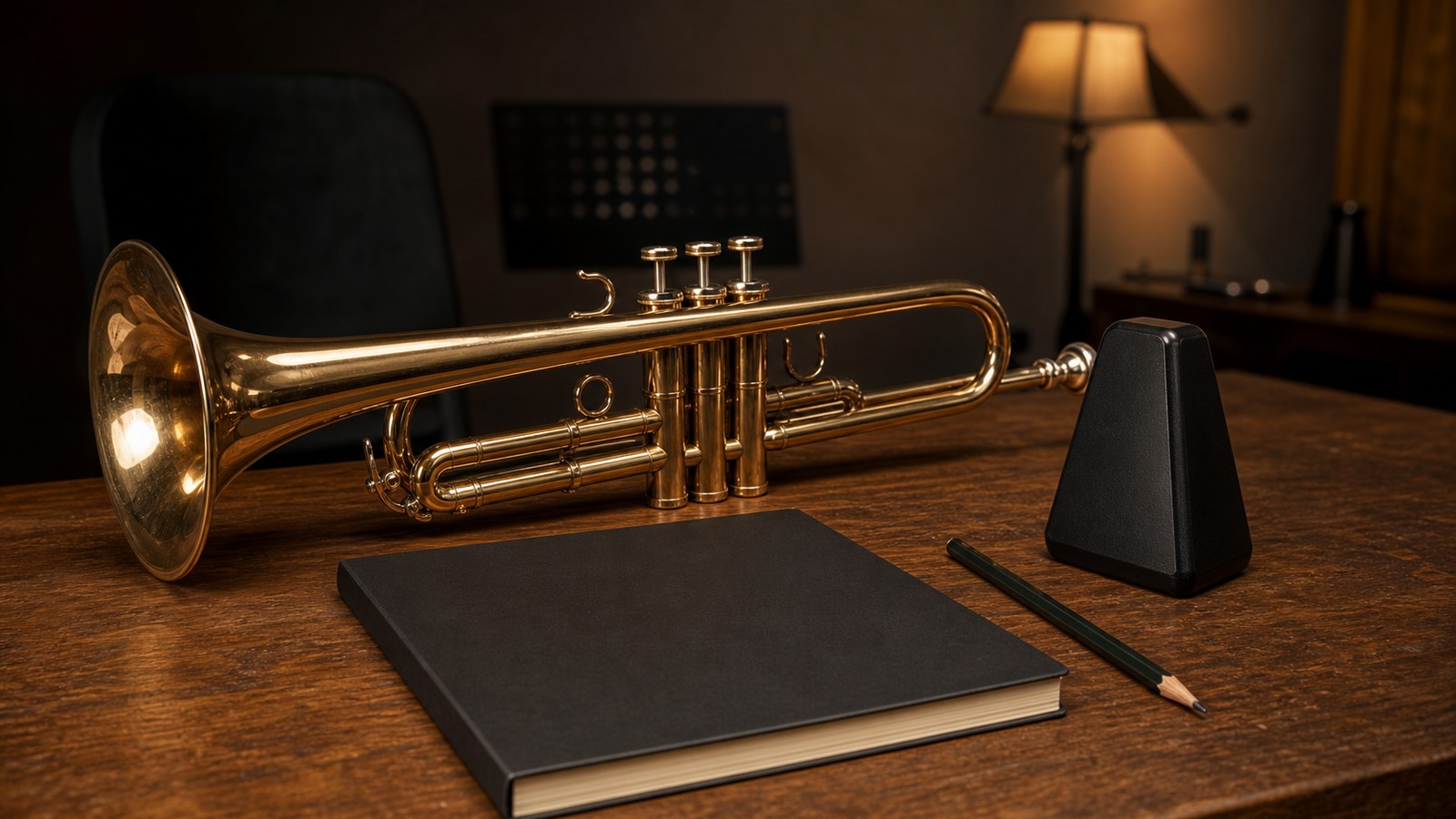
A practice journal can help. Write the etude type, tempo, challenge, and what improved. Over time, the student sees which skills need more attention.
Teacher Guidance Keeps Etudes Healthy
Some etudes can create tension if assigned too early or practiced too aggressively. A teacher can choose editions, mark breath spots, set tempos, and decide when to move on. This guidance keeps intermediate study challenging without becoming damaging.
The Best Etudes Sound Like Music
Even technical etudes should sound musical. Dynamics, phrasing, tone, and direction matter. If a student treats every study as a finger exercise, they miss the larger point of etude practice.
The best intermediate etudes teach players to solve technical problems while still making sound decisions. That is why etudes remain useful across generations. They compress musical challenges into focused studies.
Choose etudes that build the player you want to become. A balanced routine should create a trumpeter who reads calmly, plays with good tone, articulates clearly, moves flexibly, and makes phrases with intention.
Use the 10 Categories as a Balanced Set
The value of a top 10 etude list is balance. A student who practices only fast technical patterns may develop fingers without phrase shape. A student who practices only lyrical pages may struggle when ensemble music demands crisp articulation or rhythmic independence. The ten categories work together because each one covers a different weakness before it becomes a larger habit.
How to Practice One Etude Deeply
Choose one etude and give it several passes with different goals. First, check rhythm and fingerings slowly. Next, play for tone. Then mark breaths, dynamics, and phrase direction. Finally, record a complete take and listen for the one problem that would most improve the performance.
This process is slower than simply playing the page from top to bottom, but it teaches more. Intermediate students often improve when they stop asking how many etudes they touched and start asking whether one study sounded more controlled than it did yesterday.
Connecting Etudes to Real Music
Etudes become more meaningful when students connect them to ensemble parts. A syncopation study may prepare a jazz band entrance. A lyrical etude may improve a solo in concert band. A flexibility study may make slurred intervals in an audition excerpt feel easier.
Teachers can help by naming the connection directly. Instead of assigning an articulation etude as abstract homework, explain which passage in the student's music will benefit. That makes the study feel purposeful rather than separate from real playing.
Students can make their own connections too. After practicing an etude, look through current band music and find two measures that use a similar skill. This turns etudes into tools rather than isolated assignments.
When to Move On
An etude does not need to be perfect forever before the student moves on. It should be learned well enough that the main lesson is understood. If the study was about soft attacks, the player should show cleaner starts. If it was about rhythm, the counting should be steadier. Once the core skill improves, the teacher can decide whether to polish, rotate, or replace the page.
A Suggested Weekly Order
A balanced week might begin with lyrical tone, move to articulation, add flow studies, include one rhythm day, and finish with sight-reading or endurance work. Flexibility and low-register studies can appear in warmups throughout the week. The exact order should match the student's schedule and fatigue level.
The important point is variety with purpose. Intermediate trumpet growth is uneven when one skill gets all the attention. A thoughtful etude rotation keeps the player musical, technical, and healthy at the same time.
Using Tempo as the Assignment
Tempo can turn the same etude into several different assignments. A slow tempo may focus on tone, pitch, and clean breathing. A moderate tempo may reveal finger coordination and articulation. A faster tempo may test whether the player can stay relaxed without losing musical shape.
Intermediate students should avoid treating the printed tempo as the only successful tempo. If the page falls apart, slow it down and keep the musical goal intact. The right practice tempo is the one where improvement can actually happen.
Gradual tempo work also builds honesty. Moving a metronome up by small amounts shows whether the student is improving or merely hoping. That patience creates technique that holds under rehearsal pressure.
Record Etudes Occasionally
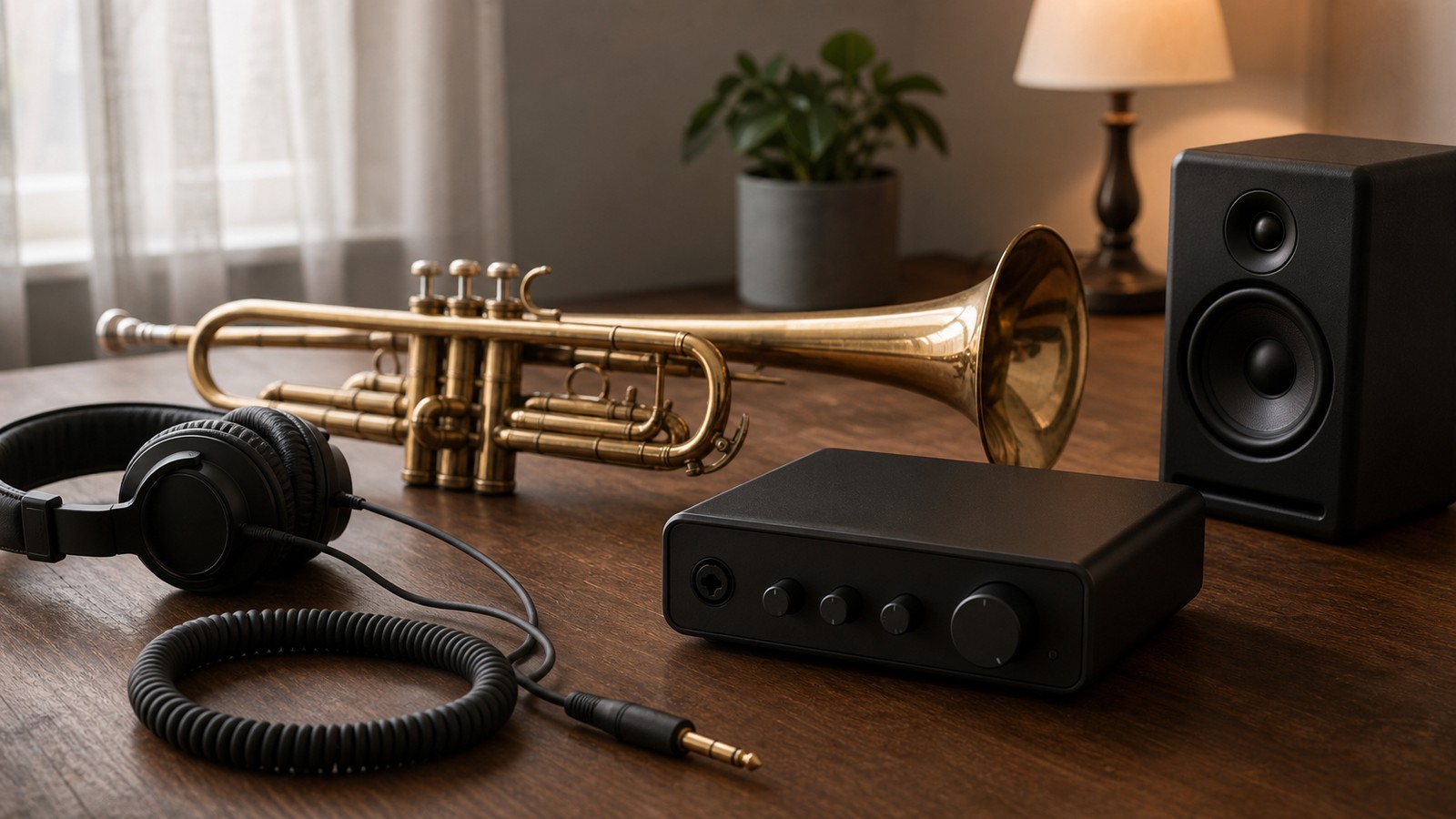
A recording reveals whether the etude sounds like music or only feels busy to the player. Listen for tone, time, releases, breaths, and phrase direction. Intermediate students do not need to record every practice session, but an occasional honest take can expose the next best improvement with surprising clarity. That feedback turns practice into evidence, not guesswork, and helps students choose smarter repetition each practice week consistently.