Learning Tuba From Breath to Ensemble Foundation
Learning tuba begins with a simple idea that takes time to master: the instrument needs relaxed, generous air. The tuba is large, but it should not make the beginner feel small or powerless. A new player learns to sit with balance, place the mouthpiece comfortably, breathe deeply, release sound without squeezing, and support the ensemble from the bottom of the harmony. The early goal is not to play loud or low at all costs. It is to make a steady, centered sound and connect that sound to rhythm, fingerings, listening, and daily practice. Step by step, the tuba becomes less like a huge object in the lap and more like a musical voice with patience, depth, and responsibility.
A: It can feel large, but patient breath work and good setup make it manageable.
A: It requires steady relaxed air, not uncontrolled blasting.
A: They should build a centered middle sound first, then expand downward.
A: The tuba often supports the ensemble's pulse and harmonic foundation.
A: Fifteen focused minutes can be enough at first when the routine is clear.
A: Most beginner tuba music is written in bass clef.
A: Yes. Poor posture restricts breathing and makes the instrument feel harder.
A: Use proper oil and ask a teacher or repair technician if sticking continues.
A: No. A controlled, centered, supportive sound matters more.
A: A steady tone, accurate rhythm, safe handling, and basic fingerings.
Set Up the Tuba Safely
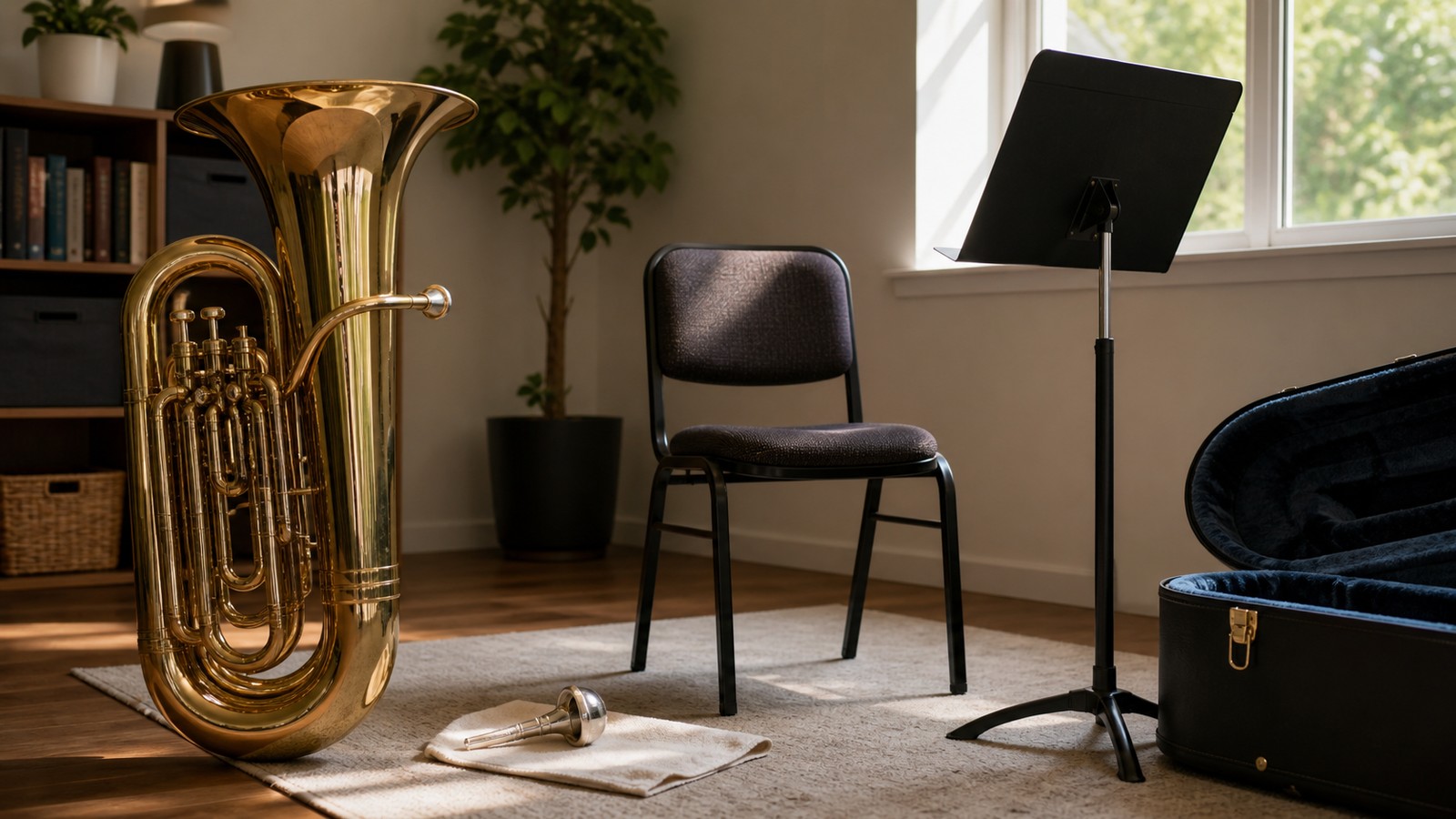
Begin with careful handling. Tubas are large, awkward, and easy to dent if they are dragged, tipped, or set down carelessly. Lift from secure areas, keep the instrument close to the body, and use a stand or case when it is not being played. A safe setup routine protects both the player and the horn.
Sit on a stable chair with both feet on the floor. The tuba should rest naturally, either on the chair, lap, or a stand depending on the model and player size. The mouthpiece should come to the face; the player should not bend down to meet it.
Before playing, check that the valves move and that the instrument is not pressing uncomfortably into the body. Comfort is not a luxury. It affects breathing, tone, and how long a beginner can practice without strain.
Understand the Role of Air
Tuba playing depends on air that feels open rather than forced. Beginners often think they must blast because the instrument is big, but a harsh push can make the sound unfocused. A better first habit is to breathe low, stay relaxed through the throat, and let the air move steadily.
Form a Relaxed Embouchure
The embouchure should be firm enough to focus the buzz but relaxed enough to vibrate. Set the mouthpiece gently, keep the corners stable, and avoid crushing the lips. The larger mouthpiece may feel forgiving at first, but pressure habits can still slow progress.
Start with comfortable middle-range pitches before chasing the lowest sounds. A centered middle tone teaches the player how air, lips, and instrument response should feel. Once that is stable, the low range becomes easier to build.
Make the First Sound
Take a calm breath, shape the lips, and release the sound with a simple dah syllable. The first tone may be airy or unstable, and that is normal. Reset gently rather than forcing the next attempt. The tuba rewards patience more than aggression.
Hold the sound for a few counts, then rest. Beginners need recovery time because the face and breathing muscles are learning new coordination. Resting is part of practice, not a sign of failure.
Listen for steadiness. A useful first sound does not need to be huge; it needs to be centered enough that the player can repeat it.
Learn Basic Fingerings
Fingerings depend on the key of the tuba and the music being used, so beginners should follow their teacher's chart. On many school B-flat tubas, early notes use simple open, first-valve, second-valve, and first-plus-second combinations. Accuracy comes from matching the chart to the sound, not from pressing buttons blindly.
Build Rhythm From the Bottom
Tuba players often provide the rhythmic foundation of a band. That means counting is not optional. Clap rhythms, count rests, and play simple patterns on one pitch before adding finger changes. A wrong rhythm in the tuba part can unsettle the whole ensemble.
Practice with a metronome at slow tempos. The goal is not to become mechanical, but to feel steady. Once the pulse is secure, the player can make musical choices without losing the foundation.
Develop Low Notes Gradually
Low playing should feel broad, not collapsed. Beginners sometimes loosen everything so much that the pitch becomes unfocused. Keep the air moving, maintain stable corners, and let the mouthpiece vibrate without excessive pressure.
Move downward by steps instead of jumping to the lowest possible sound. Each pitch should keep a core. If the tone disappears, return to a more comfortable range and rebuild the air.
A teacher can help separate normal beginner weakness from equipment or mouthpiece problems. Do not assume every low-range struggle is personal failure. Sometimes the solution is a better breath shape, sometimes it is a mouthpiece adjustment, and sometimes the instrument needs mechanical attention.
Practice Long Tones and Simple Patterns
Long tones teach breath control, tone quality, and patience. Play one comfortable pitch, hold it with a steady sound, rest, and repeat. Then use simple two- and three-note patterns to connect the tone to finger movement.
Read Bass Clef With Confidence
Most beginner tuba music is written in bass clef. Learn the staff slowly, connect each pitch to a fingering, and avoid guessing. Saying pitch names or fingerings before playing can help the eyes and hands coordinate.
Reading also includes rests and dynamics. Because tuba parts may have fewer moving notes than other instruments, every entrance matters. A well-counted entrance can make the entire group sound more confident.
Play Musically, Not Just Loudly
The tuba can be powerful, but power is only one color. Beginners should practice soft, medium, and full sounds so they learn control. A good band tuba player supports without covering the ensemble.
Listen to the players around you. The tuba part may align with low brass, low woodwinds, percussion, or the entire harmony. Understanding that relationship makes the part feel meaningful even when it looks simple.
Musical playing also means shaping phrases. Breathe where the line makes sense, start notes cleanly, and release with intention. The tuba is not just a sound machine; it is part of the musical sentence. When the player treats even simple bass lines as phrases, the whole ensemble sounds more alive.
Create a First Practice Routine
A beginner routine can be short and effective: safe setup, breathing, long tones, a fingering pattern, rhythm work, and one short line from a method book. Fifteen focused minutes can build more progress than a long session without a plan.
Keep the Instrument Working
Oil valves as instructed, keep the mouthpiece clean, and empty moisture carefully. Tubas need regular care because small mechanical problems can feel huge to a beginner. If a valve sticks repeatedly or a slide will not move, ask for help rather than forcing it.
Good storage is part of musicianship. Put the tuba where it cannot be bumped, stepped over, or knocked off balance. A beginner who protects the instrument is already learning the responsibility that low-brass playing requires.
What Progress Looks Like
Progress on tuba often feels like steadiness before flash. The sound becomes more centered, breaths become calmer, entrances become more reliable, and the player begins to hear how the part supports the group.
Do not measure success only by range or volume. A beginner who can produce a repeatable tone, count accurately, use correct fingerings, and listen across the ensemble is already becoming a real tuba player.
The tuba teaches patience, responsibility, and musical grounding. When those habits grow, the instrument's size stops being intimidating and starts feeling like strength. Progress may arrive quietly, but it changes how secure the entire band feels.
Learning to Hear the Bass Line
Tuba players should learn to hear how their part connects to everyone else. The bass line may match percussion, support low woodwinds, reinforce trombones, or outline the harmony for the entire band. When a beginner understands that job, simple notes feel less boring and more important. Listening turns the part into responsibility.
Using a Teacher, Director, or Section Leader
Feedback matters because tuba sound can be hard for beginners to judge from behind the instrument. A teacher can hear whether the tone is centered, whether attacks are late, and whether the player is using too much pressure. A director can explain how the part functions in the full ensemble.
Section leaders can help with practical habits: where to breathe, how to count a repeated pattern, and when to watch the conductor. Beginners should welcome that guidance. The tuba part may look simple on paper, but experienced players know how much detail makes it work.
Building Endurance Without Strain
Endurance grows slowly. A new player should alternate playing and rest, especially during long-tone work. Pushing through tired lips usually teaches pressure instead of strength. Good endurance feels like repeated relaxed coordination, not a fight.
Breathing exercises away from the instrument can help, but they should stay calm and natural. The goal is to make full breaths feel familiar. Once breathing is reliable, longer phrases become less intimidating.
A practice journal can track stamina honestly. Write down how long the player practiced, which exercise felt better, and where fatigue appeared. Patterns will show whether progress is steady or whether the routine needs adjustment.
Avoiding Common First-Year Habits
Common problems include overblowing, pressing too hard, ignoring rests, and treating low notes as loose sounds instead of centered pitches. These habits are fixable, but they become harder to change if the player repeats them for months. Slow, thoughtful practice is the best prevention.
Why Tuba Beginners Should Play Real Music Soon
Exercises build control, but real music gives the student a reason to care. Even a short melody or simple bass line can teach phrasing, rhythm, and ensemble imagination. Beginners should not wait until they feel advanced before playing something musical.
A good first piece should be slow enough to count, comfortable enough to sound centered, and short enough to repeat without fatigue. Success on real music turns fundamentals into motivation.
How to Practice When the Instrument Feels Huge
Some beginners need time to feel physically comfortable with the tuba. Break the routine into small pieces: set up safely, breathe, play one sound, rest, then play a short pattern. This makes the instrument feel less like one giant task and more like a series of skills the student can control.
Connecting Home Practice to Band Class
Home practice should prepare the student for what happens in rehearsal. If the band piece has repeated quarter notes, practice steady starts and releases. If the part has long rests, practice counting entrances. If a low note speaks slowly, isolate that pitch with calm air before returning to the full line.
This connection helps beginners understand why fundamentals matter. Long tones, rhythm drills, and fingering patterns are not separate chores; they are tools for sounding reliable when other people are counting on the bass line.
The tuba player who arrives prepared gives the ensemble confidence. That is a rewarding feeling, and it often becomes the motivation that keeps beginners improving. It also helps the student see that low-brass work is not hidden work; it is the floor the rest of the music stands on. That realization can make practice feel meaningful, especially when the band locks in around a steady bass line.