Concert Tuba and Sousaphone Serve Different Musical Jobs
Tuba and sousaphone are closely related, but they are not interchangeable in every situation. The concert tuba is designed mainly for seated playing in concert band, orchestra, brass ensemble, and indoor rehearsal settings. The sousaphone wraps around the player's body and was built for mobility, especially marching bands and parades. Both provide low brass foundation, both can play similar musical roles, and both require strong breath support. The difference is in shape, balance, projection, setting, and comfort. Choosing between them depends less on which is better and more on where the player will use it. A school musician may need both at different times: tuba for concert season and sousaphone for marching season.
A: Yes, it is a tuba-family instrument designed to wrap around the player for mobility.
A: Concert tuba is usually better for learning fundamentals in a stable seated position.
A: They are easier to carry while moving and project sound forward outdoors.
A: Yes. Many students use concert tuba indoors and sousaphone for marching.
A: They often do when both instruments are in B-flat, but response can still differ.
A: Neither is universally better; each is built for a different setting.
A: No. Fiberglass models are lighter than many brass models, but fit still matters.
A: Usually only if the player has a specific long-term marching or performance need.
A: It can, but concert tuba is usually preferred for indoor ensemble blend.
A: Use the instrument required by the ensemble, setting, and player's physical comfort.
The Basic Design Difference
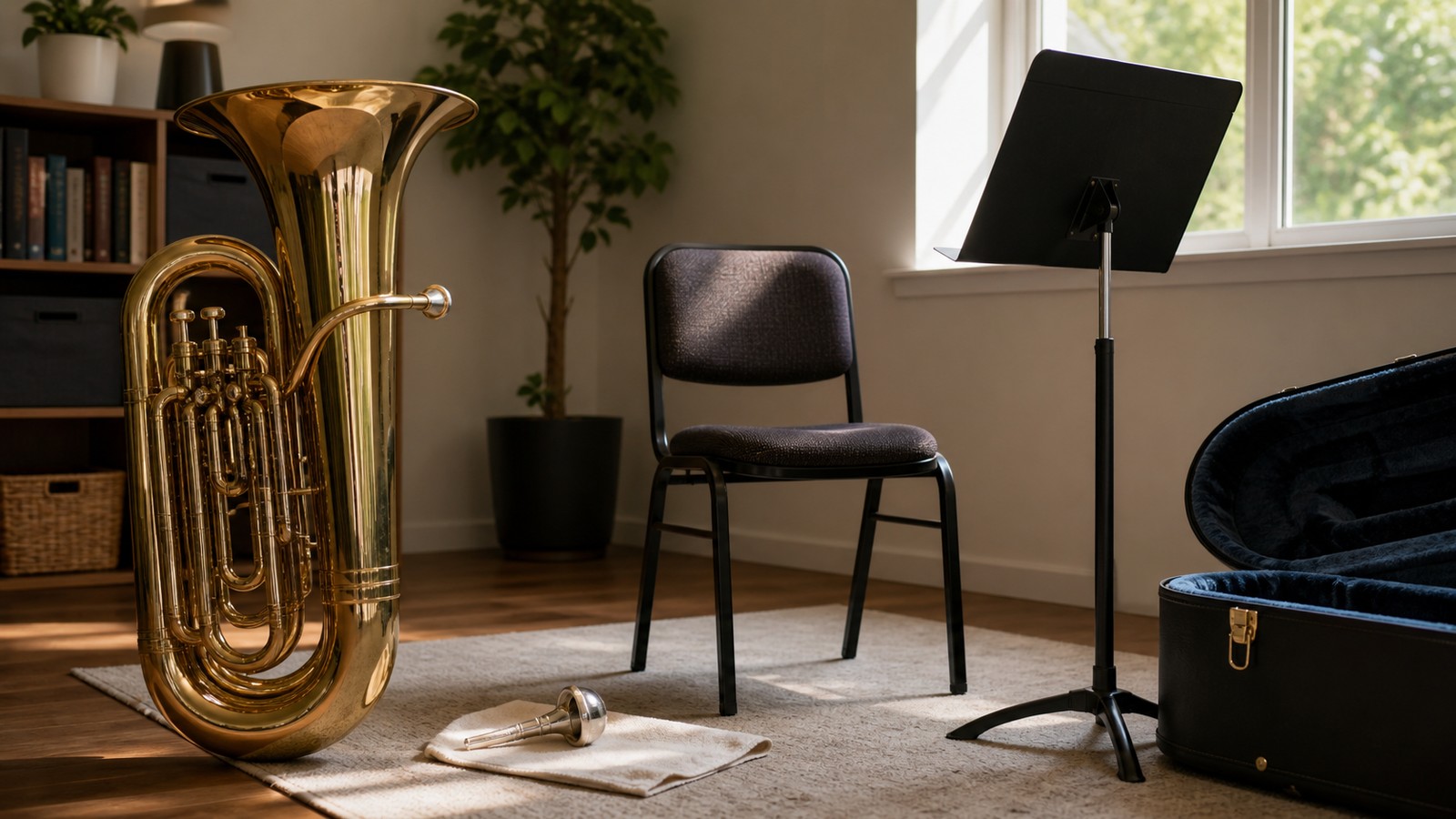
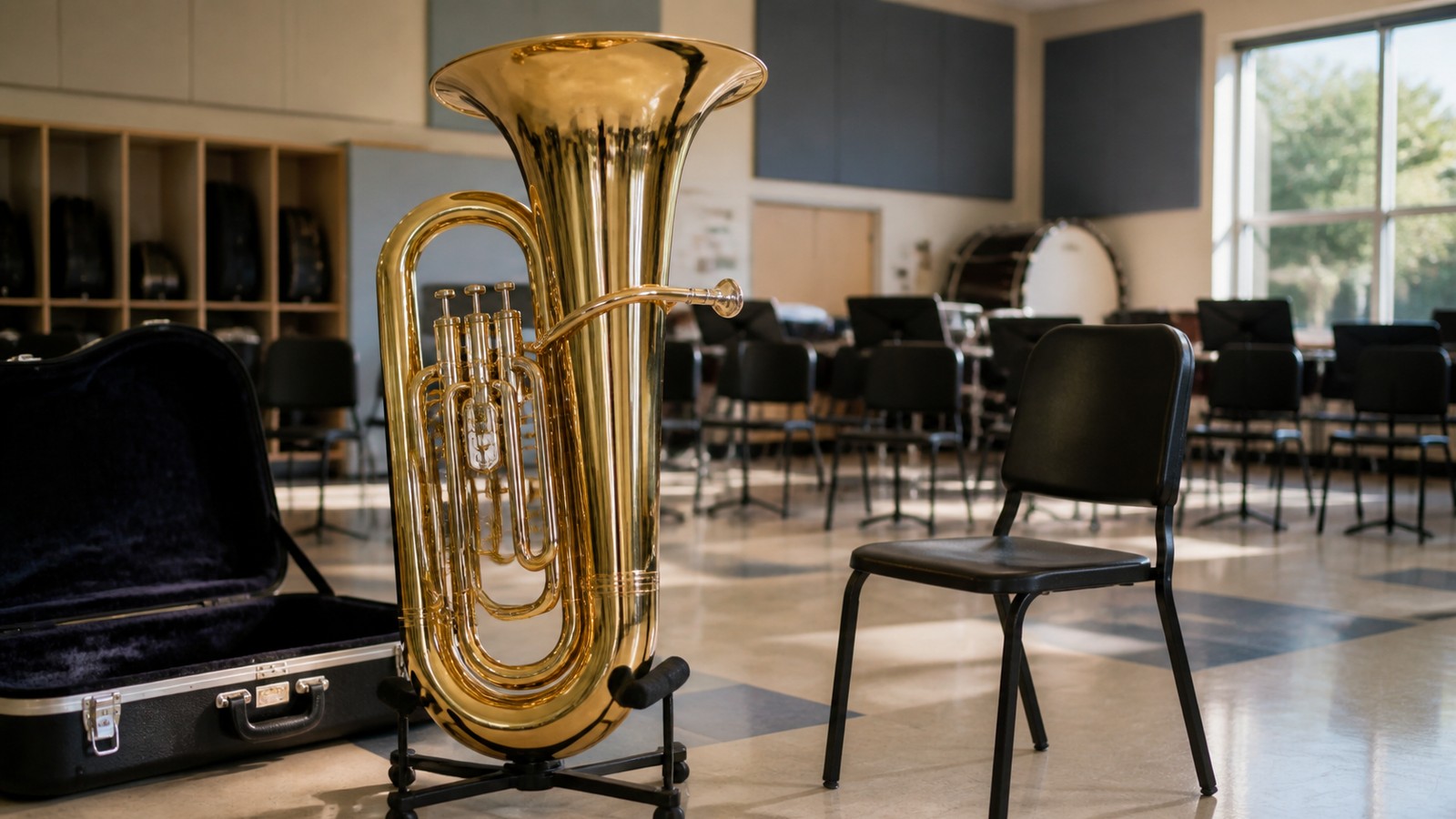
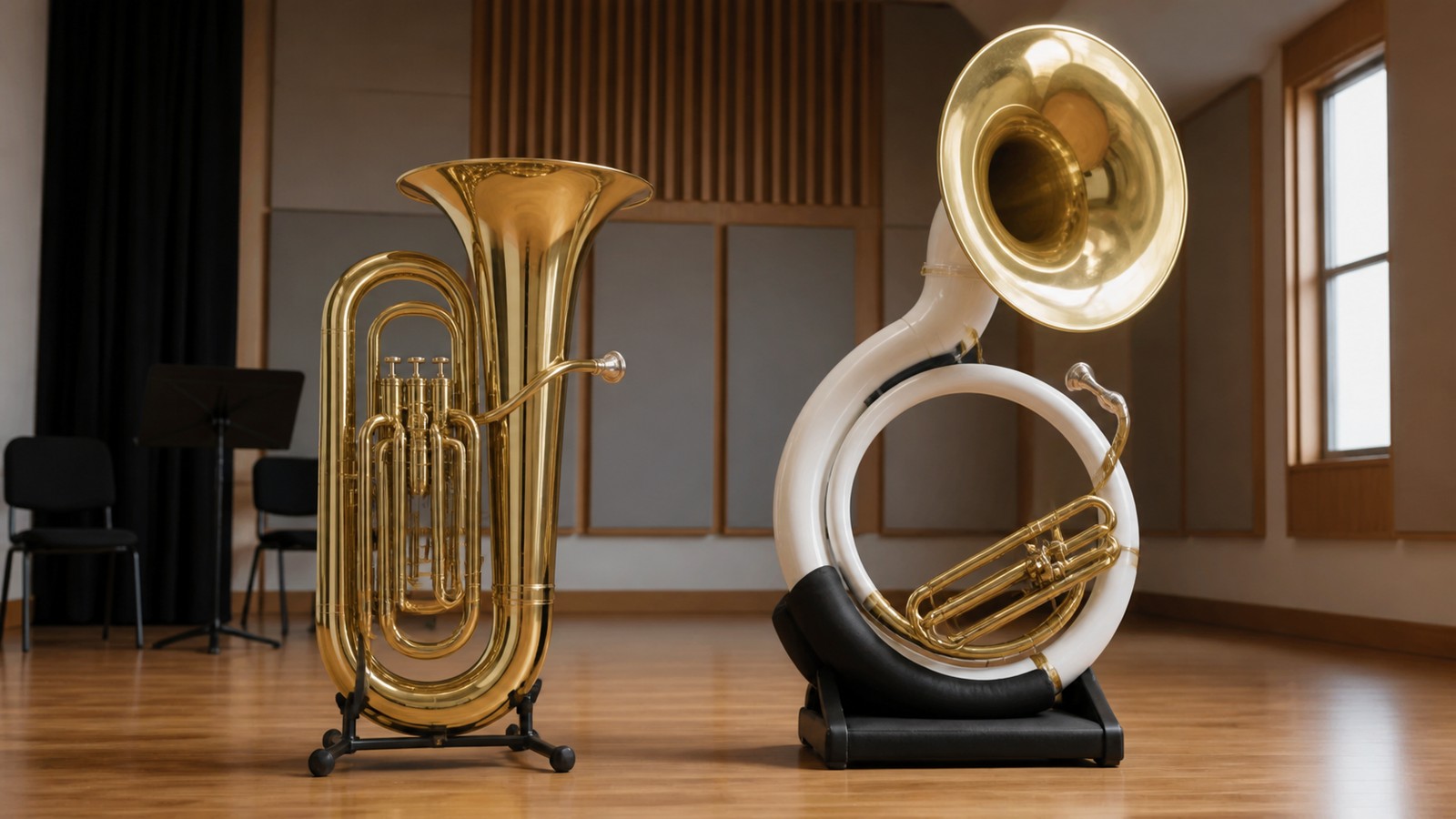
A concert tuba sits upright, usually resting on the player's chair, lap, or a stand. The bell points upward, and the player sits behind the instrument. This design suits indoor ensembles where tone blend, seating, and written parts matter more than movement.
A sousaphone wraps around the body, with the instrument's weight carried on the shoulder and the bell facing forward. That shape allows the player to walk, turn, and project sound outdoors. It is a tuba-family instrument adapted for motion.
The visual difference is obvious, but the practical difference is even more important. One instrument is optimized for seated ensemble playing, while the other is optimized for mobility and outdoor presence.
Sound and Projection
Concert tubas often produce a rounder indoor sound that blends into the ensemble. Sousaphones are designed to project forward, which helps in marching bands, football stands, and parades. That forward bell can make the sound feel more direct to listeners.
Comfort and Weight
A tuba can be heavy, but the weight is usually supported by the chair, lap, or stand. A sousaphone distributes weight around the body, which can be comfortable for movement but tiring over long rehearsals. Fit depends on player size, shoulder comfort, and how well the instrument balances.
Fiberglass sousaphones are lighter than brass models and common in school marching programs. Brass sousaphones can sound and feel different, but the extra weight matters. Comfort should be judged during real marching posture, not only while standing still.
Where Each Instrument Is Used
Concert band, orchestra, and indoor brass ensembles generally use concert tubas. The seated setup lets the player focus on tone, intonation, and blend. In these settings, a sousaphone would usually look and sound out of place.
Marching band, pep band, parades, and outdoor events often use sousaphones because the player must move and project. The wraparound body and forward bell make practical sense when the ensemble is spread across a field or street.
Some schools use marching tubas or convertible tubas instead of sousaphones. The exact choice depends on program tradition, budget, visual style, and available instruments.
Fingerings and Musical Parts
Many tubas and sousaphones used in schools are pitched in B-flat, so fingerings may feel familiar between them. That does not mean every instrument responds identically. Valve layout, resistance, intonation, and balance can differ enough that a player needs adjustment time.
Which Is Easier for Beginners?
For most beginners, concert tuba is the better first learning instrument because the player can sit, focus, and build tone without marching demands. The setup is more stable, and the teacher can address breathing, posture, and fingerings in a controlled environment.
Sousaphone can be easier for outdoor movement once the student has basic sound and rhythm. However, adding body weight, steps, memorized music, and visual drill too early can overwhelm a new player. Many students learn tuba first and add sousaphone later.
Marching Band Considerations
Sousaphone players need endurance. They carry the instrument for long rehearsals, maintain posture while moving, and still play with steady sound. The physical demand is part of the job, so schools should fit instruments carefully and teach safe carrying habits.
Outdoor sound also behaves differently. A player may feel isolated on a field, yet their sound may travel strongly forward. Listening, counting, and watching the conductor or drum major become essential.
A good marching setup includes safe storage, clear handling rules, and time for students to adjust. Sousaphones are durable in purpose, but they are still large instruments that can be damaged by careless movement.
Cost and Storage
Both instruments are expensive, and sousaphones require large storage space. Schools often own them because individual families rarely need a personal sousaphone unless the player is deeply involved in marching, college band, or specialized performance.
Can One Player Use Both?
Yes. Many students play concert tuba indoors and sousaphone outdoors. The musical foundation transfers: breathing, fingerings, rhythm, reading, tone concept, and ensemble responsibility all carry over.
The player should still expect a transition period. The sousaphone feels different on the body, and the bell direction changes how the player hears themselves. A few rehearsals of adjustment are normal. Good teachers help students transfer skills without pretending the two instruments feel identical.
Which Should You Choose?
Choose concert tuba for concert band, orchestra, lessons, indoor practice, and foundational study. It is the better choice for most beginners and for players who care about tone development in seated ensembles.
Choose sousaphone when the main job is marching, outdoor projection, or mobile low-brass support. It is a practical instrument for a specific setting, not a general replacement for a concert tuba.
If the player is in school, ask the director what the program uses. The answer may be decided by available inventory and ensemble season rather than personal preference. A practical choice that serves the ensemble will usually help the student more than a personal favorite that does not fit the program.
Common Mistakes in Comparing Them
One mistake is assuming the sousaphone is just a novelty version of tuba. It has a serious job and can be central to a marching band's sound. Another mistake is assuming concert tuba is too formal for students. It is often the foundation that makes sousaphone success possible.
Final Takeaway
Tuba and sousaphone share low-brass purpose, but their designs answer different musical problems. The tuba is built for seated tone, blend, and indoor ensemble control. The sousaphone is built for movement, projection, and outdoor visibility.
For a beginner, start with the instrument your program requires and the one that lets fundamentals grow. For many students, that means concert tuba first, then sousaphone when marching season calls.
The best choice is not about status. It is about using the right tool for the musical job while keeping the player comfortable, safe, and motivated.
How Directors Think About the Choice
Band directors often choose based on ensemble balance, storage, budget, visual needs, and student safety. A sousaphone may be perfect for the field but unnecessary in a concert setup. A concert tuba may sound best indoors but be impractical for a parade. Understanding that practical view helps families avoid treating the choice as a personal ranking.
Buying Advice for Families
Families should be cautious about buying either instrument without school guidance. A personal concert tuba can make sense for a committed player, but a personal sousaphone is usually a specialized purchase. Storage, transport, repair, and seasonal use all deserve attention.
If the school provides sousaphones for marching season, buying one privately may not be necessary. Money may be better spent on lessons, maintenance supplies, or a better mouthpiece chosen with a teacher. The most useful purchase is the one that supports the student's actual musical schedule.
Sound Goals for Each Instrument
On concert tuba, players should aim for blend, warmth, and steady pitch inside the ensemble. The sound should support without dominating. Indoor acoustics reward control because the bass voice can easily become too heavy.
On sousaphone, players need clarity and projection without harshness. Outdoor performance can tempt students to force the sound, but steady air still works better than blasting. A strong sousaphone sound travels because it is centered.
The best low-brass players adapt. They do not use the same exact sound concept in every setting. They listen to the room, field, ensemble, and musical purpose.
A Student's Seasonal Path
A common path is concert tuba during beginner study, sousaphone during marching season, then a return to concert tuba for indoor performance. Each season teaches something useful. Concert work develops tone and reading, while marching work builds endurance, memorization, and physical awareness.
The Practical Bottom Line
Choose the instrument that matches the season, ensemble, and player's body. If the student is learning fundamentals, concert tuba usually offers the clearest path. If the student is moving outdoors with a band, sousaphone solves a real performance problem.
A player who respects both instruments becomes more flexible. That flexibility is valuable because low-brass musicians are often asked to support different groups in different settings.
How Sound Feels to the Player
Players hear themselves differently on the two instruments. A concert tuba's bell direction can make the sound feel like it rises into the room, while a sousaphone sends much of the sound forward. Beginners should know that this change can feel strange even when they are playing correctly.
Rehearsal Habits for Switching
When switching from tuba to sousaphone, rehearse posture before adding music. Find the balance point, check valve-hand comfort, and practice breathing while standing. Once the body feels organized, add simple long tones and familiar patterns.
When switching back to concert tuba, listen for blend and indoor balance. The player may need less force than they used outdoors. A few careful rehearsals can reset tone concept and remind the student that projection is not the same as volume.
Directors can help by giving transition time rather than expecting instant comfort. The two instruments share a musical family, but the body experience is different enough to deserve respect.
A Confident Choice
A confident choice comes from matching the tool to the job. Concert tuba is usually the home base for tone and indoor musicianship. Sousaphone is the practical outdoor partner. Students who understand that difference can move between them without feeling that one is a lesser instrument.
The best low-brass players learn to value both. They bring the same counting, breath, and listening standards to each setting, then adjust shape, balance, and projection for the music in front of them.
When in Doubt, Follow the Ensemble Need
Personal preference matters, but ensemble need should decide close calls. If the student is preparing for concert assessment, the concert tuba deserves attention. If the student is preparing for a parade or field show, the sousaphone is the practical answer. Matching the season prevents frustration and helps the player practice the skills that will actually be used. That simple rule keeps the comparison grounded. It also reminds families that the choice may change during the year, and that flexibility is normal in school music programs. A student who understands the reason for each switch is less likely to feel confused by changing equipment. In practice, that understanding makes both instruments feel useful and keeps attention on music rather than shape. The result is a calmer, smarter musical choice for everyone involved.