Finding a First Tuba That Feels Playable, Durable, and Realistic
A beginner tuba is a different kind of first instrument purchase. It is large, expensive, and often tied closely to a school program, so the best choice is rarely a quick online bargain. New players need an instrument that speaks easily, supports steady low-register tone, fits their body, and can survive rehearsals, storage, and transport. Families also need to know whether buying makes sense at all, because many students begin on school-owned tubas before deciding whether a personal instrument is worth the cost. A good beginner tuba should make the player feel supported rather than overwhelmed. The right horn balances manageable size, reliable valves, solid intonation, repair access, and a sound that helps the student become the foundation of an ensemble.
A: Often no. Many students should start on a school-owned instrument until commitment is clear.
A: A 3/4-size tuba may fit smaller players better, but teacher guidance is essential.
A: They can be, but only after valve, slide, brace, and dent inspection.
A: B-flat is common in many school programs, though local teacher preference should guide the choice.
A: They require large amounts of material, complex valves, big cases, and skilled labor.
A: Yes. Poor fit can create posture strain and make breathing harder.
A: Valve reliability, slide movement, air seal, and structural condition matter most.
A: Brand helps when it brings repair support, consistency, and teacher trust.
A: Valve oil, slide grease, cleaning tools, a safe case, and teacher-approved mouthpiece basics.
A: Test with a teacher, inspect carefully, confirm support, and avoid rushed online purchases.
What a Beginner Tuba Needs to Do
A first tuba should respond without forcing the player to overblow. Beginners are still learning how to breathe deeply, release steady air, and keep the embouchure relaxed, so an instrument that feels stuffy can create bad habits quickly. The best beginner tubas speak clearly in the middle and lower range, with valves that move smoothly and tuning that a teacher can manage.
Durability is just as important as tone. A tuba may be carried through crowded halls, placed in a band room storage rack, or shared by multiple students. Thin braces, weak valve action, or fragile cases can turn a promising purchase into a repair project.
A beginner tuba should also fit the musical setting. School band players usually need a concert tuba that blends with a section, not a specialty horn chosen for advanced solo work. Practical fit matters more than impressive specifications.
Why Many Students Start on School Tubas
Because tubas cost far more than many other beginner instruments, school-owned horns are common. This can be a sensible path. The student learns the basics, the family avoids a major purchase during the trial period, and the director can place the player on an instrument that works for the ensemble. If the student later becomes committed, a personal tuba can be chosen with much better information.
Size, Weight, and Body Fit
Beginner tubas come in different body sizes, and those sizes affect comfort. A 3/4-size tuba may suit younger or smaller students because the instrument sits closer to the body and feels easier to manage. A 4/4 tuba can offer a fuller sound, but it may be too large for some beginners to hold comfortably without tension.
Fit should be tested while seated in playing position. The mouthpiece should meet the player naturally, the right hand should reach the valves without strain, and the player should not have to twist the torso just to find the leadpipe. Poor fit can make breathing harder before the first note begins.
Valves and Mechanical Reliability
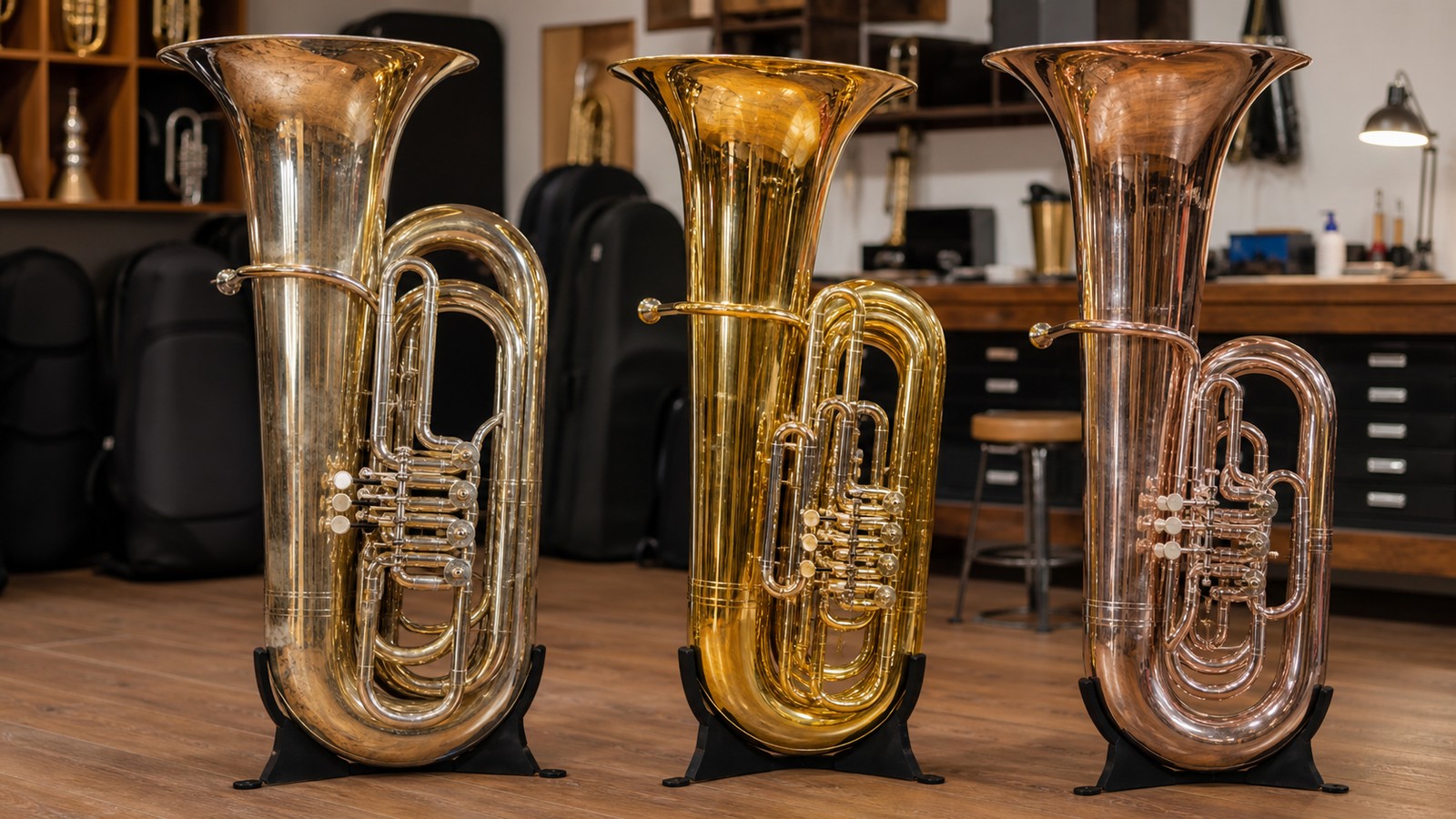
Most beginner tubas use piston valves, though rotary-valve tubas are also common in some traditions. Either can work, but the valves must be smooth, quiet, and dependable. Sticky valves frustrate beginners because they interrupt rhythm and make the player blame themselves for mechanical problems.
Valve compression also matters. If the valves leak air, the instrument may feel weak or unfocused. A repair technician can evaluate this better than a new player can. For used tubas, valve condition is one of the most important inspection points.
Students should learn simple care early: oil valves correctly, avoid eating right before practice, and keep the instrument capped and stored safely. Good mechanical habits extend the life of the horn.
Common Keys for Beginner Tubas
In many American school programs, B-flat tubas are common beginner choices because they fit method books and ensemble expectations. C tubas, E-flat tubas, and F tubas have important roles, but they are usually not the first default for a beginning school player unless a teacher has a specific reason.
New, Used, Rental, or School-Owned
Buying a new beginner tuba gives the cleanest warranty and the least uncertainty, but the price can be high. Used tubas can save a great deal of money, yet they require careful inspection for valve wear, dented branches, loose braces, and tuning-slide issues.
Rental options vary widely because tubas are expensive to stock and ship. Some families rent from a local store, while others rely on the school. The safest route is usually the one that includes repair support, teacher approval, and clear responsibility for maintenance.
Brands Worth Comparing
Yamaha, Jupiter, Eastman, King, Conn, and Miraphone are names students may encounter while comparing beginner or school-friendly tubas. The best brand depends on local repair access, model condition, teacher preference, and budget. A respected name helps, but it does not replace inspection.
Miraphone often appears in conversations about higher-quality rotary tubas, while Yamaha and Jupiter are common in student and school settings. King and Conn models have long histories in American band programs. Eastman has become visible in many school and college environments.
For a first player, the question is not which brand has the most prestige. The question is which specific instrument is playable, serviceable, and appropriate for the student's current level.
Used Tuba Inspection Points
A used tuba should be checked for large dents in the bows, loose solder joints, stuck slides, valve wear, missing caps, and signs of rough school use. Cosmetic wear is normal, but structural damage can be expensive. The bigger the instrument, the more important professional inspection becomes.
Accessories That Actually Help
A beginner needs valve oil, slide grease, a mouthpiece brush, a snake or cleaning kit, and a safe way to transport the instrument. A tuba stand can help some students at home, especially if holding the instrument causes tension. A sturdy case or gig bag matters, but protection should come before convenience.
Mouthpiece choice should stay conservative at first. A teacher can recommend a size that helps the student develop tone without making the low register feel impossible. Chasing a huge mouthpiece too early can make response slower and practice more tiring.
Budget Expectations
Beginner tubas are expensive because they use a lot of brass, large cases, complex valve assemblies, and significant labor. Even used student tubas can cost enough that a family should pause before buying. This is one reason school instruments remain so important.
A low price deserves careful attention. Some very cheap tubas are hard to repair, poorly aligned, or built with soft parts that wear quickly. A more expensive but serviceable used horn can be a better long-term value than a bargain that cannot stay in playing condition.
Families should budget for maintenance as well as purchase. Valve service, dent work, cleaning, and case repair can add up. A tuba that comes from a dealer with support may cost more upfront but reduce risk.
How to Choose With a Teacher
A tuba teacher or band director should be involved before a family buys. The teacher can judge whether the horn fits the student's body, whether the sound is appropriate, and whether the model works in the local program. That guidance is especially valuable because online photos tell very little about how a tuba actually plays.
Final Buying Advice
The best beginner tuba is usually the most practical reliable horn the student can play comfortably. It does not need to be the largest, shiniest, or most expensive option. It needs to respond, stay in working order, and help the player build the deep, steady sound that makes the tuba so important.
Start with the school program, compare realistic options, and inspect used instruments carefully. If buying feels premature, use a school horn until the student's commitment is clearer. A patient decision is much better than a rushed purchase.
When the right tuba is chosen, the student can stop worrying about the size of the instrument and start learning its role. That role is powerful: supporting harmony, rhythm, and ensemble confidence from the bottom up.
How Students Know the Tuba Fits
A good fit is visible before the student plays a full exercise. The player should sit upright, breathe without folding forward, reach the valves easily, and keep the mouthpiece at a comfortable height. If the student has to twist the neck, lift the shoulders, or hold the instrument's weight with constant effort, the tuba may be working against them. Fit does not need to be perfect on the first day, but it should allow healthy fundamentals.
Working With School Inventory
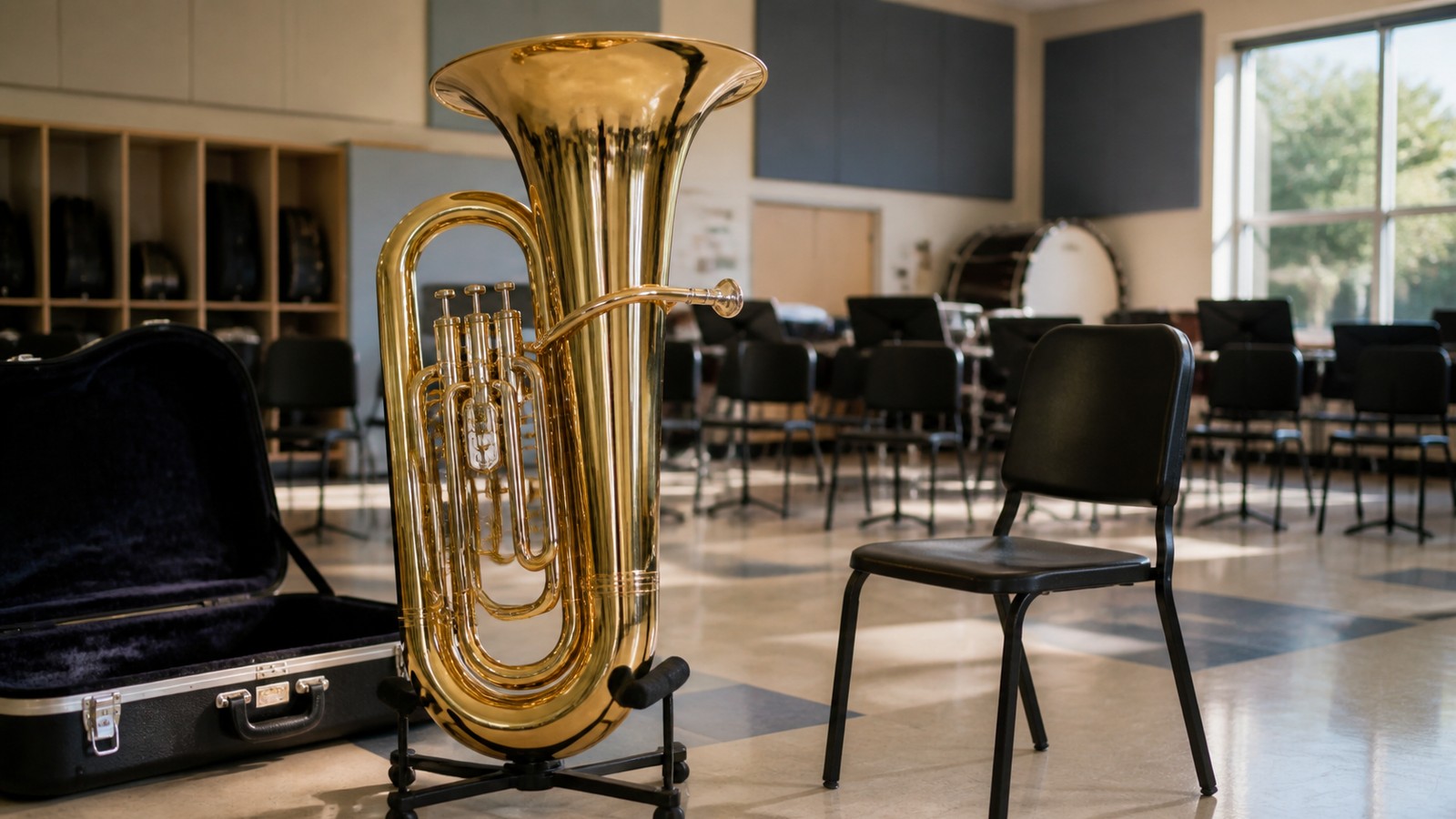
School instruments can be a blessing when they are maintained. A director may choose one tuba for concert band, another for home practice, and a sousaphone or marching tuba for outdoor season. That shared inventory can spare families from buying too soon while still giving the student access to appropriate equipment.
The challenge is consistency. A student who plays one horn at school and another at home may notice different valve feel, response, or tuning. That is manageable if the teacher explains the differences. Beginners should learn that adjustment is normal, not a sign that they are doing everything wrong.
Planning for Musical Growth
A beginner tuba should not trap the player at the first level. If the student is progressing quickly, the instrument should still support better tone, wider dynamics, and more secure pitch. A very limited horn can make the second or third year harder than necessary.
At the same time, growth does not require a professional purchase right away. Many students can learn for years on a solid school or student tuba. The important sign is whether the instrument responds honestly to improved technique.
Teachers can help families recognize the difference between a student outgrowing an instrument and a student needing more practice. That distinction can save a great deal of money.
When Waiting Is the Smarter Choice
Waiting to buy can be wise if the student is brand new, still growing, or unsure about long-term interest. It can also be wise when the available used tubas are questionable or the family has not found a trusted teacher to inspect them. A delayed purchase is not a lack of commitment. Sometimes it is the best way to make a better commitment later.
A Strong First-Tuba Decision Process
The strongest process is simple: ask the director, test the fit, inspect the mechanics, compare realistic prices, and confirm repair support. Each step removes a different kind of risk. Skipping any one of them can lead to a horn that looks impressive but is difficult to own.
A beginner tuba should make daily playing possible. If it supports healthy posture, steady breath, smooth valve work, and teacher-approved sound, it is doing its job. The student's musicianship can grow from there with confidence.
The Best Beginner Tuba Is the One That Gets Used
A tuba can be technically impressive and still be the wrong beginner choice if it discourages practice. The right first horn should feel safe enough to handle, comfortable enough to sit with, and responsive enough that a student hears progress. That daily usability is what turns a large purchase or school assignment into actual musicianship.