Proper Trombone Position Starts With Balance
Learning how to hold and position the trombone properly makes the instrument easier to play, easier to breathe through, and easier to control. The trombone is long, front-heavy, and built around a moving slide, so posture and hand position matter from the first lesson. A good setup lets the left hand support the instrument, the right hand move the slide freely, the mouthpiece meet the face without strain, and the body stay open for breathing. Proper position is not stiff; it is balanced, repeatable, and comfortable enough to support good sound.
A: The left hand supports most of the weight so the right hand can move the slide.
A: Yes. Bring the instrument to you instead of bending down to the mouthpiece.
A: It may be carrying weight or gripping the slide instead of guiding it lightly.
A: High enough that your head stays level and your eyes can read without slumping.
A: Yes, but the same balance, breath, hand position, and slide-path principles apply.
A: Ask a teacher for setup help, especially for younger players or smaller arms.
A: Not necessarily. Use a natural angle that supports comfort, breath, and slide clearance.
A: Yes. Collapsed posture can restrict air and make the instrument feel heavier.
A: It shows shoulder height, head angle, slide path, and leaning habits immediately.
A: Good position frees breathing, supports the horn, and lets the slide move accurately.
Holding Trombone Is About Balance
The trombone should feel balanced between the player's body, left hand, and natural arm position. If the instrument feels like it is falling forward, the player may grip too hard, pull the mouthpiece into the face, or tense the shoulders. Balance comes before slide speed.
Beginners often think holding the trombone is just a matter of strength. It is really a matter of setup. When the chair, stand, arms, and instrument angle are organized, the horn feels much lighter. That matters because less physical strain leaves more attention for sound, slide position, and rhythm.
Set the Chair and Stand First
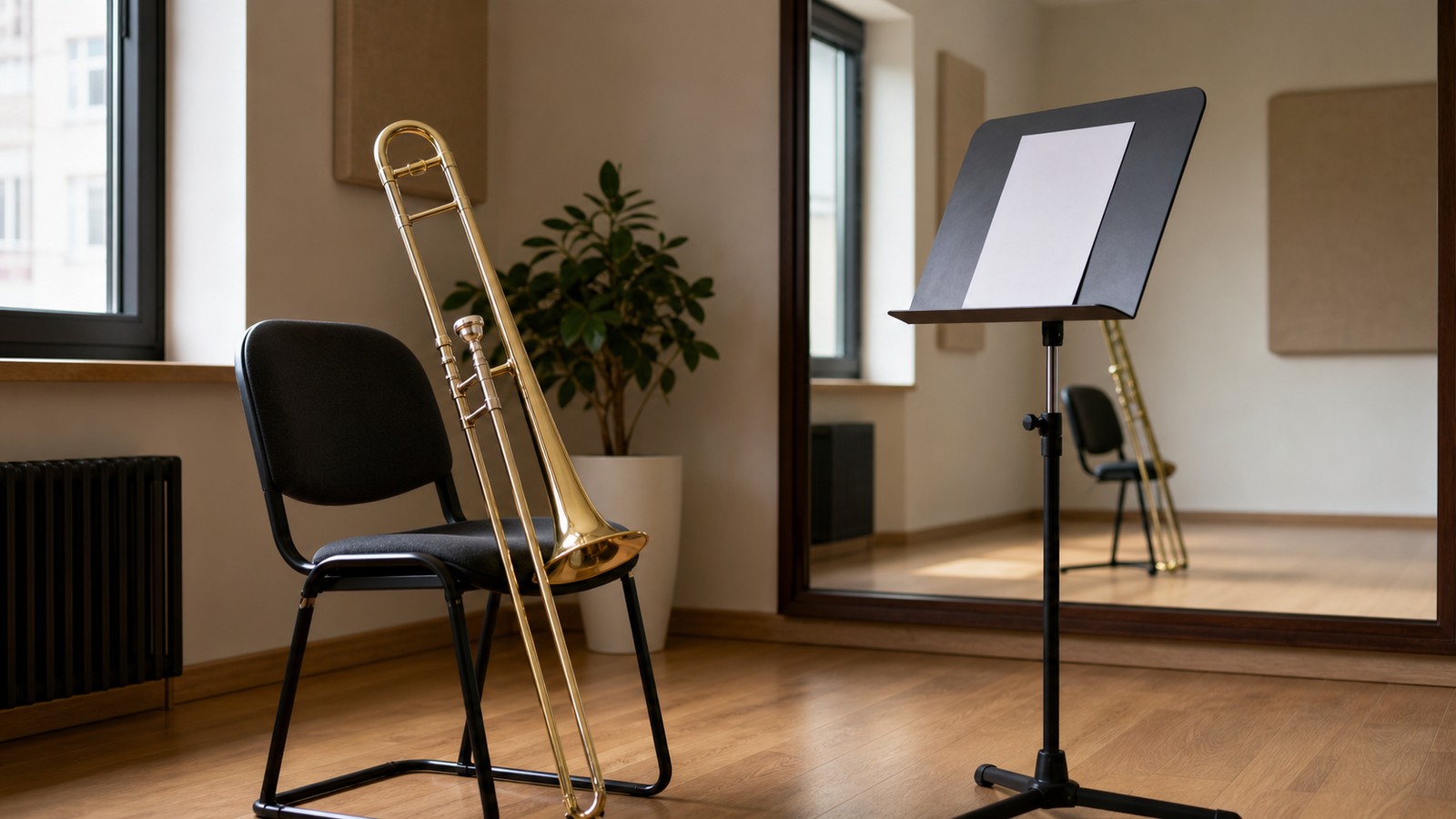
Before lifting the trombone, set the chair and music stand so the body does not have to twist. The stand should be high enough that the player can read with the head level, not dropped toward the chest. A poor stand height can ruin an otherwise good playing position. The player should be able to see the music without pulling the bell, neck, or eyes out of alignment.
Bring the Instrument to the Face
The trombone should come to the player rather than the player collapsing toward the trombone. Bring the mouthpiece to the lips while keeping the head upright and the chest open. This supports breathing and keeps the neck from working too hard.
If the student leans forward every time they play, the instrument may be too low or the stand may be pulling the eyes down. Reset the setup before blaming embouchure or tone. A better posture can improve sound immediately.
The mouthpiece should meet the face at a natural angle. Every player's face shape is different, so the exact angle may vary. The goal is comfort, seal, and airflow without pushing the head out of alignment. If the mouthpiece feels like it arrives from the wrong direction, adjust the whole instrument position rather than twisting the neck.
Left Hand Carries the Weight
The left hand supports the trombone around the brace area near the mouthpiece and bell section. It should hold the instrument securely enough that the right hand does not have to carry weight. This frees the slide hand for smooth movement.
A tense left-hand grip can travel into the wrist, forearm, shoulder, and embouchure. The hand needs security, not squeezing. Students should feel that the horn is controlled without clamping every finger. If the left hand gets tired immediately, the player may be holding the instrument too far from the body or letting the bell section pull forward.
Right Hand Guides the Slide
The right hand should guide the slide lightly. It is not a handle for holding up the trombone. When the right hand carries weight, slide motion becomes heavy, late, and inaccurate. A clean right-hand setup should make first to third position feel easy before the player worries about fast passages.
Keep the Wrist Relaxed
A relaxed right wrist helps the slide move in a straight, efficient path. If the wrist locks, the player may push the slide downward, twist it sideways, or overshoot positions. The motion should feel guided rather than forced.
Different teachers describe the slide grip in slightly different ways, but they usually agree on lightness. The fingers should control the slide without grabbing tightly. A grip that looks strong can actually slow the hand down.
Students can check the wrist by moving slowly between first and third position. If the slide scrapes, wobbles, or dips, the hand may be too tense or the arm path may be uneven.
Let the Slide Move Forward
The slide should travel forward and back along its natural path. Beginners sometimes drop the hand as the slide extends, which pulls the slide out of alignment and can make positions less accurate. Think forward, not down. A straight slide path also protects the instrument from unnecessary side pressure.
The elbow can open naturally as the slide extends. The shoulder should not lunge or rise. A clean arm path makes long positions easier and protects the slide from unnecessary stress.
Bell Angle Should Feel Natural
The bell does not need to point dramatically high or low. A natural bell angle lets the mouthpiece meet the face comfortably and keeps the slide clear of the body. The best angle is the one that supports sound, breathing, and relaxed hands. If the bell angle changes every time the slide moves, the support hand is probably not stable enough yet.
Posture Opens Breathing
Good trombone posture leaves room for breath. Sit or stand tall without locking the body. The ribs should feel available, the shoulders should stay relaxed, and the head should balance over the spine.
A collapsed posture can make the instrument feel heavier and the sound smaller. It also encourages the player to use pressure instead of air. Better posture does not guarantee great tone, but it removes a common obstacle. Students often hear the difference as soon as they reset the ribs and bring the horn up to them.
Breathing should feel direct and uncramped. If the player has to raise the shoulders to inhale, the setup may be too tight. Reset the body before playing louder or longer.
Avoid Shoulder Tension
The trombone's length can make beginners lift the shoulders without noticing. Raised shoulders restrict breathing and make the slide arm feel stiff. The shoulders should remain broad, low, and quiet while the arms do their jobs.
A mirror can help reveal tension. If one shoulder is higher than the other or the right shoulder reaches forward with every slide movement, slow down and rebuild the position.
Sitting and Standing Feel Different
Players should learn both seated and standing setup. Sitting is common in band and orchestra, while standing may happen in lessons, solos, jazz, marching contexts, or practice. The same principles apply, but the body's balance changes.
When sitting, use enough chair support without slumping into the backrest. Keep both feet grounded and avoid crossing legs. The slide needs space in front of the body.
When standing, distribute weight evenly and avoid locking the knees. The instrument should still come to the face, not pull the head forward. Standing should feel alert, not rigid.
Arm Length Affects Setup
Younger players and smaller beginners may need extra attention to reach outer positions comfortably. If sixth or seventh position causes the shoulder to lunge, the player may need careful teacher guidance, alternate strategies, or a different instrument setup. Reaching should not pull the mouthpiece away from a steady embouchure or make the torso chase the slide.
Watch Long Slide Positions
Third position and beyond reveal posture problems quickly. If the player has to lean, twist, or chase the slide, the starting position may be wrong. Good first-position setup makes the rest of the slide path more reliable.
Long positions should extend from the arm, not the whole torso. The body can remain balanced while the slide moves. This helps accuracy, tone, and endurance.
Keep the Head Neutral
The head should not jut forward, tilt sharply, or tuck down toward the mouthpiece. A neutral head position keeps the airway open and reduces strain. The music stand, chair, and instrument angle should support that neutral position.
Students often adjust the head because the stand is too low. Raising the stand can fix the problem faster than repeated reminders to sit up. The eyes should move to the music, but the head should stay balanced.
A neutral head also helps the mouthpiece pressure stay more consistent. If the head reaches forward, the instrument may press unevenly into the face.
Use Mirror Checks
A mirror gives immediate feedback on posture, shoulder height, slide path, and head angle. Short mirror checks are more useful than long sessions staring at appearance. Look, adjust, then return attention to sound.
Build the Habit With Slow Notes
Position habits develop best during easy playing. Use long tones, slow scale fragments, and simple melodies while checking balance. If the music is too hard, the player may abandon posture just to survive the notes.
Teachers can ask students to reset before each repetition: feet, chair, stand, left hand, right hand, head, breath. The sequence becomes automatic with practice.
Common Beginner Position Problems
Common issues include holding the bell section too low, gripping the slide tightly, leaning toward the stand, carrying weight with the right hand, and dropping the slide arm. These habits can appear even when the student is trying hard.
Fix one problem at a time. If a teacher corrects everything at once, the student may become stiff. Start with the change that improves balance or breathing most immediately.
Good position should lead back to better sound. If an adjustment looks correct but makes the player tense or unable to breathe, refine it until it works musically.
F Attachment Balance May Feel Different
A trombone with an F attachment can feel heavier in the left hand and slightly different in balance. Students should learn how the added tubing changes comfort without letting the right hand compensate. Support still belongs mainly to the left side. The trigger hand position should also stay relaxed so the thumb can move without squeezing the entire horn.
Use a Case-to-Playing Sequence
A repeatable setup sequence helps beginners avoid random holding habits. Start by placing the chair and stand, then pick up the trombone, settle the left hand, check the bell angle, place the right hand lightly, breathe, and bring the mouthpiece to the face.
This sequence is useful because many posture problems happen before the first note. If the player starts twisted or low, the sound and slide will fight that setup. A calm routine makes proper position easier to repeat.
Reset Between Repetitions
Do not wait until posture collapses to fix it. After a short exercise, lower the horn briefly, relax the shoulders, and rebuild the position. Frequent small resets teach the body what correct balance feels like.
Ask for Fit Feedback Early
A teacher can spot fit issues that beginners cannot diagnose alone. Hand size, arm reach, chair height, instrument weight, F attachment balance, and stand placement all affect comfort. A quick setup check can prevent weeks of awkward practice.
Parents can help younger students by watching for obvious strain rather than trying to teach every technical detail. If the player leans, winces, drops the slide, or cannot reach comfortably, it is time to ask for guidance.
The Best Positioning Takeaway
Proper trombone position is built from simple parts: a good chair and stand height, left-hand support, light right-hand slide control, open posture, and a natural mouthpiece angle. Each part helps the others.
The player should feel balanced, not frozen. The instrument comes to the face, the body stays open for breathing, and the slide moves freely in front of the player.
When holding and positioning become reliable, trombone playing feels less like wrestling with a long instrument. The player can spend more attention on tone, pitch, rhythm, and musical line, which is the real purpose of good setup.