Better Tuba Intonation Starts With Listening Before Adjusting
Learning how to improve intonation on the tuba means learning how pitch, tone, air, valves, slides, and ensemble context work together. A tuner can help, but it cannot teach every musical decision. Tuba players need to know their instrument's tendencies, listen to the chord around them, and adjust with a sound that stays centered and alive.
A: Tuners help identify tendencies, but ensemble listening must guide final pitch placement.
A: Common causes include weak air, fatigue, unfocused tone, or unsupported soft playing.
A: They teach players to hear pitch relationships and when the sound locks into a reference.
A: It can, but adjustments should be intentional and based on listening.
A: Tubing length and instrument design create tendencies that players must learn and manage.
A: Yes. A spread tone makes pitch harder to locate and stabilize.
A: Listen to the chord function, low colleagues, fixed-pitch instruments, and conductor's balance.
A: Yes. The instrument and room can change pitch as they warm up.
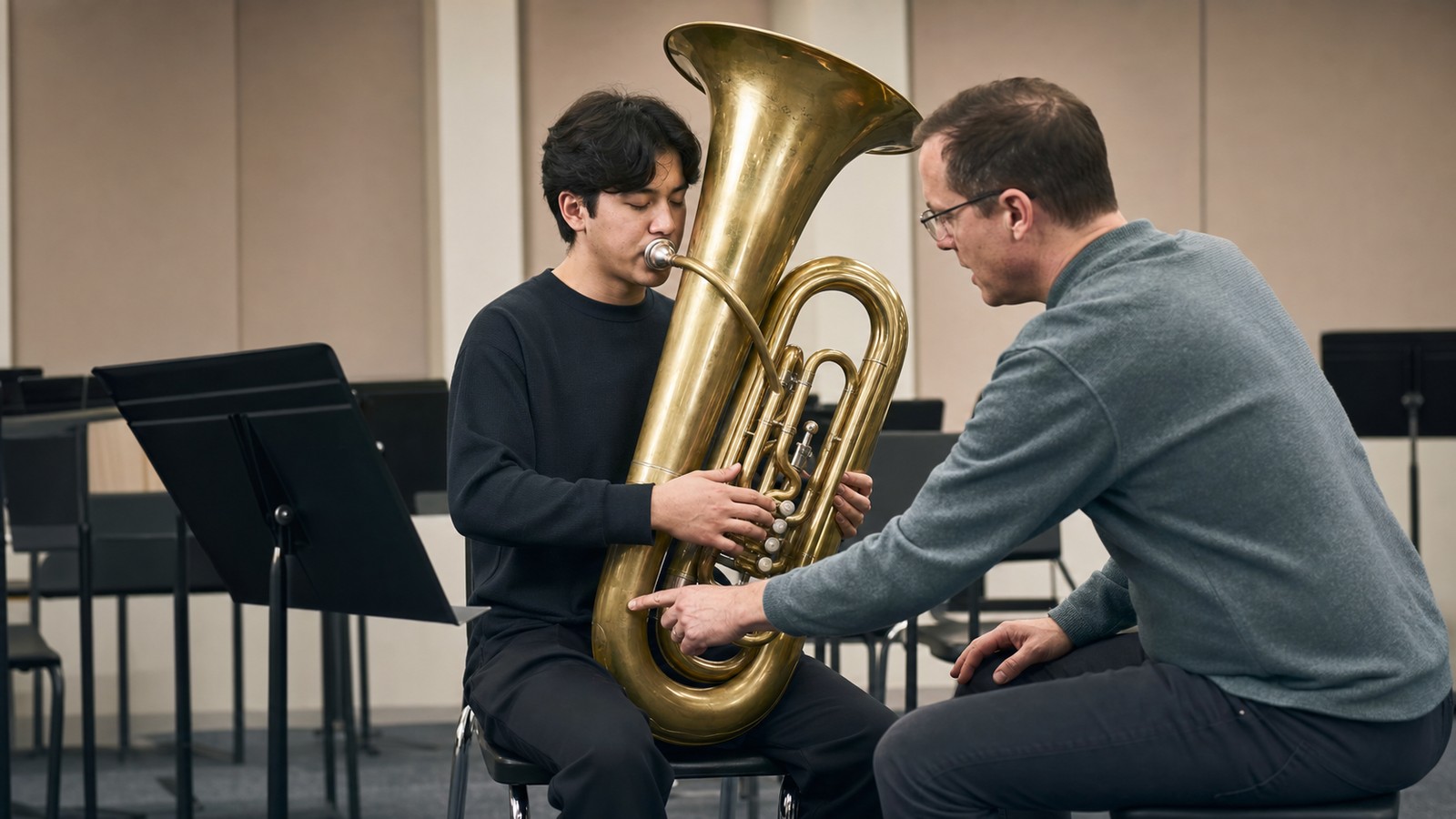
A: Use slow scales, drones, recordings, and teacher feedback to identify recurring notes.
A: Place every note where the ensemble harmony and musical context need it.
Intonation Is More Than a Tuner Reading
A tuner can show whether a single note is high or low in isolation, but ensemble intonation is more complex. The tuba may be playing a root, fifth, bass motion, doubled line, or passing tone. Each function can change how the pitch needs to sit against the surrounding harmony.
Students should use tuners as mirrors, not as judges. The tuner helps identify tendencies, while the ear decides how the note fits in real music.
Tone Quality Affects Pitch Perception
A spread or unfocused tuba tone can make pitch hard to hear. Before moving slides or blaming valves, players should check whether the sound has a clear center. A resonant tone gives the ear something stable to tune.
This is why long tones remain useful for intonation. They allow the player to hear the relationship between air, embouchure, resonance, and pitch without the distraction of technical motion.
If the tone changes every time the player adjusts pitch, the correction may not be reliable yet.
Know the Instrument's Natural Tendencies
Every tuba has notes that tend to sit differently. Some valve combinations may be sharp, others may sag, and certain partials may need extra attention. A player improves faster by learning those tendencies instead of treating every pitch problem as a surprise.
Use Main and Valve Slides Intentionally
Slide adjustment is part of tuba playing, but it should be organized. The main tuning slide sets a broad starting point, while valve slides and alternate fingerings may solve specific note tendencies. Pulling slides randomly during rehearsal usually creates more confusion than accuracy.
Students should learn which slides are practical to move while playing and which adjustments need to happen before a piece begins. Not every instrument layout makes the same slide strategies easy.
Good slide use begins with listening. Move only when the ear knows what problem the slide is supposed to solve.
Drones Teach Pitch Relationships
Drone practice helps tuba players hear pitch as a relationship rather than a number. Sustaining notes against a drone reveals beats, stability, and how the tone locks into a reference. It is especially useful for roots, fifths, and slow scale work.
The goal is not to stare at a screen. The goal is to hear when the sound settles.
Slow Scales Reveal Valve Problems
Slow scales expose intonation patterns across fingerings. If a note is consistently high or low, the player can decide whether to adjust with air, embouchure, slide, alternate fingering, or musical context. Rushing through scales hides those decisions.
Air Support Keeps Pitch From Sagging
Unsupported air often makes pitch sag, especially at soft dynamics or near the end of long phrases. Tuba players need steady air through the full note, not only at the attack. When the air slows too much, the pitch and tone can both lose center.
This does not mean blowing harder all the time. It means keeping the air organized and the sound alive.
Practicing soft long tones with a drone can reveal whether pitch is supported or merely quiet.
Embouchure Pressure Can Pull Pitch Around
Excess pressure may sharpen notes, restrict resonance, or make pitch unstable. A loose setup may make notes sag or spread. The embouchure needs enough organization to focus the sound while staying free enough to vibrate.
If pitch corrections require visible strain, the player should step back to tone and air before adding more slide movement.
Ensemble Intonation Depends on Function
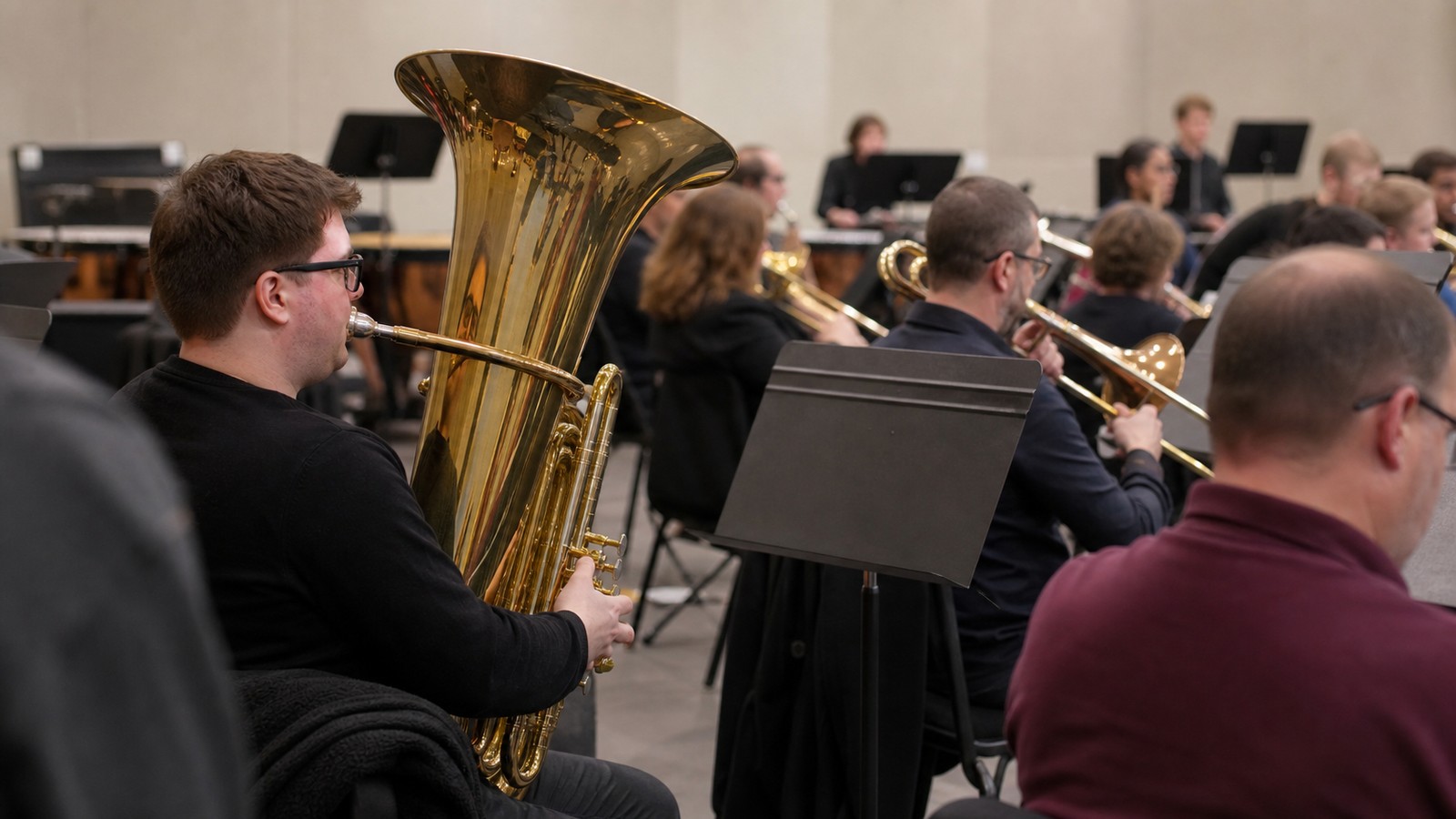
The tuba often sets the bottom of the chord, but it still must listen to the whole group. A bass note under clarinets, trombones, horns, or strings may need slightly different placement depending on texture and tuning system. The player should identify whether they are supporting, doubling, moving, or coloring.
Listen Down, Across, and Up
Tuba players sometimes hear only their own bell and the conductor. Better intonation requires listening down to the bass function, across to low brass and low winds, and up to the chord tones above. This wide listening helps the player choose corrections that serve the ensemble.
In band, the tuba may align with bass clarinet, baritone saxophone, euphonium, trombone, and percussion. In orchestra, it may need to relate to bass trombone, contrabass, bassoon, and timpani.
The more clearly a player hears those relationships, the less they rely on guesswork.
Temperature and Fatigue Change Pitch
Tubas respond to temperature, warm-up time, and player fatigue. A cold instrument may not sit where it will after several minutes of playing. A tired player may use more pressure or less air, which changes pitch again.
This is why tuning once at the start of rehearsal is not the whole solution. Players must continue listening as the room, instrument, and body change.
Better Intonation Becomes Better Ensemble Trust
When a tuba player improves intonation, the entire ensemble benefits. Chords settle faster, releases feel cleaner, and other players trust the foundation. The tuba becomes a guide instead of a pitch problem hiding at the bottom.
The path is practical: build centered tone, learn tendencies, use slides with purpose, practice with drones, and listen to function in context.
Over time, intonation becomes less about chasing mistakes and more about placing every note where the music needs it.
Tune With the Sound You Will Use
Players sometimes tune with a careful, artificial sound and then play the piece with a completely different tone. That makes the tuning note less useful. Tune with the kind of air, posture, and resonance you plan to use in rehearsal so the adjustment reflects real playing.
This is especially important for soft or loud passages. A pitch that is centered at medium volume may behave differently at the dynamic the music actually requires.
Check Pitch After Articulation Changes
A note can tune well when sustained and then shift when articulated. Heavy attacks, clipped releases, or uneven valve timing can all change how pitch is perceived. Tuba players should test intonation inside the articulation style of the passage, not only on isolated whole notes.
Learn When to Lead and When to Follow
Sometimes the tuba must provide a pitch reference for the ensemble. At other times, it must follow a soloist, match low strings, or adjust to a fixed-pitch instrument. Intonation improves when the player understands which role is active in each moment.
This role can change within a single phrase. A bass line might begin as a root, move through passing tones, and then support a cadence.
Naming that function helps the player make musical corrections instead of generic ones.
Use Recordings to Hear the Room
The tuba can sound different behind the bell than it does in the room. A simple rehearsal recording can reveal whether pitch centers clearly, whether low notes spread, and whether the bass line overpowers or disappears. Listening back turns guesswork into evidence.
Recordings should be used kindly. The point is not to punish every flaw, but to notice patterns the player cannot hear while performing.
Tune Moving Lines Slowly
Intonation is not only a long-tone issue. Moving bass lines need pitch care too. Practicing a line slowly with drones or a keyboard reference can reveal notes that pass by too quickly in tempo.
Ensemble Chords Teach Practical Pitch
Chorale work is one of the best ways to improve tuba intonation because it places pitch inside real harmony. The player can hear how roots, fifths, thirds, suspensions, and resolutions feel from below. This is more musical than treating every note as a separate tuner target.
In sectionals, tubas can sustain the bass while upper voices adjust, then switch roles and listen to how the chord changes.
That process builds trust. Everyone learns that pitch is shared.
Do Not Confuse Sharpness With Brightness
A bright or edgy tuba sound may seem sharp even when the tuner is close, while a covered sound may seem low. Tone color and pitch perception interact. Players should refine sound quality and pitch together instead of treating them as unrelated issues.
A warmer, centered sound often makes intonation easier for everyone around the tuba.
Practice Intonation at Real Dynamics
A note that is in tune at mezzo forte may not behave the same way at pianissimo or fortissimo. Tuba players should practice pitch at the dynamics they actually see in music. Soft notes may sag from weak air, while loud notes may rise if the player presses or overblows.
Mark Tendency Reminders Carefully
Small pencil reminders can help, but they should be clear and limited. Marking every note with arrows can become visual noise. Instead, identify the passages where tendencies repeat and write reminders that point to action: support, listen to trombone, pull first slide, use alternate fingering, or keep tone centered.
These markings should evolve as the player improves. A note that once needed a warning may become reliable later.
Good markings help the ear remember, but they do not replace listening.
Sectionals Are Ideal for Tuba Pitch
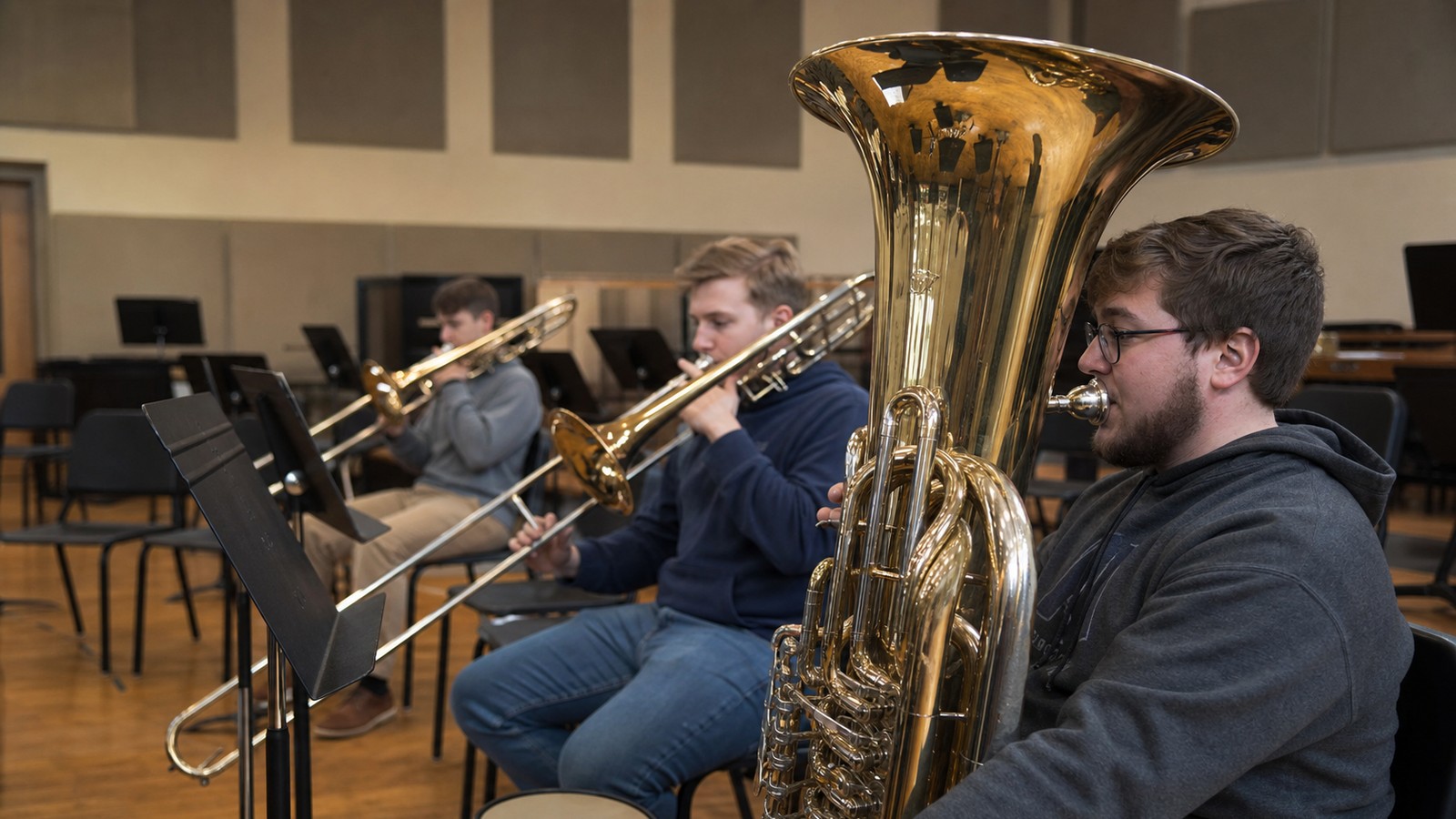
Low-brass sectionals give tuba players time to hear pitch relationships without the full ensemble covering details. Tubas can tune roots with euphoniums, match articulation with trombones, and check octave placement with bass voices. This focused work makes full rehearsals more efficient.
A sectional also lets players discuss tendencies openly. Instead of guessing why a chord feels rough, the section can isolate the bass, then rebuild upward.
Pitch Confidence Reduces Overcorrection
When players lack confidence, they often chase pitch too aggressively. They adjust after every tiny wobble and end up moving more than the music requires. A stable tone, known tendencies, and repeated listening build the confidence to make smaller, calmer corrections.
Use Alternate Fingerings Musically
Alternate fingerings can help certain notes, but they should be chosen for sound and context, not only for tuner accuracy. A fingering that fixes pitch but changes tone, response, or valve smoothness may not be the best choice in a fast passage. Test alternates inside real music.
Students should write down which alternate fingerings work on their own instrument. Tuba models differ, and a solution from one player may not transfer perfectly to another horn.
The ear should approve the result. An alternate fingering is successful when the phrase sounds better.
Intonation Improves Through Repetition
Pitch habits improve slowly because the player is training both ear and body. Repeating the same careful listening over many days makes corrections feel natural. The goal is to need fewer emergency adjustments because the setup, air, and ears are already working together.
That patient repetition turns intonation from a problem to fix into a skill the player carries into every rehearsal. It also helps the player stay calm when pitch problems appear unexpectedly in ensemble playing and need quick musical judgment from the section. Calm corrections usually sound better than rushed ones.