Good Tuba Warm-Ups Wake Up Air, Tone, and Flexibility
Low brass warm-ups for tuba players should prepare the body to play, not exhaust it before rehearsal begins. A useful warm-up starts with calm breathing, easy tone, comfortable response, and simple movement across registers. The best routine helps the player sound centered, flexible, and ready for music while leaving enough energy for the actual practice session.
A: It can be short if it prepares breathing, tone, response, articulation, and focus.
A: Usually no. Moderate dynamics make it easier to hear tone and avoid early fatigue.
A: Breathing organizes posture and air before the embouchure has to work.
A: They help, but most players also need flexibility, valve motion, articulation, and musical phrasing.
A: After easy tone and flexibility are working, not at the very start.
A: Use shared breathing, chorales, tuning patterns, and simple rhythms.
A: Return to breathing, posture, and a more comfortable pitch before continuing.
A: Yes. The routine should respond to fatigue, rehearsal demands, and player readiness.
A: No. Simple, attentive exercises build better habits than complicated distracted work.
A: The player should feel ready, centered, and energized rather than tired.
Warm-Ups Should Have a Purpose
A warm-up is not a random collection of exercises. It is a short process that checks breathing, tone, embouchure response, articulation, valves, and musical focus. Tuba players benefit from a routine that wakes up the whole playing system without turning into a strength test.
Begin Away From the Instrument
A few relaxed breaths before picking up the tuba can change the entire session. The player should feel the ribs expand, the shoulders stay loose, and the air move without a tight throat. This brief reset reminds the body that sound begins before the mouthpiece.
Silent breathing also helps students separate preparation from panic. Instead of grabbing the horn and forcing the first note, they enter the warm-up with a calmer body.
Directors can use the same habit with a low-brass section. One shared breath can organize time, posture, and attention before the first tone.
First Notes Should Be Comfortable
The first notes of the day should sit in a friendly register. For many tuba players, that means middle-low notes that speak easily without pressure. Starting too high or too loud can make the embouchure tighten before it has found a natural vibration.
An easy first sound gives useful information. If the note feels stuffy, sharp, unfocused, or slow to respond, the player can adjust breathing and setup before moving on.
Long Tones Build the Center
Long tones remain useful because they teach steadiness. A tuba player can listen for a full beginning, consistent middle, and clean release. The exercise may be simple, but it reveals air support and tone focus immediately.
Keep Long Tones Musical
A long tone should not become a frozen sound. Even a single note can have shape, direction, and beauty. Beginners can think of sending the tone forward, while advanced players can refine color and pitch center.
The length should fit the player's level. A beautiful shorter note is better than a long, collapsing one. Warm-ups should teach quality before endurance.
Adding a gentle crescendo and decrescendo can help when the player is ready, but the tone should never spread or lose support.
Lip Slurs Wake Up Flexibility
Simple slurs between nearby partials help the embouchure coordinate without heavy tonguing. The goal is smooth movement, not a loud jump. Tuba players should keep the air moving and let the face make small, efficient adjustments.
Slurs that feel forced are usually too wide or too fast for the moment. Slow, clean motion teaches more than a rushed pattern full of bumps.
Valve Patterns Check Coordination
Warm-ups should include easy valve motion because sticky fingers can make the first rehearsal passage feel harder than it is. Slow chromatic patterns, simple scales, or repeated valve combinations help the hand and air coordinate.
Articulation Starts Should Stay Light
Tonguing during warm-ups should clarify the front of the note without jabbing the sound. Tuba players often need to keep the tongue efficient because the instrument already has a large air column to move. Heavy attacks can make the warm-up feel clumsy.
Start with repeated notes at a moderate tempo and listen for sameness. Each note should speak clearly without a different tone color every time.
A good articulation warm-up leaves the tongue feeling coordinated, not tired.
Low Register Needs Gentle Openness
The low register should be included, but it should not become an excuse to let the sound fall apart. Tuba low notes need generous air and relaxed space, yet they still require center. A floppy low warm-up can create habits that are hard to control later.
Descending patterns work well when the player keeps the tone connected. If notes stop speaking, return to a comfortable pitch and rebuild.
High Register Belongs Later
Higher notes should usually come after breathing, tone, and easy flexibility are established. Jumping upward too soon can encourage pressure. A few gentle upper notes may be enough for a warm-up, especially before a long rehearsal.
Section Warm-Ups Need Balance
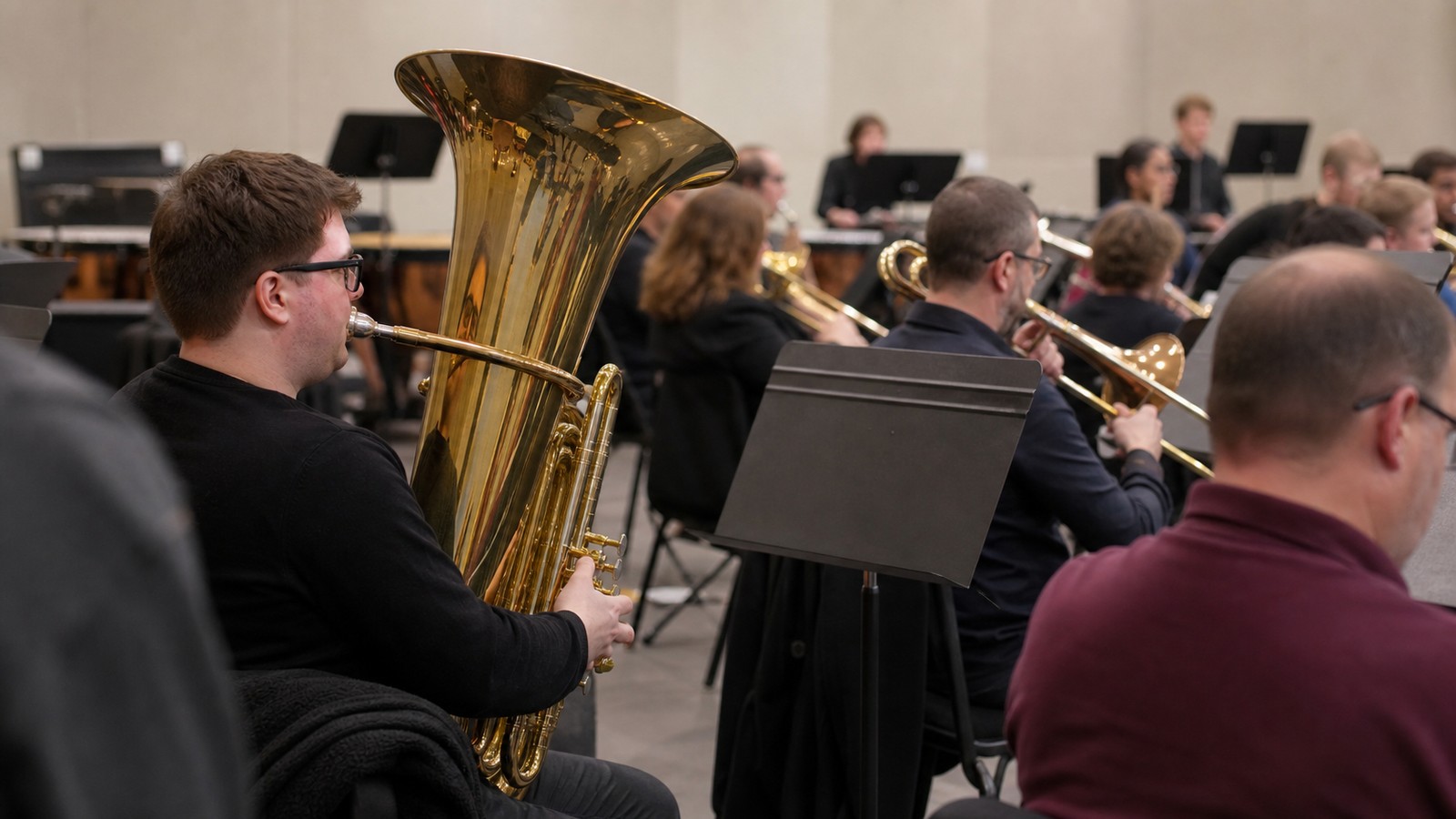
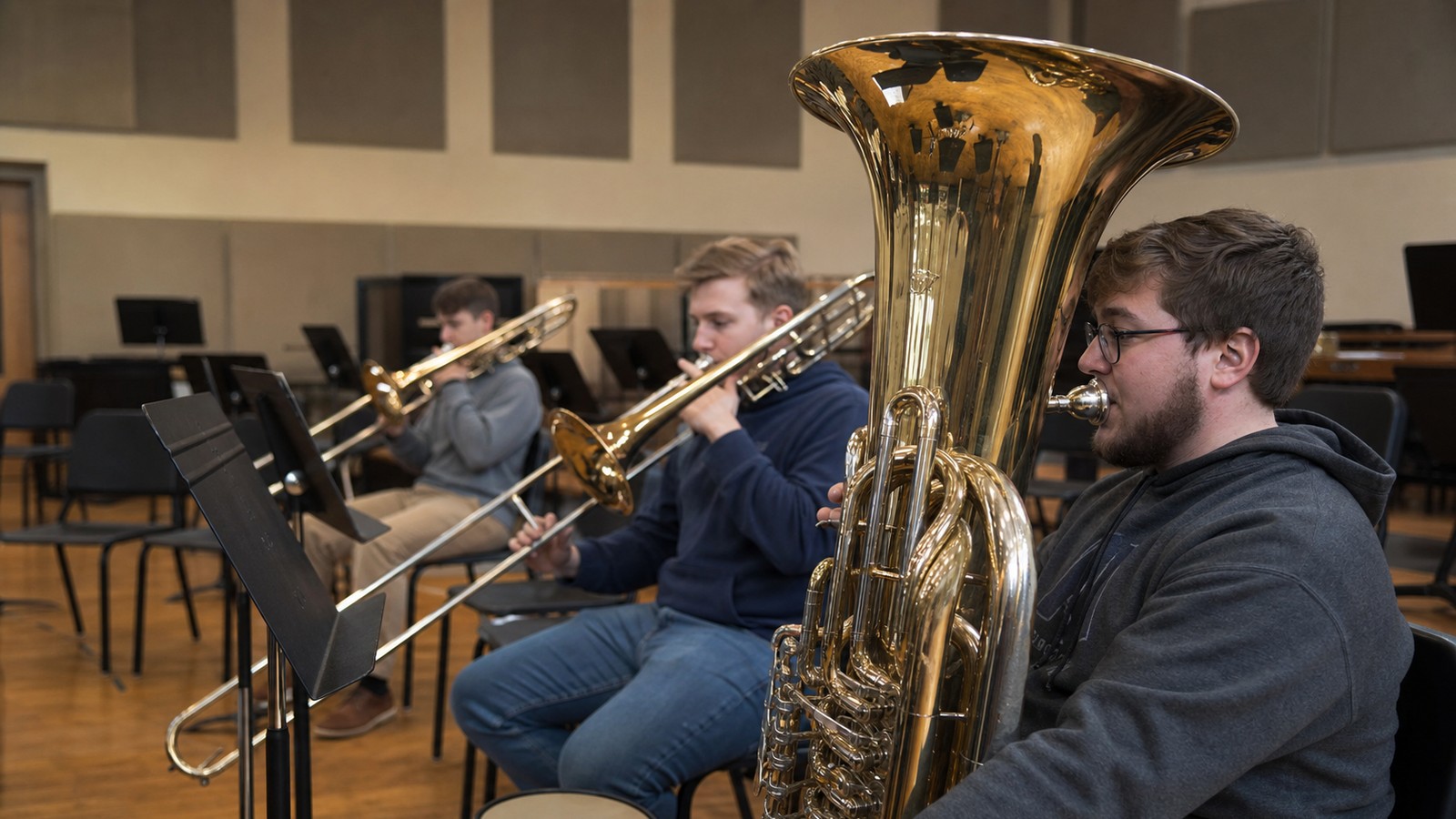
In a low-brass section, warm-ups should help players match pitch, length, and tone. Tubas, euphoniums, and trombones may not need identical exercises, but they can share breathing, chorales, and simple tuning patterns.
The tuba role is especially important because it often defines the bottom of the chord. A centered tuba sound helps the entire section settle.
Section warm-ups should stay efficient. If the group spends too long on exercises, attention may fade before rehearsal begins.
Do Not Warm Up Too Loud
Loud playing can be part of a complete routine, but it should not dominate the beginning. A warm-up that starts at full volume may hide tone problems and drain endurance. Moderate dynamics make it easier to hear pitch, response, and resonance.
Save the biggest sound for later in the practice plan or for music that requires it. Warm-ups should prepare power, not spend it.
Short Routines Can Still Work
A student with limited time can still warm up well. Three focused minutes of breathing, easy long tones, one slur pattern, and a simple scale can be better than fifteen distracted minutes. The quality of attention matters more than routine length.
Adjust Warm-Ups to the Day
The body does not feel the same every day. A player who is tired, returning after illness, or preparing for a demanding rehearsal may need a gentler routine. A player who feels fresh may spend more time on range, articulation, or flexibility.
Warm-ups should respond to the player instead of forcing the player through a fixed checklist.
That flexibility keeps the routine useful. It also teaches students to listen to their own bodies with maturity.
End With Something Musical
A warm-up should lead toward music. Ending with a simple melody, chorale line, or easy excerpt helps the player connect exercises to expression. This prevents the routine from becoming mechanical.
For tuba players, a slow lyrical phrase can be especially helpful. It checks tone, breath, pitch, and musical line at the same time.
The Best Warm-Up Leaves You Ready
A good tuba warm-up leaves the player feeling ready, not finished. The air is moving, the tone is centered, the valves respond, and the embouchure feels awake but not worn out. That balance is the mark of a healthy routine.
Warm-Ups Should Match the Rehearsal Ahead
A player preparing for a lyrical rehearsal may need more time on long tones, soft attacks, and connected phrasing. A player preparing for a march, pep tune, or fast band piece may need clearer articulation and valve motion. The routine should aim at the music coming next, not at an abstract ideal.
This keeps warm-ups practical. The player is not only waking up the face; they are preparing the skills that the day will demand.
Teachers can help students make these choices by asking what is difficult in the current music before assigning exercises.
Mouthpiece Buzzing Can Be Optional
Some tuba players like a small amount of mouthpiece buzzing before they play. Others find that it encourages tension or makes them overthink the face. Buzzing is a tool, not a requirement, and it should be brief if used at all.
When buzzing works, it helps the player hear pitch and feel vibration. When it makes the first full-instrument notes worse, skip it and warm up directly on the tuba.
Use Range Carefully in Warm-Ups
A warm-up can touch the edges of the range, but it should not become range training unless the practice plan calls for that. The player might include a few gentle upper notes and a few focused low notes, then save demanding expansion for later. This protects the face before rehearsals and performances.
Tuning Work Belongs Early
Tuba warm-ups are a good time to check pitch tendencies because the instrument often anchors the ensemble. Simple drones, sustained roots, and slow scale degrees can reveal whether the player is centered. The goal is not to chase a needle, but to hear where the sound sits.
When a section warms up together, the tuba can establish a stable reference for chords. That reference helps euphoniums, trombones, and horns build upward with confidence.
Pitch attention during warm-up saves rehearsal time later. It turns the tuba from a loud bottom voice into a trustworthy foundation.
Mental Focus Is Part of Warming Up
A warm-up also moves the player from the outside day into musical attention. Phones, hallway noise, and rushed setup can leave the mind scattered. A short routine gives the brain a sequence: breathe, listen, center, connect, and begin.
That mental shift is especially useful before auditions or performances. Familiar exercises can settle nerves without demanding too much.
Avoid Comparing First Notes
Players in a section may not all sound equally ready on the first note of the day. That is normal. Warm-ups should not become a competition over who sounds strongest immediately. The better goal is for every player to improve from the first breath to the first piece.
A Routine Should Evolve
The best warm-up for a beginner may become too narrow as the player grows. New repertoire, stronger range, longer rehearsals, and more advanced ensembles all change what preparation should include. Students should keep the bones of a good routine while allowing details to evolve.
A mature tuba player knows several warm-ups: a short version, a full version, a gentle recovery version, and a performance version. Having options makes preparation more reliable.
Warm-Ups Should Include Real Listening
A player can complete every written exercise and still fail to listen. During warm-ups, the tuba should sound intentional from the first tone. Listen for pitch center, resonance, note shape, and whether the room returns a healthy sound.
Directors Can Keep Low Brass Engaged
In ensemble warm-ups, low brass players sometimes feel like they are only holding long roots while other sections receive attention. Directors can keep tubas engaged by asking for specific sound goals: warmer attacks, cleaner releases, steadier pitch, or better balance under the chord.
Those requests give tuba players a musical job. They also prevent warm-ups from turning into passive waiting.
When the low brass understands its purpose early, the whole rehearsal starts with a stronger foundation.
Avoid Turning Warm-Ups Into Proof
Warm-ups are preparation, not a public test of ability. Students who try to prove their loudest sound or highest note during warm-up often waste energy and create tension. A calmer routine builds more confidence because it produces repeatable readiness.
The player should leave the routine curious and alert, not judged. That mindset makes practice healthier and more sustainable over time.