The Tuba Gives Ensembles Foundation, Color, and Direction
The role of tuba in band, orchestra, and brass ensemble is bigger than simply playing the lowest notes. A good tuba player shapes harmony, rhythm, balance, style, and the way an entire group feels from underneath. The instrument can anchor a concert band, deepen an orchestra, power a brass ensemble, or move like a bass voice in chamber music.
A: No. It often supplies bass, but it also shapes rhythm, color, balance, and melody.
A: It anchors chords, supports bass lines, and gives wind writing a stable foundation.
A: Composers often save the tuba for moments needing specific depth, color, or force.
A: The tuba becomes more exposed and often acts like an active chamber bass voice.
A: The tuba often supplies roots or bass motion, so its pitch influences the entire chord.
A: No. The correct role may require warmth, transparency, restraint, or rhythmic clarity.
A: Yes. Melodic tuba lines need confident tone, phrase direction, and clear projection.
A: Listen for how the tuba supports harmony, rhythm, blend, and the ensemble's overall feel.
A: Bass note length changes the groove, support, and style of the entire group.
A: It is the ability to guide the ensemble's foundation without needing constant attention.
The Tuba Is the Ensemble's Ground
Most listeners notice melodies first, but ensembles depend on a reliable bottom. The tuba often supplies that ground by giving chords a clear root, supporting low rhythmic motion, and helping other instruments understand where the harmony lives. When the tuba sound is centered, the group feels more secure even if the listener cannot isolate the part.
This grounding job requires more than volume. A tuba player must choose the right length, weight, pitch center, and attack for the style. A note that is loud but late, wide, or out of tune can make the whole ensemble feel unstable.
Concert Band Tuba Is a Foundation Voice
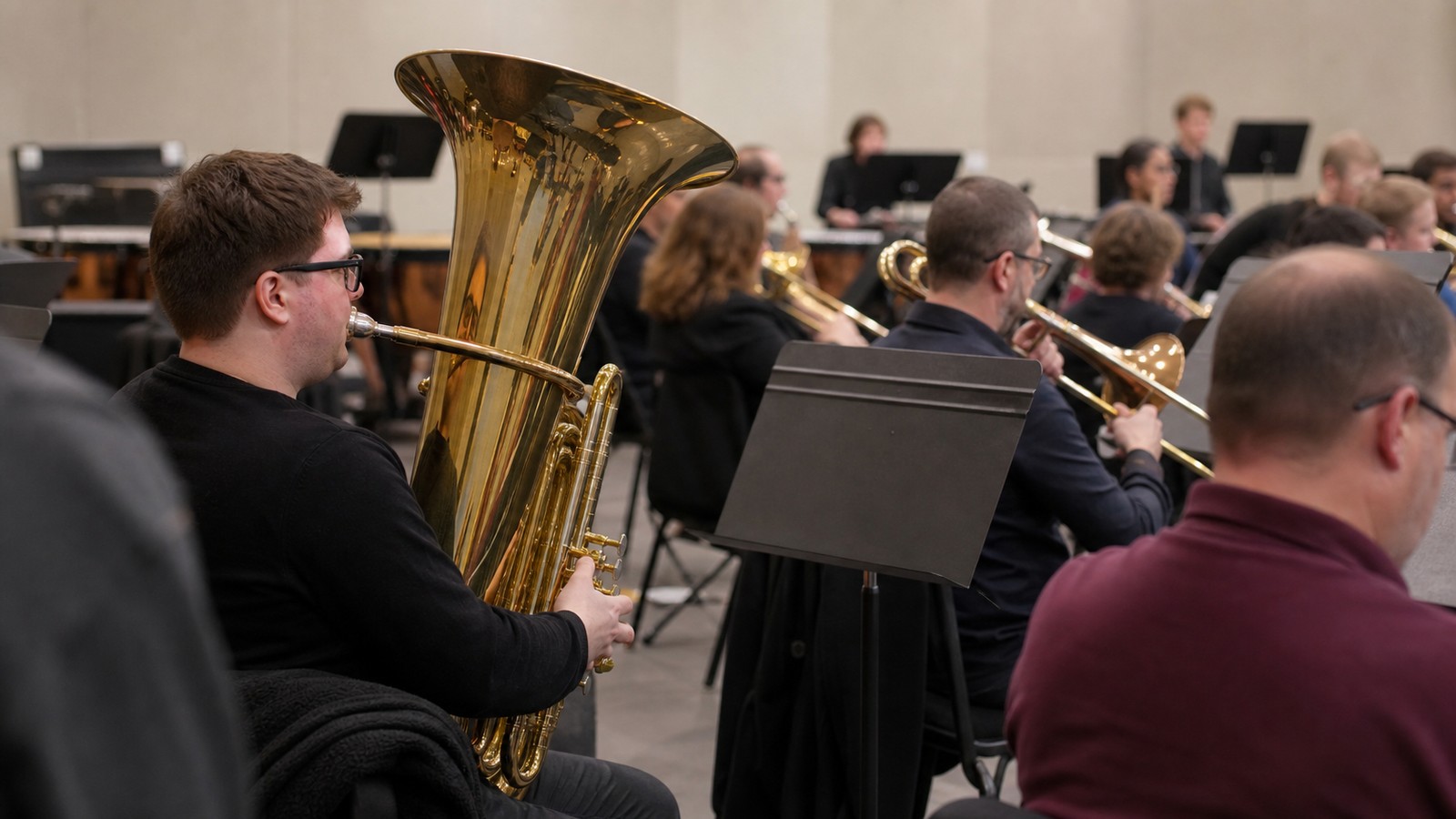
In concert band, the tuba frequently supports the bass line in marches, chorales, fanfares, transcriptions, and modern wind works. The player may double low woodwinds, reinforce euphoniums, answer trombones, or define the bottom of a full brass chord. A strong band tuba section gives the ensemble depth without making every passage heavy.
Band writing also asks tubas to change character quickly. One piece may need buoyant march style, another may need broad chorale tone, and another may need transparent support under delicate winds. The same instrument has to provide weight and agility.
For students, this means band tuba playing is not background work. It is a leadership role from below.
Orchestra Tuba Is Often Selective
In orchestra, the tuba usually plays less often than it does in band, but its entrances can be extremely important. The instrument may add depth to brass climaxes, support the bass trombone, darken a chord, or give dramatic force to a moment that composers want listeners to feel physically. Long rests are part of the job.
Orchestral Restraint Takes Discipline
Because orchestral tuba parts can be selective, players must stay mentally engaged through silence. An entrance after many rests may need to match the exact character of trombones, horns, strings, or low winds already in motion. The player cannot warm into the phrase; the first note has to belong.
The orchestral role also demands careful balance. A tuba can overwhelm a texture quickly, especially in a resonant hall. The best orchestral players understand when to provide mass and when to color the section without covering it.
This restraint is one reason orchestral tuba playing feels so mature. Power is available, but the player must decide how much the music truly needs.
Brass Ensemble Tuba Can Be More Active
In brass quintets, choirs, and mixed brass ensembles, the tuba often acts like the bass voice of a small group. It may play walking lines, counterpoint, rhythmic figures, sustained foundations, or exposed melodic fragments. There is usually less room to hide than in a large ensemble.
This setting rewards clarity and flexibility. The tuba must keep time, tune chords, support the style, and leave space for trumpets, horn, and trombone. A heavy approach can make chamber music feel stuck, while a lively bass line can make the whole group breathe.
Rhythm Is a Core Tuba Responsibility
The tuba often defines how the beat feels. A bass line that is slightly late can make a march drag, while one that is too short can make a chorale feel unsupported. The player has to understand note length as a rhythmic choice, not just a tone issue.
Intonation Starts at the Bottom
Because many chords are built upward from the bass, tuba pitch affects everyone else. If the root of the chord is unstable, upper voices may struggle to tune even when they are listening carefully. A centered tuba sound gives the ensemble a reliable reference point.
This does not mean the tuba dictates pitch stubbornly. The player must listen to the full chord, adjust to fixed-pitch instruments, and understand when the bass note is a root, fifth, passing tone, or color tone.
Good tuba intonation is both confident and flexible. It provides leadership without becoming rigid.
Color Changes by Ensemble Type
A band tuba sound may need breadth and blend across a large wind texture. An orchestral sound may need a darker match with low brass and contrabass lines. A brass ensemble sound may need more immediacy so rhythm and counterpoint speak clearly. The role changes with the room and group size.
Students should avoid using one default tone everywhere. The instrument's job changes, so the sound concept should change with it.
The Tuba Can Carry Melody Too
Although the tuba is famous for bass support, it can carry lyrical melodies and technical features. When the instrument becomes melodic, the player must keep the same foundation of pitch and rhythm while adding phrase direction, color, and projection. A melodic tuba line should not sound apologetic.
Listening Outward Is Essential
Tuba players spend much of their time surrounded by their own sound, but the real role is defined by what reaches the ensemble. Listening outward means hearing the conductor's balance, the bass drum's placement, the trombones' articulation, the basses' pitch, and the solo line's space.
This habit turns tuba playing from note production into ensemble musicianship. The player learns when to lead, when to blend, when to release shorter, and when to give the group more support.
A tuba part may look simple on the page, but the listening responsibilities are complex.
Directors Rely on Tuba Stability
Directors often use the tuba section as a sign of ensemble health. If the low end is steady, in tune, and stylistically clear, the rest of the group has a better chance to lock in. If the bottom is uncertain, rehearsals can feel harder than they should.
This is why tuba players should take pride in dependable playing. Reliability is not boring. It is the condition that lets everyone else sound better.
The Role Is Musical Leadership From Below
The tuba's role in band, orchestra, and brass ensemble is a form of leadership that does not always draw attention to itself. The instrument grounds harmony, shapes rhythm, colors texture, and makes large groups feel organized. That leadership can be subtle, but it is never passive.
A developing tuba player should learn to ask what the ensemble needs in each setting. Does the music need weight, motion, transparency, warmth, bite, or restraint? The answer changes from piece to piece.
When the tuba player listens that way, the instrument becomes more than a low voice. It becomes the sound that helps the whole ensemble stand upright.
March Style Needs Lift From the Bottom
In marches, the tuba often gives the music its stride. The player has to balance length and lift so the bass line moves forward without becoming clipped or heavy. This is a different skill from simply playing short notes. The release, accent, and breath all shape how the ensemble walks through the phrase.
A good march bass line also works closely with percussion and low woodwinds. If the tuba rushes, drags, or overplays, the style can lose its snap. If the tuba places the notes clearly, the entire band sounds more confident.
Chorale Playing Requires Patience
In slow chorales, the tuba may need to hold long notes that seem simple on the page. Those notes demand steady air, careful pitch, and releases that match the section. The player has to make the foundation feel alive without drawing attention away from the harmony.
Low Brass Blend Changes the Tuba's Color
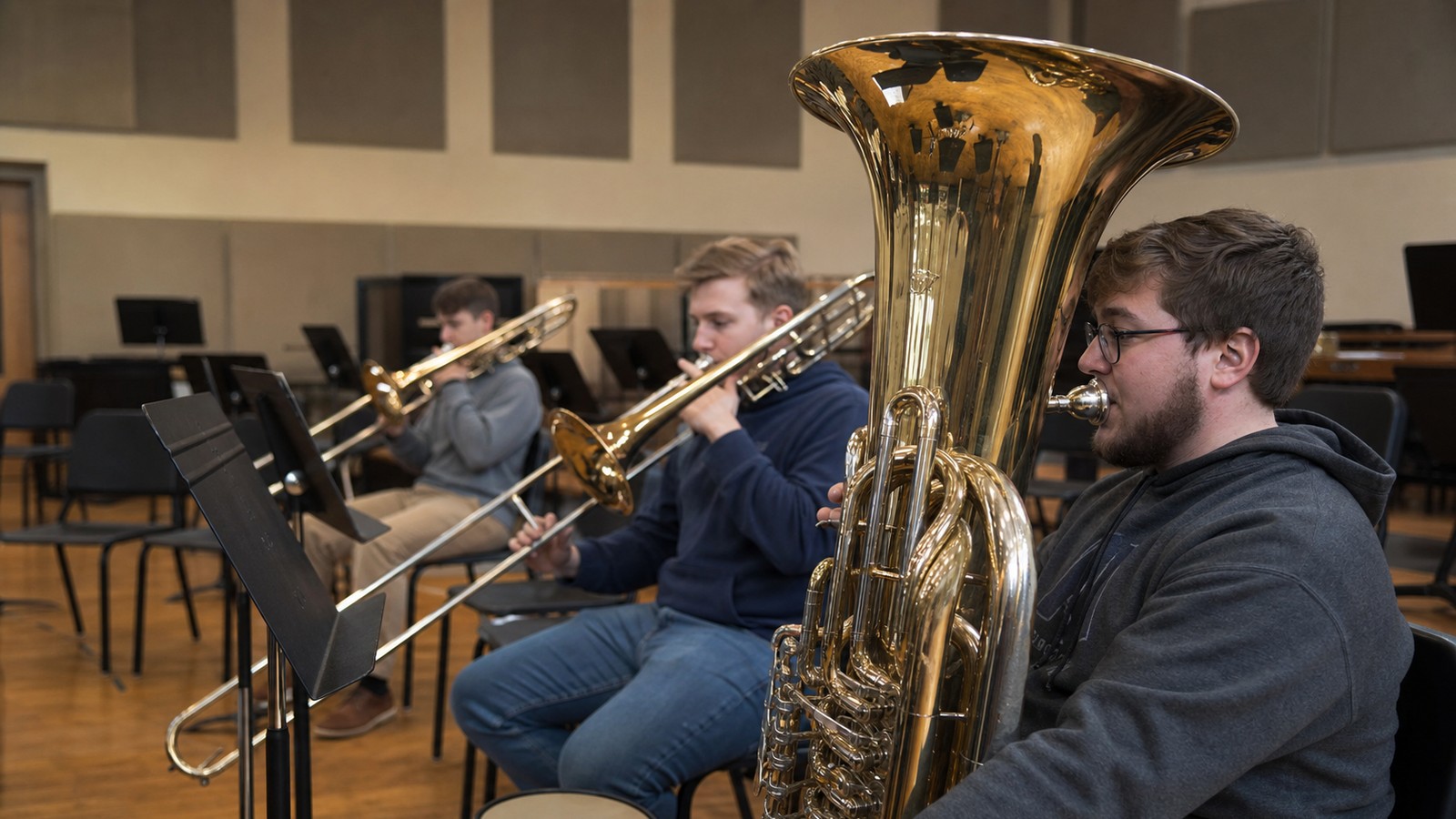
When the tuba plays with trombones and euphoniums, the sound should feel connected to the low-brass family. Too much edge can separate the tuba from the section, while too little core can make the bottom disappear. The player needs to hear the color around them and adjust.
This blend work changes by register. A low tuba note may need more definition so it does not rumble, while a middle-register line may need less weight so it does not cover euphoniums or bass trombone.
The goal is a section sound where every part has a function. The tuba should make the low brass larger, not merely louder.
The Tuba Shapes Silence Too
Tuba players influence music even when they release. A clean ending can make a cadence feel settled, while a late or messy release can blur the ensemble. Because low sounds carry weight, endings from the bottom are especially noticeable.
Students should practice releases as deliberately as attacks. In many ensembles, a beautiful tuba release is one of the quickest ways to make the group sound more polished.
Doublings Need Careful Awareness
Tuba parts often double string bass, bass clarinet, baritone saxophone, bassoon, euphonium, trombone, or left-hand piano reductions. Doubling does not mean the player can stop listening. It means the tuba must match style, pitch, and length with another color.
Solo Moments Need a Different Kind of Confidence
When the tuba steps forward, the player has to keep the foundation mindset while becoming more vocal. A solo line needs phrase direction, clean articulation, and enough projection to speak through the texture. It should sound intentional, not surprised to be heard.
This can be challenging for students who are used to supporting others. Practicing lyrical etudes and exposed excerpts helps the player become comfortable with attention.
A confident tuba feature can change how listeners understand the instrument. It shows that the same voice that supports the ensemble can also sing.
Good Role Awareness Helps Practice
Knowing the tuba's role in a piece should change how the player practices. A foundation passage needs pitch and time. A moving bass line needs clarity and direction. A color entrance needs blend. A feature needs shape and confidence.
Instead of practicing every measure with the same tone and volume, students can ask what job each passage has. That question makes practice more musical and efficient.
Balance Changes With Instrumentation
The same written tuba part can need different balance depending on who else is playing. A bass line under full brass may need more core, while the same line under flutes or muted strings may need a lighter touch. The printed dynamic is only the starting point. The ensemble texture decides how much sound actually belongs.
The Best Tuba Players Make Others Sound Better
A mature tuba player can make an ensemble feel easier to play in. The time is clear, the pitch is trustworthy, the releases are clean, and the tone gives everyone something stable to lean on. Other musicians may not always mention that support, but they feel it.
This is why the role is so satisfying for serious players. The tuba can change the whole group without demanding attention every moment.
Students who understand that responsibility tend to practice differently. They stop asking only whether they played the notes and start asking whether the ensemble improved because of their part that day musically.