Low Brass Breathing Exercises Should Build Calm, Usable Air
The best breathing exercises for low brass players are the ones that transfer directly to sound. Tuba, euphonium, and trombone players need large, relaxed, organized breaths, but they also need timing, release, and phrase control. A good breathing routine reduces tension, improves tone, and helps players use air musically instead of treating breathing as a separate athletic event.
A: It should improve the sound, response, phrase, or release on the instrument.
A: They need enough organized air, but overbreathing can create tension or dizziness.
A: It helps players notice tension and learn open motion without technical distractions.
A: They can diagnose air readiness when used gently and briefly.
A: Shared breaths improve timing, entrances, releases, and phrase unity.
A: Support is organized, flexible air energy, not a locked or rigid torso.
A: Yes. Clean endings are part of good air control.
A: Keep shoulders quiet, throat open, posture tall, and timing calm.
A: No. They should transfer immediately into tone, phrasing, and music.
A: Silent relaxed expansion followed by an easy long tone is a strong starting point.
Breathing Should Feel Open, Not Forced
Low brass players need plenty of air, but forcing a breath can create throat tension, raised shoulders, and a rigid upper body. A good breath feels open and quick enough for music without becoming noisy or panicked. The body expands, then releases air into the sound.
The best exercises teach that feeling repeatedly. They make breathing reliable under rehearsal pressure, not just during isolated warm-ups.
Start With Silent Expansion
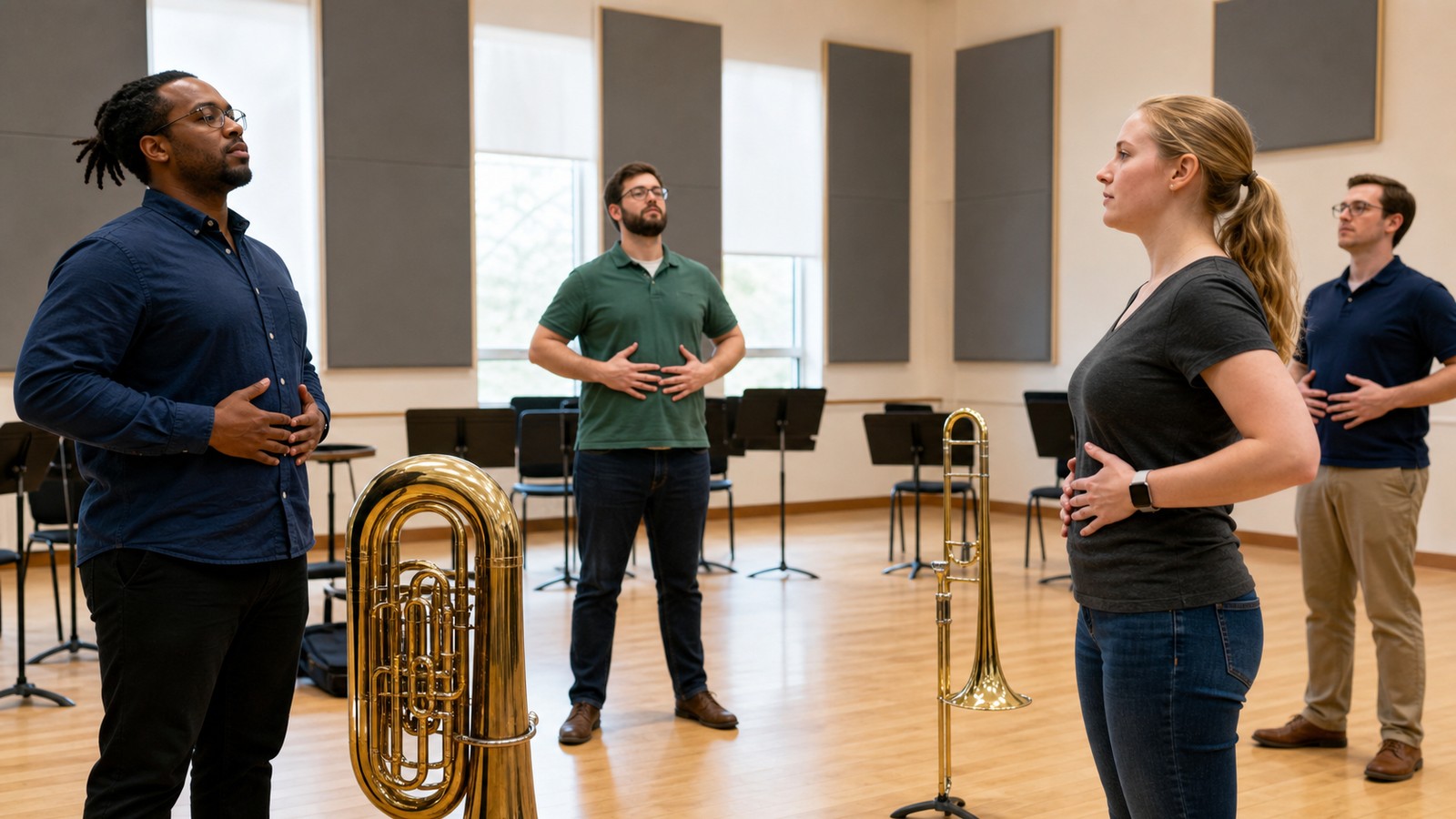
One simple exercise is to stand or sit tall and inhale silently for a few counts while feeling expansion around the ribs and lower torso. The shoulders should stay quiet, and the throat should feel open. Then release the air without collapsing.
This exercise helps students notice whether they are lifting, tightening, or grabbing before playing. It is especially useful for beginners who believe a big breath must look dramatic.
Silent expansion is not flashy, but it teaches the body how to prepare without wasting energy.
Use Timed Inhale and Exhale Patterns
Timed breathing patterns build control. A player might inhale for four counts and exhale for eight, then adjust the numbers as comfort improves. The goal is steady movement, not holding tension between inhale and exhale.
Add Flow Exercises Without the Horn
Flow exercises ask the player to move air smoothly through a relaxed mouth shape. The exhale should feel continuous, like sending air through a phrase. This helps low brass players avoid starting notes with a trapped or interrupted stream.
Some teachers use hand motion, paper movement, or simple breath shapes to make airflow visible. The prop is less important than the sensation of steady release.
After the exercise, immediately play an easy note. If the sound responds more freely, the exercise is doing useful work.
Practice Breath Attacks Carefully
A breath attack starts a note with air instead of tongue. Used carefully, it can show whether the air and embouchure are ready. If the note does not speak, the player may be relying on the tongue to cover a weak release.
Breath attacks should stay gentle and brief. They are diagnostic tools, not a replacement for clear articulation.
Connect Breathing to Long Tones
The most important transfer happens on the instrument. After a breathing exercise, play a long tone and listen for steadiness, resonance, and clean release. The exercise only matters if it improves the musical result.
Use Crescendo Shapes for Air Control
Crescendos and decrescendos teach players to change air energy without changing tone quality too drastically. Start at a comfortable dynamic, grow gradually, then return to softness while keeping the sound centered. This builds control across the phrase.
Low brass players should avoid letting the crescendo become a shove. The air grows, but the body stays organized.
Dynamic shapes are especially useful because real music rarely uses one flat air speed for an entire phrase.
Breathing Exercises Should Include Releases
Players often focus on starting sound and forget the end of the note. A complete breath routine should include clean releases. The air stops with intention, the body stays tall, and the note ends without a bump or collapse.
Good releases make ensemble playing cleaner. They also teach players not to dump unused air at the end of every phrase.
Avoid Overbreathing
More air is not always better if the player becomes tense, dizzy, or late. Low brass players need enough air for the phrase, delivered efficiently. Overbreathing can make entrances feel heavy and can distract from musical timing.
Group Breathing Builds Ensemble Time
When low brass sections breathe together, they often play together more naturally. A shared breath sets tempo, style, and intention before the note begins. This is useful in chorales, marches, brass ensemble entrances, and quiet attacks.
Directors can rehearse breath timing just like articulation. The breath becomes part of the music rather than a private survival tactic.
A section that breathes together usually releases together more cleanly too.
Breath Support Is Not Body Stiffness
Support should not mean locking the torso. The body needs organized energy, but it must remain flexible enough to let air move. If a player braces so hard that the sound tightens, the exercise has gone in the wrong direction.
Good support feels active and elastic. The sound has strength without the body becoming rigid.
The Best Exercise Is the One That Changes Sound
A breathing routine should be judged by the tone that follows it. If an exercise produces a freer first note, steadier phrase, better release, or calmer entrance, it belongs in the routine. If it creates tension or dizziness, it should be changed.
Low brass breathing is not about showing how much air a player can take in. It is about turning breath into reliable musical sound.
That transfer is the whole point: breathe better so the instrument speaks better.
Use Breathing to Prepare Style
Different styles need different breaths. A broad chorale entrance may need a calm, full preparation, while a march figure may need a quicker, energized breath. Practicing breath style helps players enter with the character already in the body.
This makes breathing part of interpretation. The breath is not only fuel; it is the beginning of the phrase.
Keep Breath Exercises Short Enough
Breathing work can become counterproductive if it lasts too long or becomes too intense. Players may get lightheaded, tense, or distracted from actual music. Short, focused sets followed by immediate playing usually work better than long breathing-only sessions.
Practice Fast Breaths for Real Music
Low brass players do not always get luxurious time to inhale. Music often demands a quick breath between phrases, after a page turn, or before a sudden entrance. Fast-breath exercises help players take in usable air without lifting the shoulders or gasping.
The goal is a quick open breath, not a noisy emergency breath.
Practicing this skill away from the horn and then on easy notes makes it more dependable in rehearsal.
Breath Marks Reduce Guessing
Marking breaths in music helps players avoid running out of air at awkward moments. It also prevents panic breaths that interrupt style. Breath marks should support the phrase, not simply appear wherever the player feels desperate.
Teachers can help students choose breath spots that preserve musical direction and ensemble timing.
Low Brass Players Need Shared Vocabulary
A section improves faster when players use common words for breathing. Terms like full, quiet, quick, released, supported, and shaped can help everyone understand the goal. Without shared vocabulary, one player may think support means stiffness while another hears it as air flow.
Breathing and Posture Cannot Be Separated
A player sitting with a collapsed chest cannot use breathing exercises fully. Posture sets the space for the breath. Tuba and euphonium players must also make sure the instrument position does not crowd the ribs or pull the head forward.
Before any breathing drill, check the chair, feet, spine, shoulders, and instrument angle.
This simple setup work often solves breath problems that students thought were endurance problems.
Transfer Exercises Into Phrases
After a breathing drill, play a phrase from actual music and notice what changed. Did the first note speak more easily? Did the line last longer? Did the release improve? This transfer step keeps breathing work connected to performance.
If nothing changes, simplify the drill or choose one that addresses the player's real need.
Breathing Should Support Articulation
The tongue cannot create a good low-brass attack by itself. If the air is late, blocked, or weak, articulation becomes heavy. Breathing exercises that prepare a clean release of air help the tongue act as a valve rather than a hammer.
Use Breaths to Shape Long Lines
Low brass players often carry long phrases that need planning. A breathing exercise can teach the player to imagine the whole line before the first note. Instead of spending air evenly without thought, the player learns where the phrase grows, relaxes, and arrives.
This is especially helpful for tuba players, who may sustain foundations that seem simple but must remain alive for many beats.
A planned breath creates a planned phrase. The sound feels less accidental.
Breathing Exercises Can Reduce Performance Nerves
Calm breathing before a performance helps the body settle, but it should be the same kind of breath used in practice. If a player only breathes deeply when nervous, the gesture may feel unfamiliar. Daily breathing exercises make performance breathing feel normal.
This does not remove adrenaline. It gives the player a reliable first action when nerves appear.
Directors Should Model the Breath
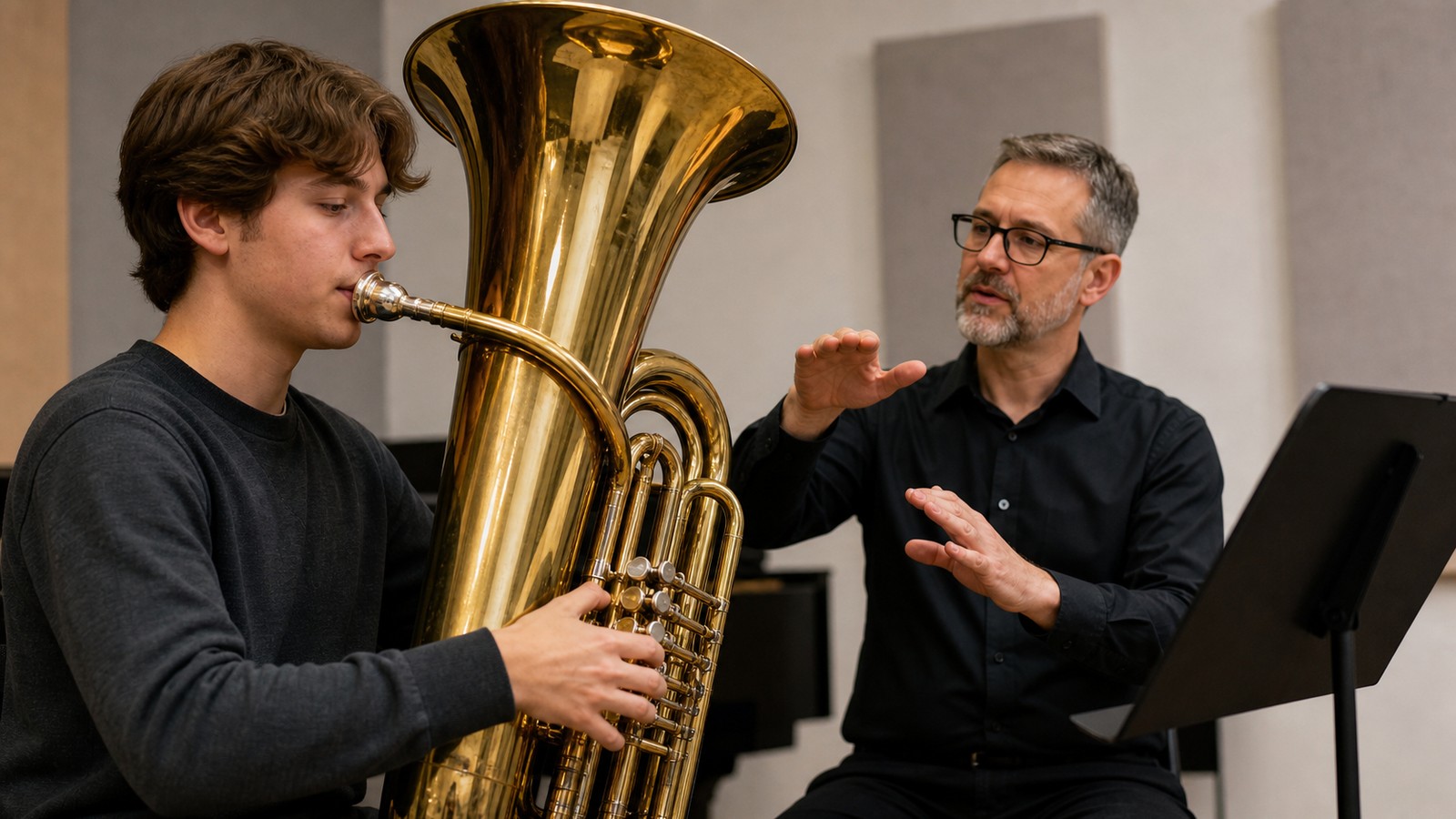
Students learn breathing visually as well as verbally. When directors model a calm, well-timed breath, low brass players can imitate the preparation more easily. Conducting gestures that show breath shape can improve entrances before anyone explains another technical detail.
The Breath Is Part of the Music
The best low-brass breathing exercises eventually disappear into playing. The audience does not hear an exercise; they hear a phrase that starts easily, moves with support, and ends cleanly. That is the real purpose of breath work.
When players understand this, they stop separating breathing from musicianship. Air becomes part of style, rhythm, tone, and expression.
Breathing Helps Low Notes Speak
Low brass players often blame the embouchure when low notes respond slowly, but the breath may be the real issue. A broad, organized release gives the instrument enough energy to speak without forcing. Practicing low notes after breathing drills can reveal whether the air is supporting the register.
Breathing Helps Soft Entrances Too
Soft entrances need air just as much as loud entrances. The player uses a controlled stream, not a timid one. Breathing exercises that practice quiet release can make soft attacks feel less risky and more predictable.
This is valuable for tuba and euphonium players in chorales, and for trombonists entering underneath delicate textures.
A confident soft breath prevents the player from squeezing the note into existence.
Good Breathing Creates Better Rehearsal Habits
When low brass players breathe well, rehearsals become more efficient. Entrances line up, phrases last longer, and directors spend less time asking for basic support. The section can focus on style and balance instead of survival.
That practical benefit is why breathing exercises deserve a place in daily work. They are not warm-up decoration; they are part of the ensemble's foundation. When the section breathes with the same timing and character, the first note sounds more intentional and the phrase has a better chance to stay supported. The habit also gives younger players a repeatable way to reset when rehearsal pressure rises during concerts, auditions, or difficult section entrances. A dependable breath can make the next note feel possible. It also keeps the section calmer and more clearly unified together.