The Best Student Tuba Is the One a Beginner Can Actually Use Well
The top student tubas for beginners are not always the biggest, shiniest, or most expensive instruments. A beginner needs a tuba that fits their body, supports a stable sound, holds up to school use, and can be serviced by a local repair shop. The best choice depends on the student's size, school expectations, budget, and whether the instrument will be rented, purchased new, or bought used.
A: Most school beginners start on BBb unless a teacher or program recommends otherwise.
A: Not for many beginners. A compact tuba can improve comfort, posture, and early practice.
A: Not always. Renting, borrowing, or buying used may be smarter until the student's needs are clear.
A: Brand matters, but fit, condition, repair support, and teacher approval matter more.
A: Check valves, slides, leaks, dents, solder joints, case condition, and repair history.
A: They should play simple notes and scales, but a teacher should help evaluate response and fit.
A: Photos can hide mechanical issues, poor fit, leaks, and shipping risks.
A: Upgrade when the current instrument limits tone, range, ensemble needs, or physical fit.
A: No, but they need careful testing and realistic expectations about service and resale.
A: The best choice is the instrument that fits the player, works reliably, and supports steady progress.
Start With BBb for Most Beginners
Most school beginners start on BBb tuba because it fits common band method books, school inventories, and ensemble expectations. Other keys can be excellent later, but BBb usually gives students and directors the smoothest path in concert band. It also makes it easier to borrow, rent, or replace equipment within school programs.
Key choice should still be confirmed with the teacher. A private teacher, youth orchestra, or regional program may have specific expectations.
Yamaha YBB-105 Is a Common Compact Student Choice
The Yamaha YBB-105 is often considered a practical 3/4-size BBb option for younger or smaller players. Its appeal is not that it sounds like a giant professional tuba. Its appeal is that many beginners can hold it, reach the valves, and create a reliable first sound without fighting an oversized instrument.
This kind of compact student tuba can be especially useful for middle school programs, smaller-framed students, and families who need portability. The tradeoff is that a growing player may eventually want a larger instrument with more depth.
For a first tuba, though, fit and response often matter more than maximum size.
Yamaha YBB-201 Fits Larger Student Programs
The Yamaha YBB-201 is a larger BBb student-style option that may suit older beginners, high school programs, or students ready for more body in the sound. It can be a strong school-owned instrument when durability, familiar design, and predictable service are priorities.
Jupiter JTU700 Can Serve Smaller Beginners
The Jupiter JTU700 is another compact BBb student tuba that often appears in school and beginner conversations. A smaller tuba can help early students manage posture, valve access, and transport. Those practical advantages can make practice more consistent.
As with any student instrument, the exact condition matters. A well-maintained compact tuba is more useful than a neglected larger horn with leaks, dents, or sluggish valves.
Eastman EBB231 Is Worth Considering
Eastman student and intermediate tubas are often considered by schools and families looking beyond the most familiar names. A model such as the EBB231 can be part of the conversation when the player wants a BBb instrument with student-friendly response and a price that may differ from long-established school brands.
The important step is to test the actual instrument. Valve action, pitch tendencies, case quality, and local repair support matter more than a name on a list.
Students should play easy long tones, simple scales, and a short excerpt before deciding whether the horn responds comfortably.
John Packer JP078 Can Be a Value Option
The John Packer JP078 is often discussed as a compact BBb student tuba option for buyers watching cost carefully. Value instruments can make ownership possible for some families, but they should be evaluated with realistic expectations about service, resale, and long-term growth.
A good value choice is not simply the cheapest tuba. It is the instrument that plays reliably enough for the student to practice without constant repair frustration.
Fit Beats Prestige for Beginners
A beginner who cannot hold the instrument comfortably will struggle no matter how respected the brand is. Check whether the mouthpiece reaches naturally, the valves sit under the hand, the instrument balances in a chair, and the student can breathe without twisting.
Parents should watch the student's body before listening for a huge sound. If the player looks trapped behind the instrument, the tuba may be too large for daily progress.
A comfortable beginner is more likely to practice. That alone can make a smaller student horn the better first choice.
Durability Matters in School Use
Student tubas live hard lives. They move between rehearsal rooms, buses, storage shelves, and homes. Durable braces, reliable valves, a protective case, and accessible repair support can matter as much as tone color for a beginner.
Before buying, ask a local repair technician or band director whether parts and service are easy to obtain. A bargain becomes expensive if routine repairs are difficult.
New, Used, and Rental Choices All Have Tradeoffs
New instruments offer predictability and warranty support, but they cost more. Used instruments can save money, but they need careful inspection for leaks, valve wear, serious dents, solder problems, and case condition. Rentals reduce commitment, but long-term costs can add up.
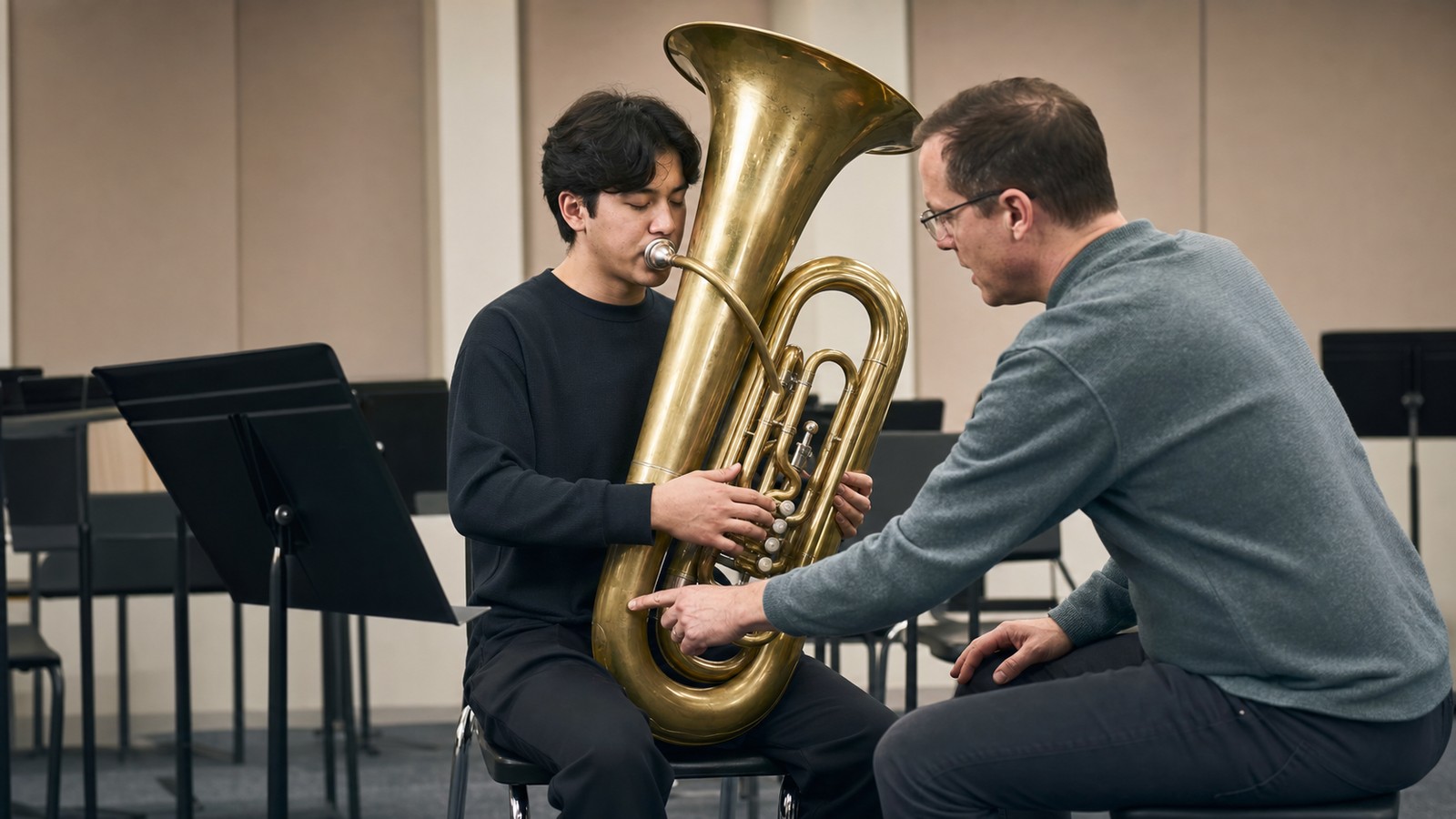
Bring a Teacher Into the Decision
A teacher can hear response, pitch, and tone issues that beginners and parents may miss. They can also judge whether the instrument fits the student's body and school setting. This is especially important because tubas vary widely in size, weight, and playing feel.
If possible, compare two or three instruments in the same room. Use simple playing tests rather than flashy demonstrations.
The best student tuba should make ordinary notes easier, not merely impress the buyer for a few minutes.
Avoid Buying Only by Online Photos
Photos can hide valve problems, dents, leaks, stuck slides, and uncomfortable fit. If buying online, ask for clear condition details, return policies, repair history, and shipping protection. Tubas are large and can be damaged in transit if packed poorly.
For used instruments, a pre-purchase inspection is ideal. The cost of inspection can prevent a much larger repair surprise.
A Beginner Tuba Should Support Growth
The right student tuba helps a beginner build tone, posture, confidence, and practice consistency. It does not need to be a lifetime instrument. It needs to be dependable enough that the student can learn without fighting avoidable problems.
For many families, the best shortlist includes compact student models for younger players, larger BBb school horns for older beginners, and carefully inspected used instruments when budget is tight.
Choose the instrument that helps the student sound better every week. That is the real top-five principle behind any model list.
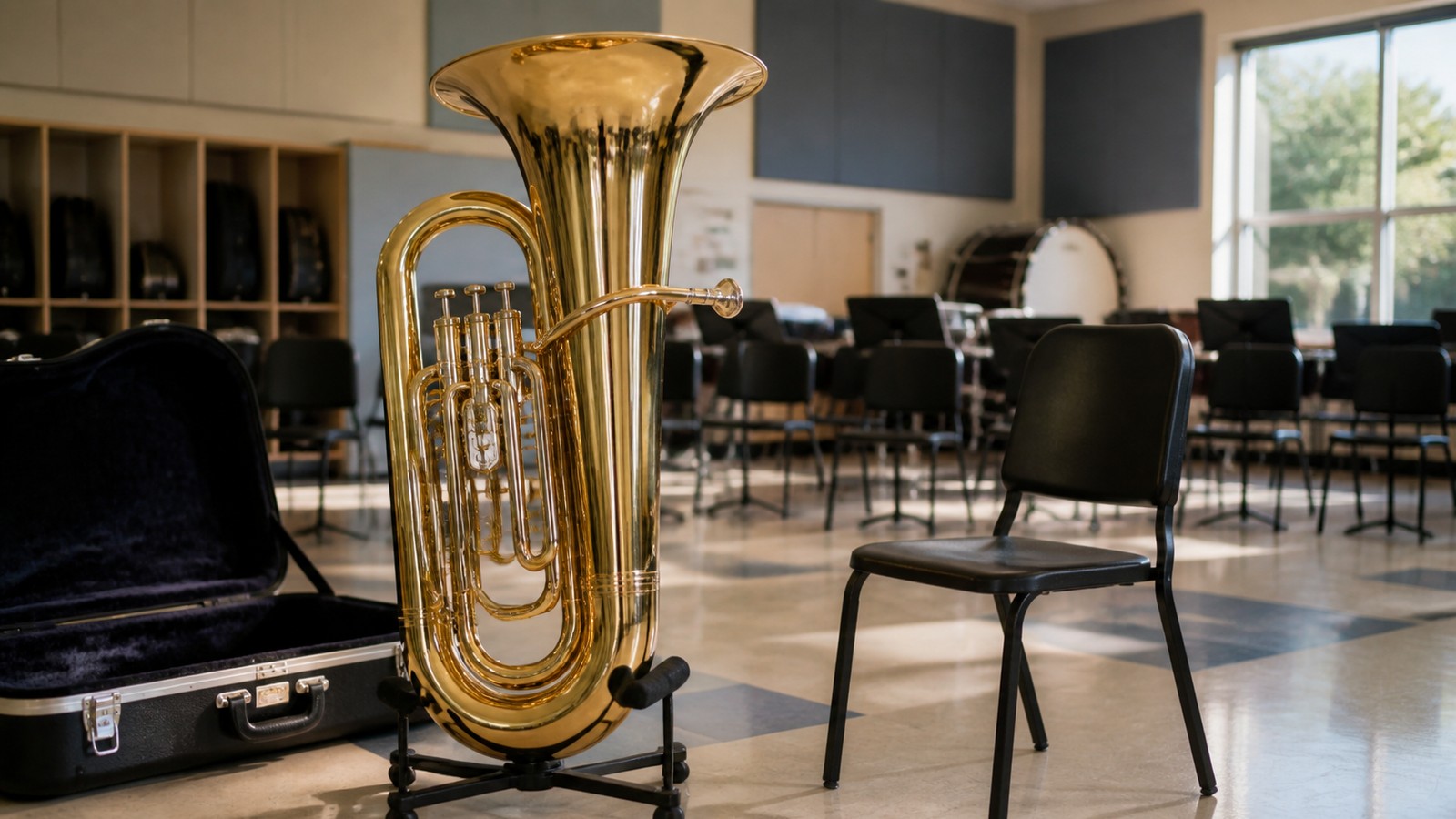
Try the Tuba in a Real Chair
A beginner should test a tuba while sitting the way they will sit in rehearsal. A horn that feels acceptable for two minutes in a store may feel very different in a band chair with a stand, music, and a full practice session ahead. Fit testing should be practical.
Ask whether the student can breathe, reach the valves, and hold the instrument without leaning. Those details matter more than a quick loud note.
Check the Case Before Buying
Tuba cases are expensive and important. A good beginner instrument with a broken or awkward case may become difficult to transport safely. Check wheels, handles, latches, padding, and whether the student can manage the case with normal help.
For school use, case durability can protect the instrument from the most common dents and bumps.
A buyer guide that ignores the case misses a major part of real ownership.
Think About Repair Access
Before buying any student tuba, ask who will repair it locally. Some brands and models are easier for nearby shops to service because parts are familiar and available. An instrument that cannot be maintained easily may interrupt a student's progress.
Match the Instrument to the Program
A school concert band, youth orchestra, marching program, and private lesson studio may have different expectations. Some programs prefer certain sizes or keys because they match the rest of the section. A student-owned tuba should fit that environment.
This is another reason teacher approval matters. The best purchase on paper may not be the best fit for the ensemble the student actually plays in.
Do Not Ignore Weight
Weight affects posture, transportation, practice frequency, and confidence. A student who dreads moving the instrument may practice less, even if the horn sounds good. Lighter or compact options can be more realistic for younger players.
Used Tubas Need Slow Testing
A used tuba should be tested slowly across all valves and slides. Play long tones, slurs, low notes, middle notes, and simple scales. Listen for leaks, rattles, sluggish response, and notes that feel unusually unstable.
Cosmetic wear is not always a problem, but mechanical problems can become expensive. A repair estimate before purchase can change the real price dramatically.
The best used buy is not the cheapest listing. It is the instrument that remains dependable after inspection.
Plan for the Second Instrument
Many beginners eventually outgrow their first tuba. That is normal. Parents should think of the first instrument as a tool for learning, not necessarily the final professional horn. A smart first purchase preserves progress and leaves room for a later upgrade.
This mindset reduces pressure. The goal is to choose well for the student's current stage.
Test Response Before Testing Volume
Beginners often try to judge a tuba by how big it sounds. A better first test is response. Can the student start notes easily, move between simple pitches, and play without excessive pressure? A horn that responds freely will usually teach better habits than one that only sounds impressive when forced.
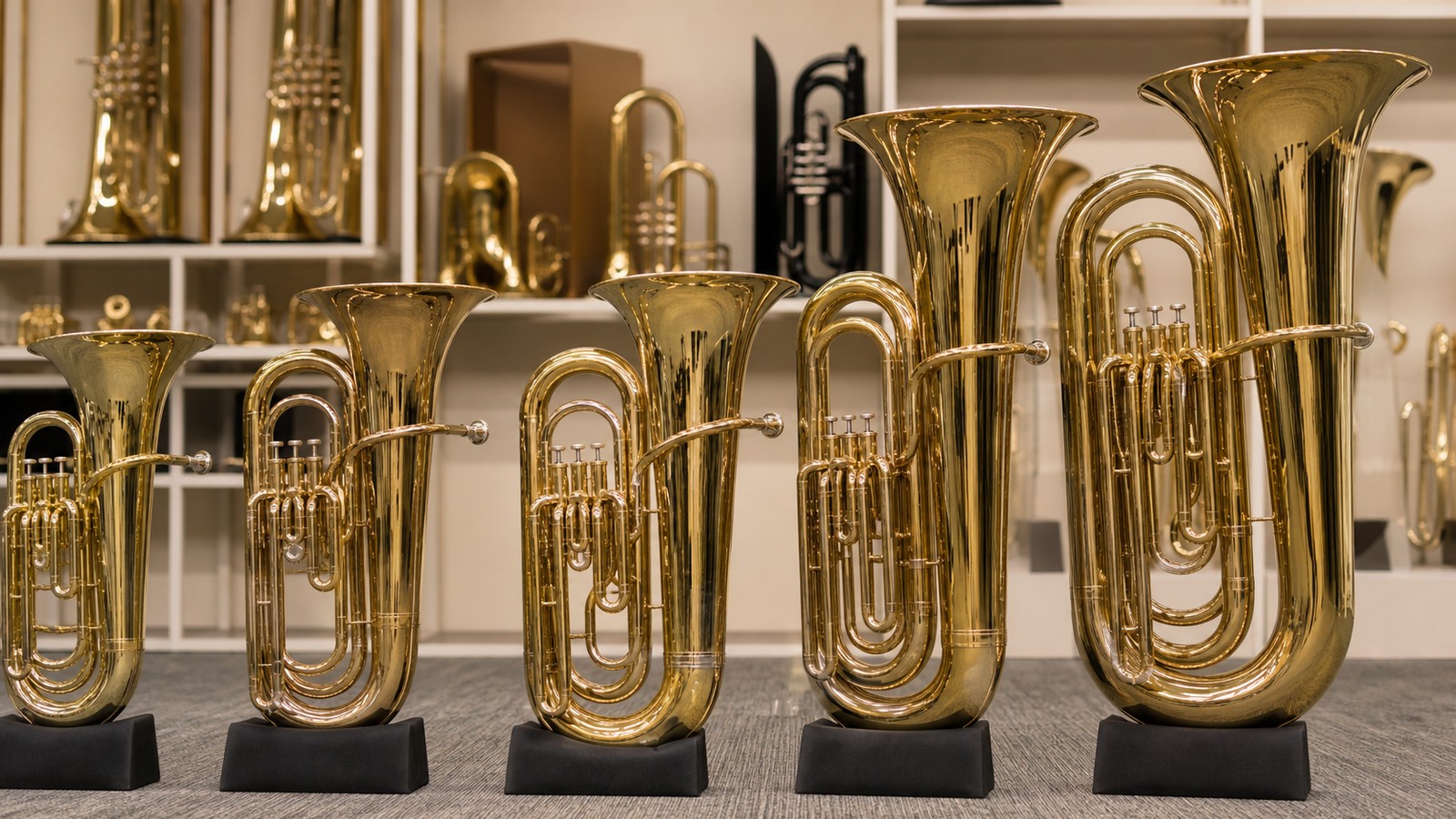
Compare Similar Models Side by Side
If possible, compare student tubas in the same room with the same mouthpiece and player. Differences in response, weight, valve feel, and pitch become easier to notice. A teacher can guide the comparison so the student does not choose only by shine or size.
Side-by-side testing is especially useful when comparing compact models to larger school horns.
The best choice should feel easier in ordinary playing, not only louder in a single test note.
Do Not Forget Mouthpiece Compatibility
A student tuba may feel different with different mouthpieces. Schools often provide a standard mouthpiece, but a private teacher may recommend a change if the setup is uncomfortable or poorly matched. Mouthpiece changes should be modest for beginners and tested carefully.
Choose Dependability Over Novelty
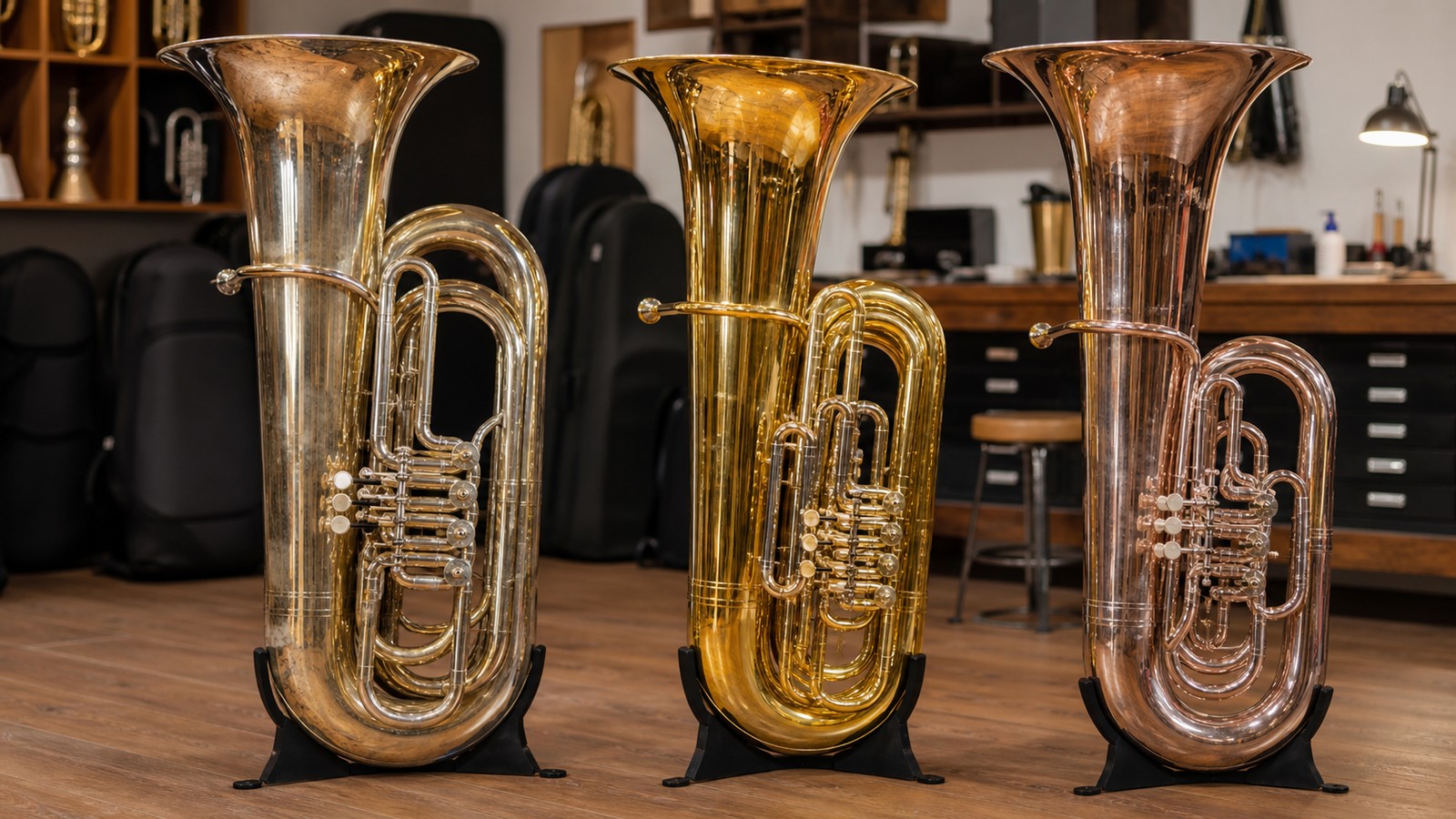
Unusual finishes, unfamiliar layouts, or bargain listings can be tempting, but beginners need dependable tools. A student tuba should have predictable response, serviceable valves, practical slides, and a case that survives normal use. Novelty matters less than steady practice.
This is why common school models remain popular. They are not glamorous, but directors and repair shops often know how to keep them working.
The Top Five Depends on the Student
Any ranked list should be treated as a starting point. The best tuba for a small middle school beginner may not be the best tuba for a tall high school student, a school-owned inventory, or a family buying used. Fit and context decide the final ranking.
A careful buyer uses the shortlist to ask better questions. That approach leads to a better instrument than simply chasing the most familiar name.
For beginners, the winning instrument is the one that makes daily practice easier to start and easier to repeat with a healthy sound and steady confidence through the first season. That practical success matters more than showroom sparkle.