Smooth Tuba Playing Comes From Coordinated Air, Tongue, and Valves
Learning how to slur and tongue smoothly on the tuba means coordinating three systems at once: steady air, efficient embouchure movement, and clean valve timing. The tuba's size can make rough attacks and bumpy slurs feel obvious, so players need a patient approach. Smooth technique grows when every connection serves the phrase rather than interrupting it.
A: Common causes include stopped air, late valves, large embouchure motion, or hidden tonguing.
A: No. The tongue should release the air clearly without punching the tone.
A: Practice slow patterns while listening for smooth air and synchronized finger motion.
A: It is light separation between notes while the air keeps the phrase connected.
A: Start slowly enough to hear the connection, then increase speed after control improves.
A: Some natural motion can occur, but exaggerated jaw movement often creates instability.
A: Low and upper registers need different weight, air focus, and response timing.
A: Melodies connect technique to expression, phrase direction, and real musical choices.
A: They should match in tone, length, front, and rhythm.
A: It combines connection with clear rhythm, tone core, and accurate valve timing.
Air Is the Common Thread
Slurring and tonguing may feel different, but both depend on moving air. A slur fails when the air stops between notes. A tongued passage sounds heavy when the tongue blocks too much air. In both cases, the player needs a steady stream underneath the technique.
A useful image is that the air carries the phrase while the tongue and valves shape it. The support should not disappear just because the articulation changes.
Slurs Need Small Efficient Motion
A smooth tuba slur does not require a large facial gesture. The embouchure adjusts, but the movement should be efficient. Beginners sometimes scoop, squeeze, or stop the air because they are trying to help the note change with too much effort.
Start with nearby notes that speak easily. The goal is to feel how little movement is required when the air stays alive.
Once easy slurs are reliable, wider intervals can be added gradually. Clean coordination should lead the expansion.
Tonguing Should Clarify, Not Hit
The tongue starts the note, but it should not punch the sound. On tuba, an overly hard tongue can make attacks sound late, spread, or explosive. A clean start comes from a light tongue release supported by moving air.
Use Simple Syllables Carefully
Teachers often use syllables to describe articulation, but the exact syllable depends on the player, register, and style. The important idea is that the tongue should move efficiently and return quickly. A syllable that creates jaw tension or throat tightness is not helping.
Students can experiment under guidance with lighter and firmer starts. The ear should decide whether the articulation fits the music.
The best syllable is the one that produces a clear beginning without damaging resonance.
Valve Timing Affects Smoothness
Even perfect air cannot hide sloppy valves. If the fingers arrive late or lift unevenly, slurs and tongued passages become bumpy. Tuba players should practice valve motion slowly enough that the air, tongue, and fingers feel synchronized.
The valves should move decisively without extra hand tension. A relaxed hand can still be precise.
Start Slurs Without the Tongue
To understand slur motion, practice moving between notes after a single initial attack. The tongue begins the first note, then the air and embouchure carry the connection. This shows whether the player is relying on hidden rearticulation.
Keep the Sound Connected Through the Middle
A slur is not only the beginning note and the ending note. The connection between them matters. Players should listen for a smooth path rather than a gap, bump, or sudden accent at the arrival.
Slow practice helps because it exposes the middle of the motion. Fast slurs can hide roughness until the habit is already formed.
When the middle feels connected, the phrase sounds more vocal and less mechanical.
Repeated Notes Reveal Tongue Balance
Repeated notes are excellent articulation tests. If every note sounds different, the tongue may be changing shape too much or the air may be uneven. The player should aim for matching tone, length, and front on each repetition.
Start at a comfortable tempo. Smoothness comes from control before speed.
Legato Tonguing Bridges the Two Skills
Legato tonguing is where slur thinking and articulation thinking meet. The tongue lightly separates notes while the air keeps the line connected. This is essential for lyrical tuba playing, ensemble bass lines, and passages where clarity must not become choppy.
Register Changes Need Different Weight
Low-register slurs may need broader air and patient response, while upper-register slurs may need more focused vibration. Tonguing also changes across registers. A heavy low tongue can sound late, and a tight upper tongue can sound pinched.
Players should practice the same pattern in several registers and notice what changes. The technique should adjust without losing the musical goal.
This register awareness helps the tuba sound even across the instrument instead of divided into separate zones.
Do Not Let the Jaw Do Everything
Some jaw motion is natural, but exaggerated jaw movement can make slurs unstable and attacks heavy. If the jaw visibly pumps for every note, the player may be substituting large motion for air and embouchure coordination.
A mirror or teacher can help catch this habit. The sound often becomes cleaner when the jaw calms down.
Practice Slowly Enough to Hear Edges
Smoothness is built at tempos where the player can hear exactly what is happening. If a passage is rushed, rough edges blur together. Slow practice lets the student notice whether the tongue, valve, or air is causing the problem.
Use Music as Soon as Possible
Exercises are useful, but slurring and tonguing become meaningful inside phrases. A simple melody can teach connection better than a page of patterns if the player listens carefully. The goal is not smooth exercises; it is smooth music.
Try taking a lyrical line and playing it once slurred, once lightly tongued, and once as written. Each version teaches how articulation changes expression.
This turns technique into musical choice. The player learns to ask what the phrase needs.
Fix One Cause at a Time
When a connection sounds rough, avoid changing everything at once. Check air first, then valve timing, then tongue motion, then embouchure movement. Isolating one cause makes practice more efficient and less frustrating.
Teachers can guide this process quickly because they hear the problem from outside the instrument.
Smooth Does Not Mean Weak
Smooth tuba playing still needs rhythmic clarity and tone core. A player should not blur notes so much that rhythm disappears. The art is to connect the phrase while preserving clean starts, accurate valves, and clear pulse.
Coordination Becomes Confidence
When air, tongue, valves, and embouchure work together, the tuba feels less slow and heavy. Slurs move without bumps, tongued notes start cleanly, and phrases become easier to shape. That confidence changes how the player approaches every style of music.
Smooth technique is not a trick. It is the result of patient listening and efficient motion repeated until the body trusts it.
Breath Attacks Can Diagnose the Line
A gentle breath attack, where the note starts without the tongue, can show whether the air and embouchure are ready. This does not replace normal tonguing, but it reveals if the player is using the tongue to cover a weak setup. If the breath attack is unstable, the air plan needs work.
Different Styles Need Different Edges
A lyrical solo, a march bass line, a jazz-influenced figure, and an orchestral entrance do not need the same articulation. Smooth playing means choosing the right edge for the style. Too little definition can blur rhythm, while too much attack can break the line.
Students should practice the same passage with several articulation weights. This teaches control rather than a single default tongue.
The best players can sound connected and clear at the same time because they adjust the edge of the note intentionally.
Valve Noise Can Reveal Tension
Some mechanical valve sound is normal, but loud, uneven finger motion may signal extra tension. If the hand slams valves during smooth passages, the body may be trying too hard. Relaxing the hand can improve both sound and timing.
A quiet hand is not the main goal by itself, but it often accompanies efficient motion. The sound should stay in charge of the correction.
Use Rhythms to Clean Slurs
Changing rhythms inside a slur pattern can expose weak connections. Long-short and short-long patterns force the player to control different parts of the motion. The goal is to keep the same sound quality regardless of rhythm.
Soft Articulation Is a Separate Skill
Many players can tongue clearly at medium volume but lose definition when playing softly. Soft articulation requires the tongue to be light while the air remains active. If the air disappears, the front of the note becomes uncertain.
Practice soft repeated notes in a comfortable register. Listen for clear beginnings that do not pop or vanish.
This skill is essential for ensemble playing because tubas often need clarity underneath softer textures.
Fast Passages Need Slow Valve Honesty
Fast tuba passages often sound muddy because players speed up before the coordination is clean. Practicing slowly with exact valve timing, steady air, and clear note lengths builds the foundation for speed. The metronome should confirm control, not pressure the player into guessing.
Once the motion is clean, increase tempo in small steps. Smooth speed is earned through accuracy.
Record the Space Between Notes
Recordings reveal whether connections are truly smooth. Players should listen not only to the notes, but to the space between them. Gaps, bumps, late valves, and uneven fronts become easier to hear from outside the instrument.
Smooth Technique Supports Better Phrasing
The point of clean slurs and tonguing is expressive phrasing. When technique works, the player can decide where a line breathes, leans, relaxes, or speaks firmly. Without that control, the instrument decides too much.
Tuba players who develop smooth connections become more useful in every ensemble. They can provide bass lines that feel alive, lyrical solos that sing, and inner motion that does not distract from the texture.
That musical payoff makes the slow technical work worthwhile.
Breath Marks Help Articulation Choices
Marking breaths before practicing can make slurs and tonguing smoother because the player knows where the phrase is going. Without a breath plan, the tongue may become too aggressive near the end of a line as the air runs low.
A clear breath plan keeps articulation from compensating for poor pacing. The phrase feels more stable because the player is not guessing.
Match Note Lengths Before Adding Speed
Uneven note lengths can make a passage sound rough even when the attacks are clean. Tuba players should practice connected patterns slowly and match the space each note occupies. This is especially important in bass lines, where uneven length can disturb the entire ensemble pulse.
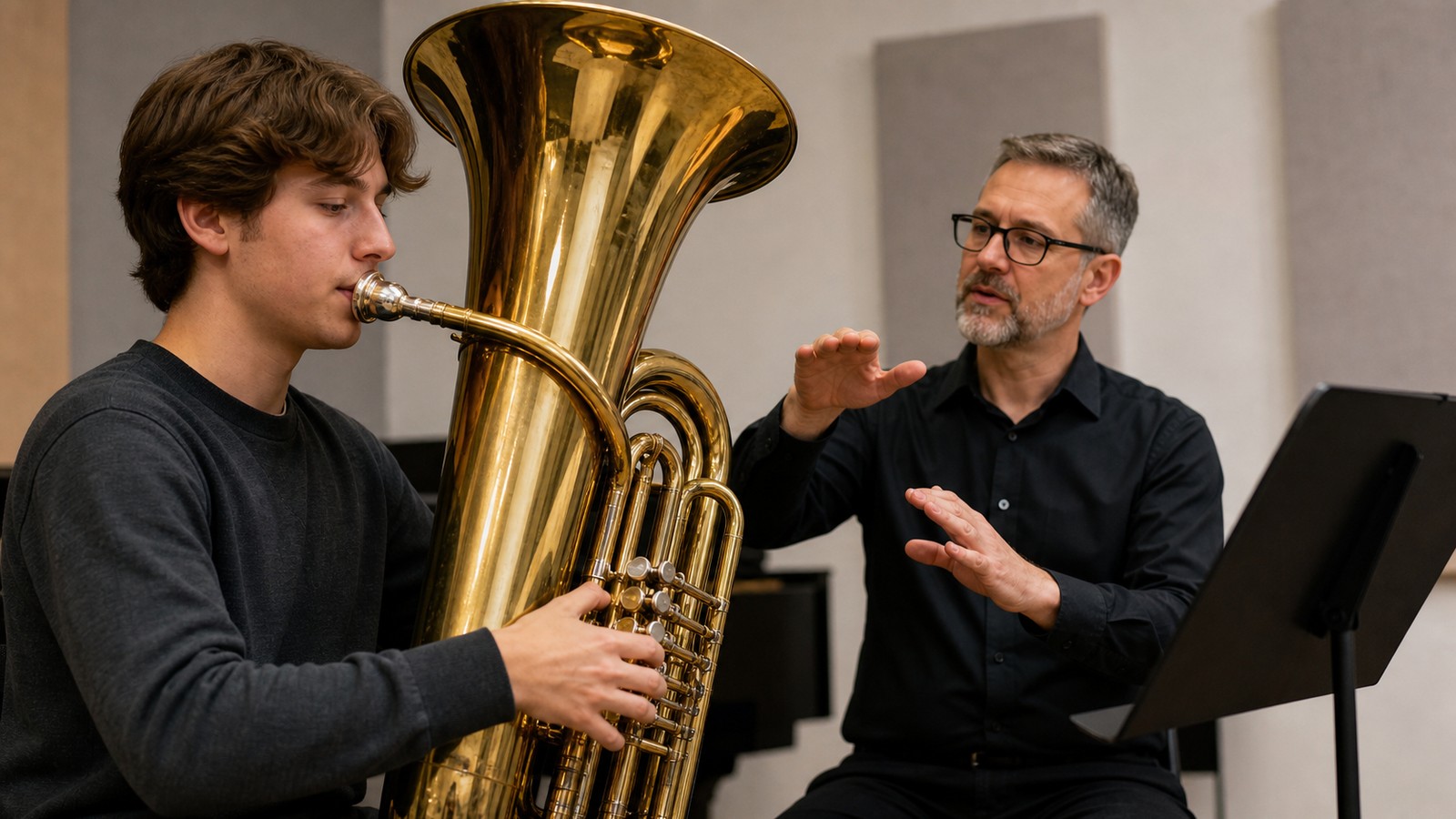
Teachers Can Separate Tongue From Air
A teacher may ask a student to play a passage on air alone, then with breath attacks, then with light tonguing. This sequence shows what each part of the system contributes. It can reveal whether the tongue is solving a problem or creating one.
The exercise also makes corrections less personal. Instead of saying the student is doing everything wrong, it identifies which layer needs attention.
That kind of diagnosis helps players improve faster and with less frustration.
Clear Connections Make Tuba Lines Feel Lighter
When slurs and tongued notes connect cleanly, the tuba part feels less physically heavy. The player does not have to restart the instrument on every note. That lighter feeling improves speed, style, and confidence without asking the sound to become small.
This is one reason smooth technique matters in every genre, from concert band bass lines to lyrical solo writing.