Soft Tuba Playing Needs Resonance, Not Timidity
Playing softly on the tuba without losing tone is one of the most useful low-brass skills. Many players can make a big sound, but soft playing reveals air control, embouchure efficiency, pitch stability, and confidence. The goal is not to make the tuba disappear. The goal is to keep a warm, centered sound at a lower dynamic.
A: The player may be reducing support too much or letting the tone core disappear.
A: They use a controlled smaller stream, but the breath still needs support and openness.
A: Begin in a comfortable middle register before moving to low or high extremes.
A: Practice single-note entries with calm breath, light tongue, and plenty of rest.
A: Reduced air and extra embouchure tension can pull pitch away from center.
A: Yes. Dynamic shapes teach players to change volume without losing tone identity.
A: Quiet enough to fit the texture while keeping a clear pitch and warm core.
A: Yes. It exposes air, pitch, and response issues that affect every dynamic.
A: It feels prepared, supported, and committed rather than hesitant or withdrawn.
A: Keep the tuba's resonance and identity at a lower dynamic.
Soft Does Not Mean Unsupported
The most common mistake is treating soft playing as less playing. A soft tuba note still needs air, shape, and resonance. If the player simply backs away from the instrument, the tone becomes thin, airy, or unstable.
Start With a Full Breath
Soft dynamics should begin with the same calm preparation as louder playing. A full breath gives the player options. A tiny breath often causes the lips to grip because the body does not trust the air supply.
The exhale is controlled, but it should not feel trapped. Think of sending a smaller stream of organized air rather than shutting the system down.
Keep the Tone Core Alive
A good soft tuba sound still has a center. The listener should hear pitch, resonance, and color rather than only air. Long tones at comfortable soft dynamics help players learn where the tone begins to lose focus.
The edge between soft and unsupported is different for every player. The goal is to find the quietest sound that still feels alive, then strengthen that point gradually.
Recording can help because soft tone often feels different behind the bell than it sounds across the room.
Embouchure Should Stay Responsive
Soft playing does not require a frozen face. The embouchure should stay responsive enough to vibrate freely. If the player clamps down to reduce volume, the tone may become tight and pitch may rise.
The corners can remain organized while the center stays supple. That balance protects both sound and intonation.
Use Middle Register First
The middle register is usually the best place to develop soft tone. Extremely low notes may lose focus, and higher notes may trigger pressure. Starting where the instrument responds easily lets the player learn the feeling of quiet resonance.
Practice Soft Entries Separately
Soft attacks are often harder than soft sustains. A player may begin too loudly, crack the note, or let the pitch sag before the sound settles. Practicing soft entries on single notes builds confidence.
The tongue should release the air gently. The note still needs a clear beginning, but the front should not explode.
Players can repeat short soft starts with plenty of rest. The goal is a calm, predictable response.
Do Not Overuse Mouthpiece Pressure
Some players press harder when playing softly because they are trying to control the vibration. That pressure can choke resonance and make endurance worse. The mouthpiece should stay secure, but the sound should not depend on squeezing the lips shut.
If a soft note only speaks with heavy pressure, return to a slightly louder dynamic and rebuild the response.
Pitch Can Drift at Low Volume
Soft tuba playing can make pitch unstable because the air stream is smaller and the embouchure may overcorrect. Players should practice with drones, tuners, or ensemble references, but they should listen musically rather than stare at a device.
Crescendos and Decrescendos Teach Control
Dynamic shapes are excellent soft-tone teachers. Start at a comfortable medium dynamic, fade gradually to soft while keeping the same tone color, then return. The challenge is to change volume without changing the identity of the sound.
The decrescendo often reveals where support disappears. That moment is useful information, not failure.
Over time, the player can make the soft end of the shape more reliable.
Soft Low Notes Need Special Patience
Low tuba notes at soft dynamics can become unfocused if the air is too slow or the embouchure too loose. The player needs a broad but organized stream. The sound should feel warm, not empty.
Descending gently into the low register works better than jumping to the softest possible pedal note. Connection builds control.
Soft High Notes Need Less Force
Upper-register soft playing tempts players to pinch. Instead, the air should stay energized and the embouchure should focus efficiently. The dynamic is soft, but the intention is not weak.
Ensemble Balance Makes Soft Playing Meaningful
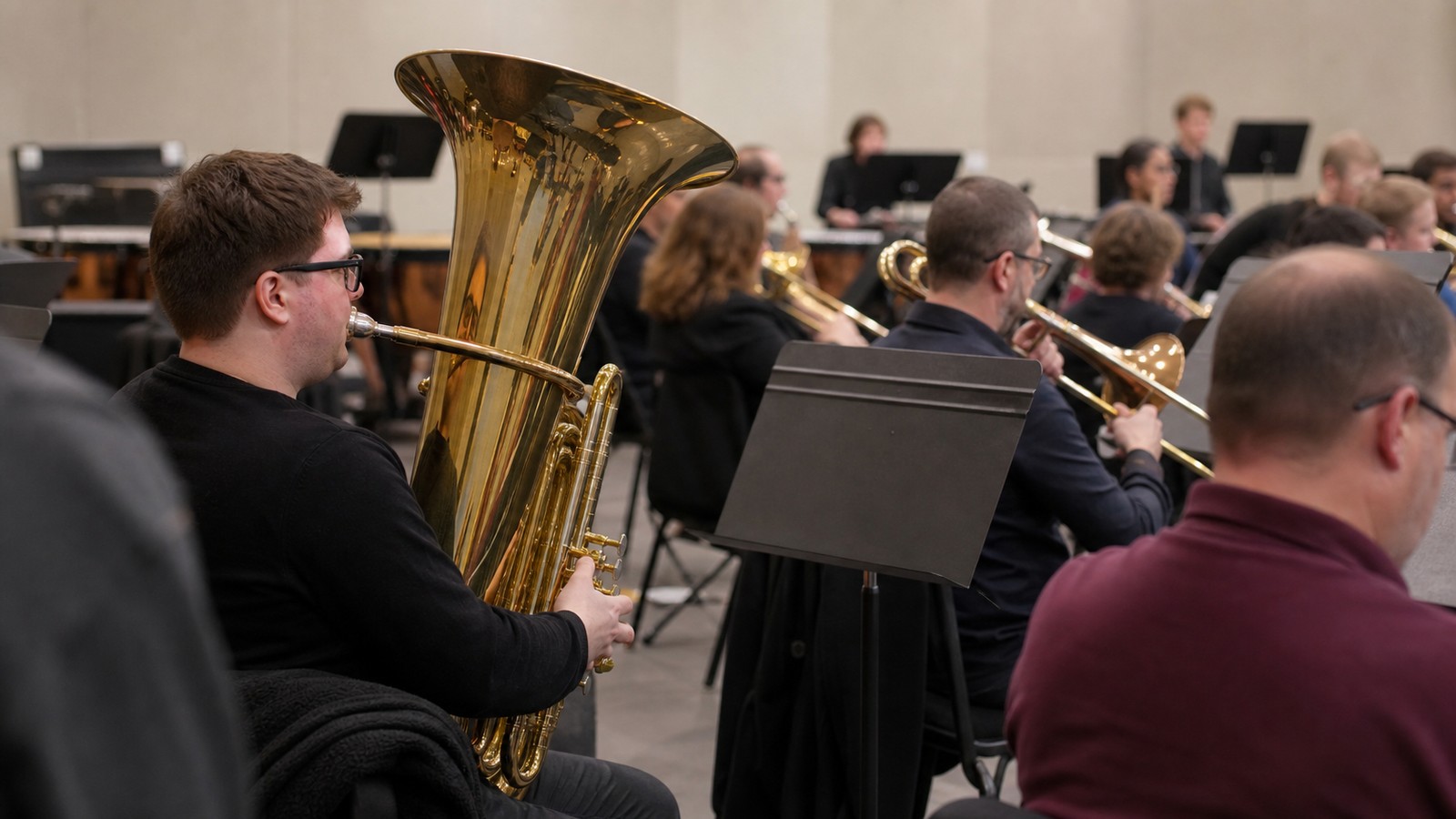
Soft tuba playing matters most in ensembles. The tuba may need to support a chord without covering woodwinds, strings, voices, or solo lines. A centered soft sound lets the player remain present while respecting the texture.
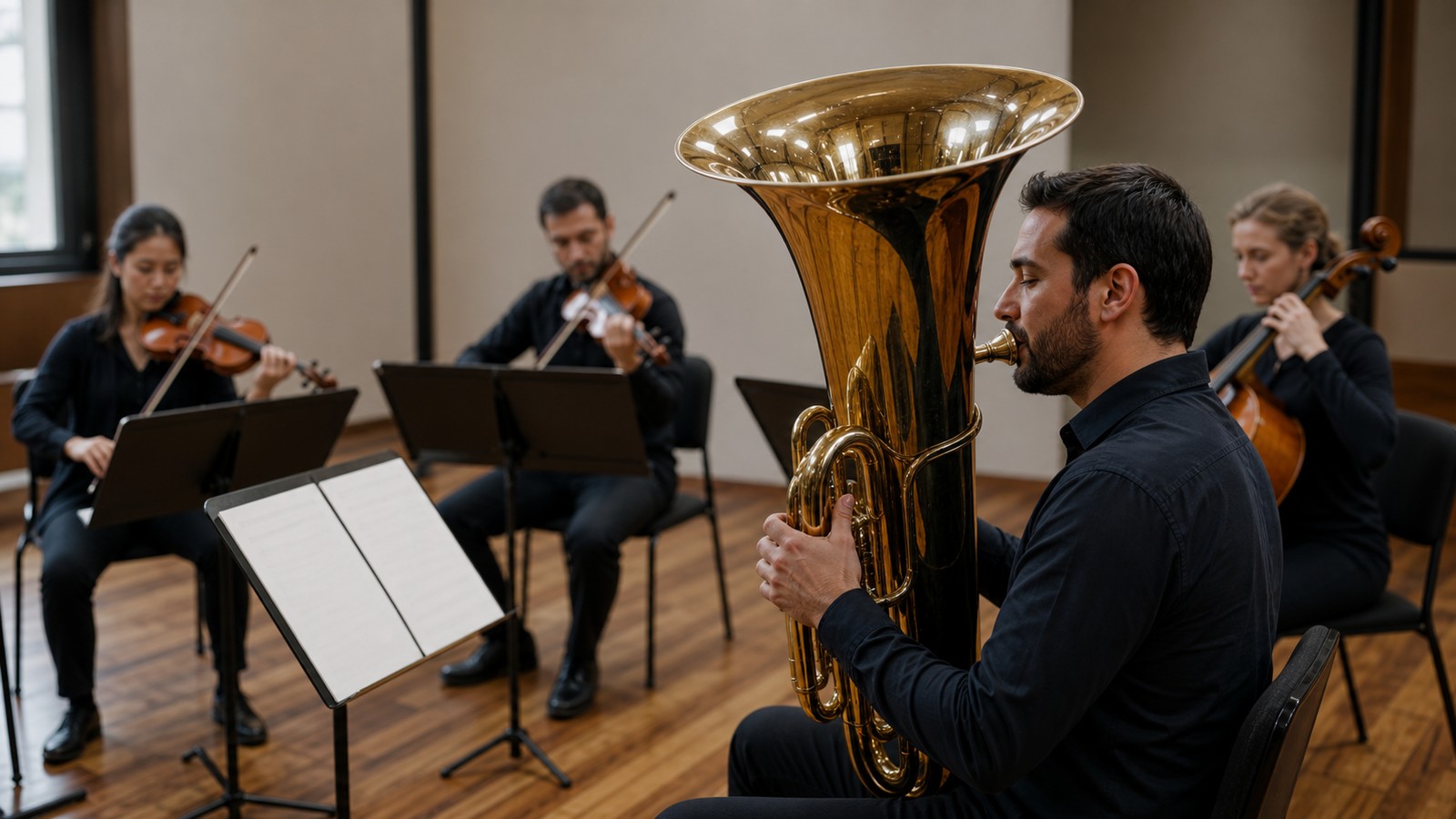
In chamber settings, the tuba often has to blend like a bass voice rather than dominate like a foundation poured in concrete.
Listening outward is essential. The correct soft dynamic depends on the room and the musicians nearby.
Quiet Practice Builds Control
Practicing softly can improve overall technique because it exposes leaks in air, pitch, and response. A player who can keep tone alive at a quiet dynamic usually gains better control at louder dynamics too.
However, soft practice should not replace full sound practice entirely. Tuba players need both resonance and restraint.
Avoid Mistaking Air Noise for Tone
A very quiet sound can seem successful from behind the instrument even when the room hears mostly air. Players should listen for pitch center and resonance. If the tone does not carry a musical core, it needs more support.
Confidence Is Part of Soft Playing
Many students play softly with hesitation because they fear missing the note. That fear creates the very problems they are trying to avoid. A confident soft entry uses calm preparation and commits to the sound, even at low volume.
Soft confidence grows through repetition. The player learns that the tuba can respond without force.
That confidence is valuable in auditions, chamber music, wind ensemble, orchestra, and solo playing.
Soft Tone Should Still Sound Like Tuba
The best soft tuba sound keeps the instrument's warmth and depth. It may be quieter, but it still has identity. When players learn to preserve that identity at low volume, they gain a much wider expressive range.
Soft playing becomes less mysterious once it is treated as active control. The breath is full, the embouchure is efficient, the pitch is centered, and the phrase still moves.
That is the real goal: not less tuba, but beautifully controlled tuba.
A player who can keep that sound in soft passages will be trusted more often with exposed lines, delicate entrances, and chamber textures.
Practice Soft Playing Across Articulations
Soft tone should be practiced with slurred notes, lightly tongued notes, repeated notes, and simple rhythms. Each articulation reveals a different weakness. Slurs may expose air gaps, while repeated notes may show whether the tongue is interrupting too much.
Use Distance as a Listening Test
Soft tuba sound can seem full to the player but disappear a few steps away. Ask a teacher or section partner to listen from across the room, or record the sound at a distance. The goal is quiet presence, not private vibration.
Distance also reveals whether the tone has too much air noise. A centered soft sound carries farther than players expect.
This test helps students understand that soft playing still needs projection, just at a controlled dynamic.
Do Not Change Equipment Too Quickly
A player struggling with soft tone may blame mouthpiece size, instrument response, or valve condition. Equipment can matter, but the first checks should usually be air, pressure, pitch center, and confidence. Changing gear too quickly can distract from solvable habits.
If the instrument truly leaks or responds poorly, a teacher or repair technician can help identify that. Technique and equipment should be separated carefully.
Soft Playing Needs Clear Releases
The end of a soft note is just as important as the beginning. Many players let quiet notes fade randomly or close with a bump. Practicing releases keeps soft passages clean and helps ensembles end together.
Use Melodies Instead of Only Exercises
Soft long tones are useful, but melodies teach phrase direction. A simple song played softly forces the player to keep air moving through changing notes, breaths, and releases. The tone must stay alive while the music goes somewhere.
This also makes practice more enjoyable. Soft playing becomes an expressive skill rather than a fragile technical trick.
Players can choose slow etudes, hymn lines, or lyrical excerpts and aim for warmth at every dynamic.
Soft Dynamics Improve Listening Habits
Quiet playing forces a tuba player to listen more carefully to the room and the ensemble. At lower volume, pitch and balance cannot hide behind size. This listening habit carries back into louder playing and makes the musician more responsive.
A player who can listen while playing softly becomes easier to blend with and easier to trust.
Build a Soft-Tone Routine
A short routine might include full breaths, middle-register soft entries, a decrescendo exercise, a low-register connection, and a simple melody. The routine does not need to be long. It needs to be consistent enough that the body learns quiet confidence.
Soft Control Expands the Whole Dynamic Range
Soft playing is not only about pianissimo markings. It teaches control across the entire dynamic range because the player learns how much air, embouchure focus, and resonance are truly needed. That awareness makes medium and loud playing more efficient too.
The tuba becomes more expressive when it can move from whispering support to full foundation without changing character. That range of color is what makes a low-brass player valuable beyond volume alone.
Soft Entrances Need Rhythm Too
Quiet entrances sometimes arrive late because the player is trying to be careful. Careful should not mean hesitant. Practice soft entries with a steady pulse so the note begins on time and still keeps a gentle character.
Piano Does Not Always Mean the Same Volume
A written soft dynamic changes meaning by room, ensemble, register, and role. A tuba playing under a flute solo may need a different soft sound than a tuba supporting a full low-brass chord. The marking gives direction, but listening decides the final balance.
This is why soft playing should be practiced with recordings, drones, and other musicians when possible. The player learns to adjust without losing tone.
A flexible soft dynamic is more useful than one fixed quiet level.
Quiet Confidence Takes Time
Soft tuba control improves slowly because the player is learning to trust response at the edge of sound. That trust comes from many calm repetitions. Missing a few quiet entrances is part of learning, not proof that the player should press or overcorrect.
Stay patient and return to the fundamentals: full breath, clear pitch, organized embouchure, and a phrase that still has direction.
Soft Playing Should Remain Expressive
A soft passage can still have shape, warmth, and emotional direction. Players should avoid treating quiet notes as fragile objects to protect. The phrase needs to move, breathe, and arrive somewhere, even when the dynamic marking asks for restraint. That musical intention keeps quiet playing from becoming timid and gives the listener something expressive to follow in the room. It also helps the player trust the sound more fully.