Tuba Embouchure Starts With Relaxed Structure and Steady Air
Mastering tuba embouchure is less about forcing the lips to buzz and more about building a relaxed structure that lets air move freely. Beginners need a stable mouthpiece placement, open breathing, supported posture, and patient tone work. The tuba is large, but the embouchure should feel organized rather than tense, heavy, or squeezed.
A: It should feel organized and stable, not clenched, painful, or stretched.
A: No. Secure contact is needed, but excessive pressure limits tone, range, and endurance.
A: Start in a comfortable middle-low register, then expand gradually with the same relaxed setup.
A: Yes. They teach steady air, centered tone, and calm release.
A: It can help when brief and gentle, but it should not create tension or replace instrument playing.
A: Poor posture restricts breathing and can force the face into pressure or distortion.
A: Pain, numbness, awkward instrument fit, or practice avoidance can signal a setup issue.
A: Often enough that tone stays healthy and the lips recover before strain sets in.
A: It is a stretched sideways setup that thins the lips and usually weakens tuba tone.
A: A teacher should intervene when sound, comfort, placement, or endurance problems repeat.
Begin With Comfort Before Complexity
A beginner's first goal is not a heroic low note or a huge sound. The first goal is a comfortable setup that can repeat from day to day. If the face is strained before the first note begins, the player is already fighting the instrument.
Posture Supports the Embouchure
Tuba embouchure begins below the face. A player who collapses through the chest or twists toward the mouthpiece will usually pinch, press, or run out of air quickly. Good posture gives the lips a better chance to vibrate naturally.
The player should sit tall enough that breathing feels open, while still staying relaxed through the shoulders. The instrument should come to the player rather than forcing the player to chase the mouthpiece.
The Mouthpiece Should Meet the Face Gently
Beginners often press the mouthpiece into the lips because pressure seems to create a note quickly. That habit can work for a moment, but it blocks endurance and flexibility. The mouthpiece needs contact, yet the face should not feel pinned.
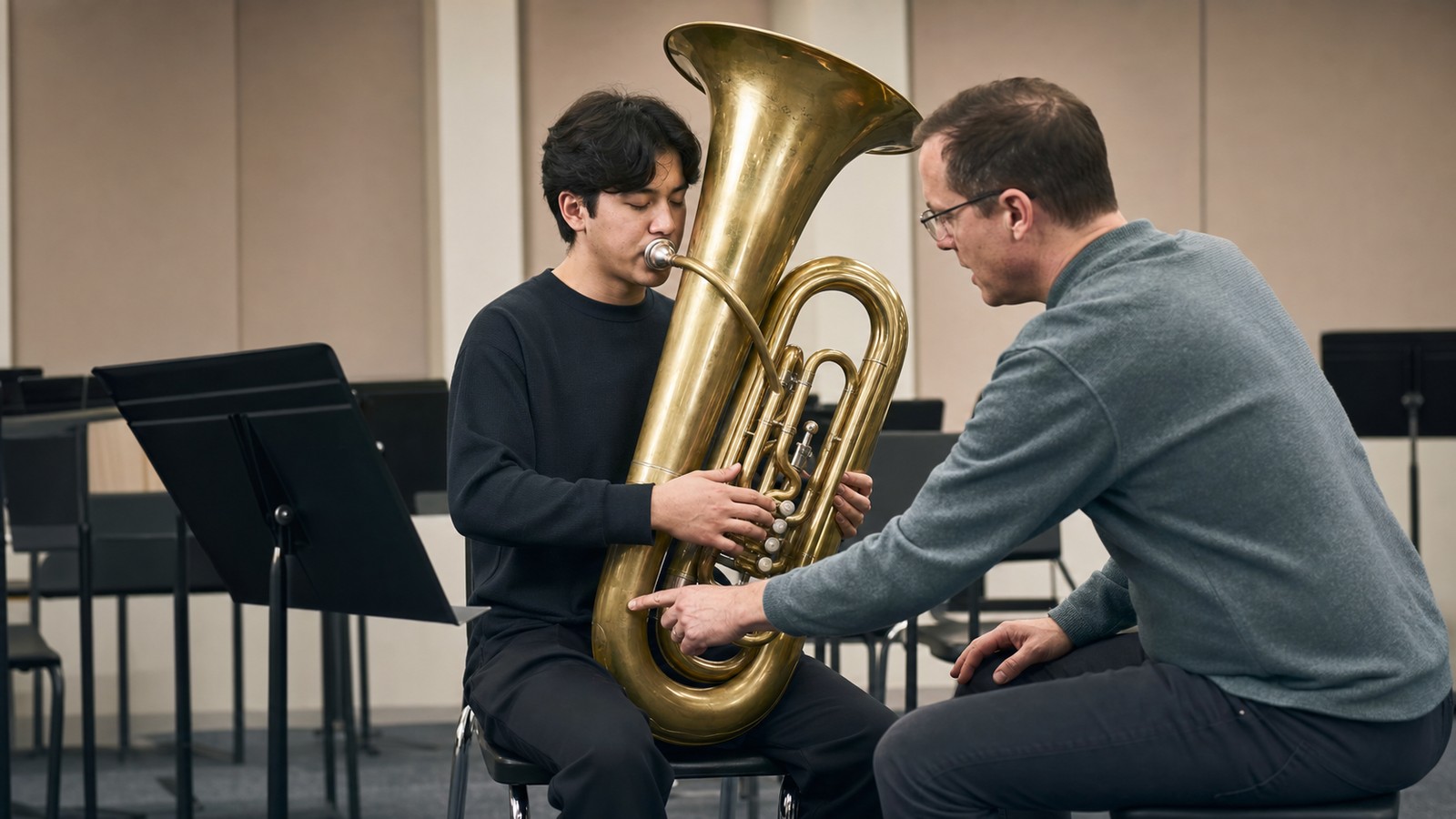
A teacher can help check whether the placement is centered enough for the student's anatomy. Perfect symmetry is not always required, but the setup should allow a clear buzz and comfortable breathing.
The best test is repeatability. If the student can set the mouthpiece the same way and produce a stable tone without panic, the placement is moving in the right direction.
Corners Need Firmness, Not Clenching
The corners of the mouth help shape the embouchure, but they should not become a hard grimace. Think of the corners as organized and steady while the center of the lips remains free enough to vibrate. Too much clenching stops the buzz.
The Tuba Needs Generous Air
Because the tuba is large, beginners must learn that air is part of the embouchure system. A tiny breath makes the lips work too hard. A full, calm breath lets the face stay more relaxed because the sound is supported from behind.
Players should inhale without lifting the shoulders or tightening the throat. The air should feel low, open, and unhurried. Then the first note should begin with movement, not with a facial squeeze.
Buzzing Should Stay Easy
Mouthpiece buzzing can help if it stays gentle and musical. The goal is a clear vibration, not a loud contest. Beginners should buzz short patterns, rest often, and avoid turning the exercise into pressure practice.
Some teachers use buzzing sparingly because students can overfocus on the mouthpiece instead of the full instrument. That is sensible. Buzzing should support tuba playing, not replace it.
When buzzing helps, the sound on the instrument usually becomes more immediate and centered. When it creates tension, it is time to stop and reset.
Start in a Comfortable Register
Beginners do not need to prove range right away. Starting in a comfortable middle-low register helps the embouchure find vibration without strain. From there, the student can gradually explore lower and higher notes with the same relaxed setup.
Low Notes Need Space, Not Collapse
Tuba beginners sometimes loosen everything for low notes until the sound loses focus. Low playing does need openness, but it still needs shape. The corners remain organized while the oral space and air stream feel broad.
A good low note feels supported rather than floppy. The face does less work when the air and posture stay dependable.
Higher Notes Should Not Become a Squeeze
As notes rise, many beginners pinch the lips and press harder. That may produce a pitch briefly, but it often damages tone and endurance. Higher tuba notes need faster air, steady corners, and a smaller vibrating area without harsh pressure.
Students should expand upward slowly. If the tone becomes thin, tight, or painful, the setup needs attention.
A patient range plan protects the embouchure. It builds strength through coordination rather than force.
Long Tones Teach the Face to Trust the Air
Long tones are simple, but they are powerful for tuba embouchure. They teach the player to begin a sound, sustain it, listen to the center, and release without grabbing. The face learns that steady air can carry the note.
Beginners should keep long tones short enough to stay beautiful. A strained eight-count note teaches less than a relaxed four-count note repeated well.
Rest Is Part of Embouchure Training
The muscles around the mouth are small compared with the size of the instrument. Beginners need frequent rests so the embouchure can recover and learn. Playing until the lips feel numb or swollen is not productive.
Avoid the Smile Embouchure
A stretched smile pulls the lips thin and usually makes tuba tone weaker. It may feel like control at first, but it limits vibration and makes endurance harder. The face should look calmer and more natural than a wide grin.
The corners can stay steady without pulling sideways. The center of the lips needs enough cushion to vibrate with depth.
Students can check this in a mirror, but they should not become obsessed with appearance. Sound and comfort matter most.
The Jaw Should Stay Free
A locked jaw restricts sound and makes articulation feel heavy. Beginners should keep the jaw naturally open enough for the mouthpiece and air stream. The exact position varies by player, but tension is the warning sign.
If a student feels the jaw working harder than the air, it is time to pause, breathe, and reset the setup.
Articulation Must Not Break the Setup
Tonguing should interrupt the air lightly, not knock the embouchure out of place. Beginners sometimes move the whole face for every attack. A stable embouchure lets the tongue do its job without large visible changes.
Breathing and Embouchure Develop Together
It is tempting to treat breathing and embouchure as separate topics, but tuba playing links them constantly. A better breath makes the lips vibrate more easily. A calmer embouchure lets the air move without obstruction.
Practice should combine both from the beginning. Simple notes with full breaths can teach more than complicated exercises played with a tight face.
The student's body gradually learns that tone begins before the mouthpiece touches the lips.
Mirrors Can Help, but Ears Lead
A mirror can reveal obvious problems like excessive pressure, shoulder lifting, or a stretched smile. Still, the ears should lead the work. The best embouchure is the one that produces a clear, resonant, repeatable sound without discomfort.
Students should listen for steadiness, warmth, and ease. Those clues are more useful than chasing a perfect-looking face.
A Teacher Should Check Pain or Persistent Strain
Mild fatigue is normal for beginners, but pain, numbness, swelling, or repeated failure to produce sound should be checked by a qualified teacher. Embouchure problems are easier to fix early than after months of habit.
Daily Practice Should Stay Short and Focused
A beginner does not need a marathon routine. Ten to twenty minutes of focused tone work, broken with rests, can build better habits than a long session full of pressure. Consistency matters more than heroic effort.
The routine should include breathing, comfortable long tones, simple slurs, easy articulations, and a few notes that gently stretch range.
Ending while the embouchure still feels healthy is a skill. It helps the next practice session begin well.
Instrument Fit Matters
Some students struggle because the tuba is not positioned well for their body. Chair height, instrument angle, leadpipe placement, and support aids can all affect embouchure comfort. A setup problem can look like a face problem.
Parents and directors should take this seriously with younger players. The student should not have to twist or lift the instrument awkwardly to reach the mouthpiece.
Strength Comes From Coordination
Embouchure strength is not the same as facial force. Strong tuba playing comes from coordinated breath, stable corners, efficient vibration, and relaxed recovery. Beginners build that strength through many small correct repetitions.
Bad Days Do Not Mean Failure
The embouchure can feel different from day to day, especially for new players. Sleep, hydration, practice load, and general fatigue all matter. A rough tone day should prompt a calmer routine, not panic.
Returning to easy notes, full breaths, and relaxed setup often restores confidence. The goal is to rebuild the habit instead of forcing the face to obey.
Patience keeps beginners from turning temporary frustration into permanent tension.
Parents Can Support Healthy Habits
Parents do not need to diagnose embouchure details. They can help by encouraging short, regular practice and by noticing whether the student complains of pain or avoids playing because the instrument feels awkward.
A supportive environment makes the tuba feel less intimidating. Beginners improve faster when they are not embarrassed by early sounds.
Recordings Make Progress Audible
A weekly phone recording of a long tone or simple scale can show progress that the student misses day to day. The embouchure may be improving even when practice feels slow. Hearing a steadier tone over time builds motivation.
A Good Embouchure Feels Sustainable
The best beginner tuba embouchure is not dramatic. It feels repeatable, breathable, and sustainable. The corners are organized, the center vibrates, the mouthpiece rests securely, and the air does most of the heavy lifting.
Mastery comes from protecting that ease while gradually adding range, volume, articulation, and endurance.
When beginners learn this early, they stop treating the tuba as a fight. They discover that a large instrument can respond to a calm, efficient setup.
Small Adjustments Should Be Tested Slowly
Embouchure changes should be small enough that the student can evaluate them honestly. Moving the mouthpiece, changing jaw position, or adjusting the corners all at once makes it impossible to know what helped. A teacher may suggest one change, then ask the student to play easy notes and listen for comfort, response, and tone.
Slow testing protects the beginner from chasing quick fixes. The embouchure is a coordination habit, so even a helpful adjustment needs calm repetition before it feels natural.
The First Clear Tone Is Only the Start
Once a beginner can make a clear tuba tone, the next step is consistency. The same easy setup should return after a breath, after a rest, and on the next practice day. That repeatability is the foundation for scales, music, range, and endurance.
Musical Goals Keep Technique Healthy
Embouchure work should always point back to music. A beginner who only checks facial position may become stiff, while a beginner who listens for a warm phrase learns why the setup matters. Simple songs, call-and-response patterns, and easy duets can keep the embouchure connected to expression.
That musical context also reduces frustration. The student hears progress as clearer notes, smoother attacks, and more comfortable phrases instead of treating embouchure as a separate puzzle that never reaches real songs in daily practice with confidence.