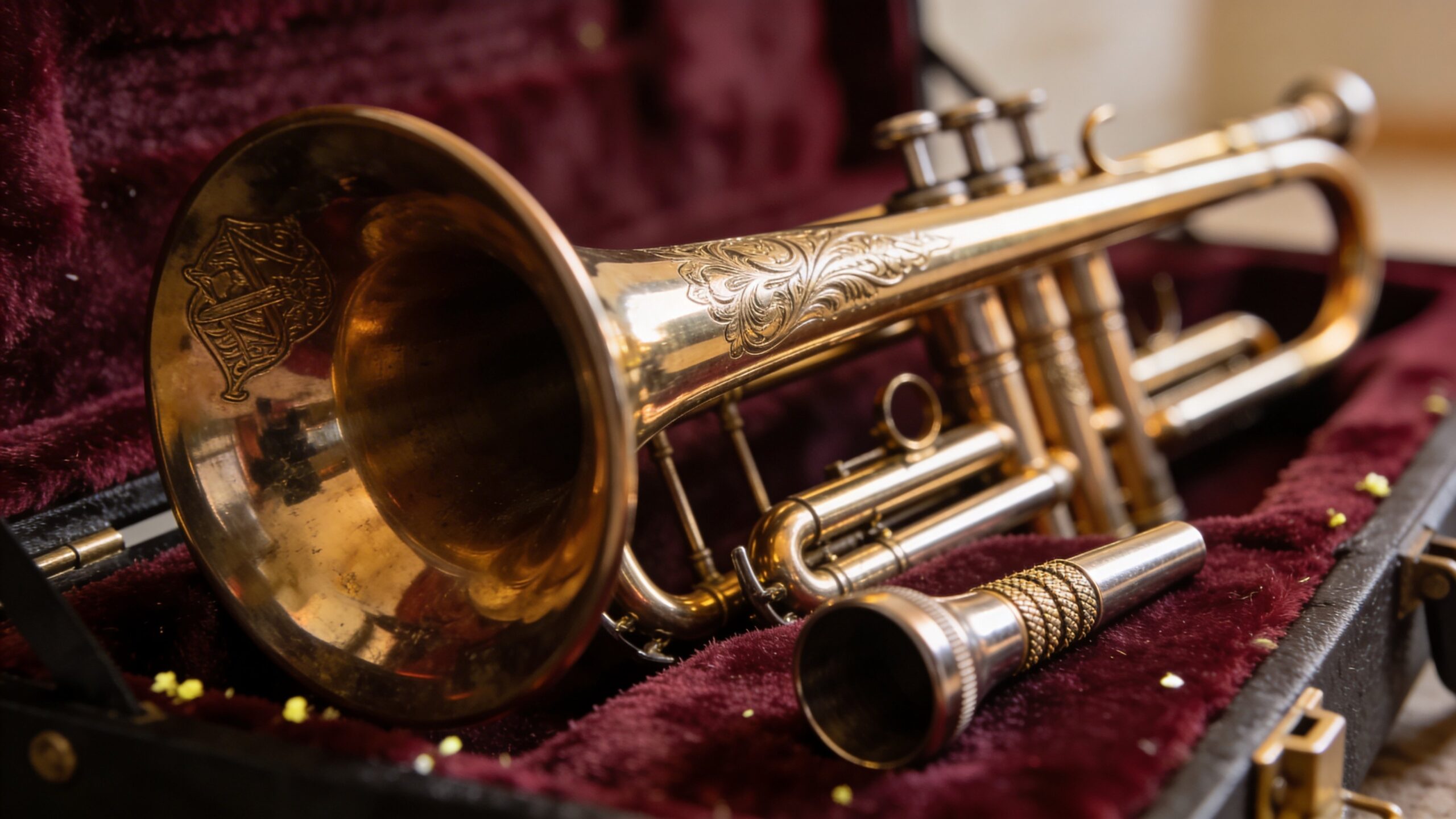
The Silent Power of Lip Slurs
Among all the techniques that shape a trumpet player’s sound, few are as transformative—and as deceptively simple—as the lip slur. At first glance, it looks like a basic flexibility exercise. But dig deeper and you’ll find that lip slurs sit at the crossroads of tone, control, endurance, and embouchure strength. From the warm-ups of beginners to the daily routines of world-class professionals, lip slurs are the bridge between raw potential and refined performance.
Mastering them requires patience, precision, and awareness of how the smallest facial movements affect airflow and pitch. Yet the rewards—richer tone, effortless range, and a confident embouchure—make every repetition worth the effort. In this article, we’ll explore the science, artistry, and discipline behind lip slurs, and how to harness them for a more powerful trumpet sound.
A: Daily. Start with 5–10 relaxed minutes, split into 2–3 short sets.
A: Usually inconsistent air or excess pressure. Slow down and keep the air spinning.
A: Yes—by training faster air and efficient aperture changes without strain.
A: Minimal micro-angle shifts are fine; avoid chewing motions that disrupt tone.
A: Start mezzo-piano. Add pp for control and ff sparingly for stamina testing.
A: Two-note slurs (C–G) to full partial stacks; add valves to test consistency.
A: Quality mutes are fine; monitor intonation and resistance to avoid overblowing.
A: Choose comfort and even response; avoid extremes that mask fundamentals.
A: Short sets, soft long tones between, hydration, and regular rest minutes.
A: Absolutely—simple, slow slurs teach breath–embouchure coordination from day one.
What Exactly Is a Lip Slur?
A lip slur is the act of changing notes smoothly without using the valves. Instead, the player adjusts pitch entirely through variations in air speed, lip tension, and embouchure shape. The movement is continuous—no breaks, no tongue articulation, just a seamless glide between harmonics.
On the trumpet, this often involves moving between partials, such as from low C to G to high C. It may sound like a small leap, but each shift engages the lips, corners, and air support in a complex dance. When performed correctly, the result is a clean, singing tone that moves effortlessly between registers.
Lip slurs are sometimes described as “yoga for the face.” They build coordination between the facial muscles and the respiratory system, developing a flexible but strong embouchure capable of reacting instantly to the demands of different dynamics and pitches.
The Science of Sound: Why Lip Slurs Work
The physics of lip slurs centers on vibration and resonance. When you buzz into the mouthpiece, your lips act like reeds—vibrating at a frequency determined by air pressure, aperture size, and muscle tension. The trumpet then amplifies and refines that vibration into musical sound.
Each harmonic on the trumpet corresponds to a natural resonance frequency of the tubing length. By tightening or relaxing your lips and adjusting the air column, you “lock in” to different resonances without changing the valve configuration. This requires extraordinary precision and feedback between your lips, ears, and breath.
Lip slurs therefore train what might be called the “neuromuscular intelligence” of your playing. They strengthen the orbicularis oris (the ring of muscles around your mouth), increase blood flow, and promote efficient breathing habits—all while fine-tuning your sense of pitch and tone consistency.
Building a Stronger Embouchure: Strength Through Flexibility
One of the biggest misconceptions about embouchure training is that strength alone leads to power. In reality, flexibility is equally important. Overly tense lips restrict vibration, leading to a strained, thin tone. Lip slurs strengthen the embouchure by teaching the muscles to work efficiently, not forcefully.
As you move between harmonics, your lips learn to balance firmness with elasticity. The constant adjustment refines control in the corners of the mouth while keeping the center supple. Think of it like athletic conditioning: you’re not just building muscle—you’re improving coordination, speed, and endurance.
After consistent practice, players notice their tone becomes fuller and more centered, attacks become cleaner, and fatigue sets in much later during long rehearsals or performances. This is the foundation of a “professional-grade” embouchure.
Breath and Airflow: The Engine Behind the Slur
Even the most finely tuned embouchure can’t function without solid airflow. Lip slurs reveal immediately whether a player’s breath support is efficient. Too little air, and the tone collapses. Too much tension in the throat, and the slur breaks.
The key lies in maintaining a steady, fast air stream while letting the lips and corners adjust naturally. Many teachers describe it as “blowing warm air through the horn.” The air should stay energized, even as the pitch changes.
Practicing lip slurs with focused breathing builds an automatic connection between air and tone production. Over time, this habit enhances projection, intonation, and dynamic control—skills that extend to every aspect of trumpet performance.
Developing Precision and Control
One of the hidden benefits of lip slur training is how it develops micro-control. Each movement between partials teaches your body how to make minute adjustments without overshooting or undershooting the target pitch.
At slow tempos, this feels like sculpting the air with your lips—every transition revealing weaknesses or imbalances in your setup. At faster tempos, it becomes a coordination exercise, testing your ability to keep tone and timing consistent while moving rapidly across harmonics.
Professional players often describe a sense of “magnetism” between notes once their control is finely tuned. The trumpet seems to pull you toward the next pitch, rather than forcing you to hunt for it. That magnetic pull is the result of countless lip slurs done with focus and care.
The Role of the Mouthpiece and Setup
Your mouthpiece and trumpet setup can either enhance or hinder your lip slur performance. A mouthpiece with a shallow cup or tight backbore may make upper slurs easier but can limit tone depth in lower registers. Conversely, deeper mouthpieces provide warmth but demand more control in high slurs.
Experimentation is part of the process, but the goal is always comfort and balance. The best players adapt their embouchure to their equipment, not the other way around. When performing lip slurs, focus on evenness of tone and response across all registers. If one range feels unbalanced, it might be time to assess whether your setup supports your natural playing style.
Warm-Ups: Starting the Day with Lip Slurs
Nearly every brass pedagogue—from Herbert L. Clarke to Claude Gordon to modern masters like Allen Vizzutti—includes lip slurs in their daily warm-up routines.
A typical session begins with simple slurs between two adjacent harmonics, such as low C to G. As the lips wake up, you can expand to wider intervals and more complex valve combinations. The secret is patience: warming up is about awakening muscle memory, not testing endurance.
Slow, controlled lip slurs help the body remember what efficient playing feels like. The result is a smoother transition into technical drills, articulation studies, and repertoire practice later in the session.
Common Mistakes and How to Avoid Them
While lip slurs seem simple, many players struggle to execute them cleanly. Here are the most frequent pitfalls:
1. Excessive Pressure: Pressing the mouthpiece too hard against the lips restricts vibration and kills flexibility. Instead, rely on firm corners and steady air.
2. Jaw Movement: Avoid unnecessary jaw shifts. True slurs come from air and lip coordination, not from chewing motion.
3. Uneven Airflow: Let the air remain constant. The lips should adjust the pitch, not the lungs.
4. Speed Over Substance: Practicing too fast too soon leads to sloppy transitions. Master slow slurs first; speed will follow naturally.
Correcting these habits may take time, but each adjustment brings more consistency and freedom to your playing.
Progressive Lip Slur Exercises
As your comfort grows, expand your exercises. Start with simple two-note slurs (C–G) and move toward full harmonic series (C–G–C–E–G). Then incorporate valve combinations to challenge different tubing lengths.
Advanced routines might include “lip slur ladders,” where each pattern ascends by half-steps or whole steps. The goal is always smoothness, not volume or force. Professional players often practice these with a metronome, gradually increasing tempo to refine coordination.
Over time, this structured approach transforms your embouchure into a responsive, well-conditioned instrument of its own.
Lip Slurs and Range Development
Few exercises develop range as safely as lip slurs. Because they train both air velocity and muscle coordination, they allow players to access higher registers without the strain that comes from brute force.
As you ascend through harmonics, the air speed must increase while the aperture narrows slightly. Learning to make this adjustment seamlessly is the key to unlocking upper notes. Lip slurs teach your lips to respond instantly, building a bridge between your middle and high registers.
This method also promotes endurance in high playing. Once your lips can transition easily between registers, you’ll find high notes require less effort and remain more stable even during long performances.
Musical Application: Beyond the Exercise
While lip slurs are essential for technical growth, their benefits extend far into musical performance. Every legato passage, lyrical solo, and expressive phrase relies on the same control that lip slurs cultivate.
By mastering the art of smooth transitions, you’ll bring greater fluidity to melodic lines. Your tone will remain consistent from the lowest pedal tone to the highest concert C. The embouchure’s increased flexibility also improves articulation clarity and pitch accuracy, especially in fast passages.
Think of lip slurs as your daily maintenance routine—the unseen foundation that allows artistry to flourish.
The Mental Game: Focus, Patience, and Awareness
Lip slurs are as much a mental discipline as a physical one. Success depends on mindful repetition and self-observation. Rushing through them mechanically misses the point.
Approach each slur as a study in awareness: How does the tone feel as it changes? Where does resistance build up? Are you truly relaxed, or are you forcing the pitch?
Many professionals treat lip slurs as a kind of meditation. Each slow glide between notes is an opportunity to refine focus and body alignment. Over time, this mental clarity spills over into all aspects of performance—from rehearsals to high-pressure concert situations.
Historical Perspective: Lip Slurs in Brass Pedagogy
Lip slurs have been part of brass pedagogy since the 19th century. Early cornetists like Jean-Baptiste Arban recognized their importance in developing control and tone, embedding them in his Complete Conservatory Method—a cornerstone of trumpet literature.
Later educators expanded on this foundation. Claude Gordon emphasized airflow and “compression power” through slur work, while Carmine Caruso’s routines integrated rhythmic precision and muscle balance.
Modern approaches, including those of James Stamp and William Adam, emphasize relaxation and resonance, treating lip slurs not just as drills but as exercises in musical sound production. The continuity of this practice across generations is proof of its enduring value.
Lip Slurs in Different Musical Contexts
From classical concertos to jazz improvisation, lip slurs play a crucial role. In orchestral settings, they help produce the pure, centered sound required for blending within brass sections. In jazz and commercial music, they contribute to flexibility and endurance—allowing for expressive glissandos and rapid range changes.
Even in marching or lead trumpet contexts, where endurance is tested under extreme conditions, lip slur mastery ensures the embouchure remains reliable under pressure. The universality of this technique is why every serious brass player keeps it as a core part of their daily practice.
Advanced Variations: Taking Lip Slurs Further
Once the basics are mastered, players can explore creative variations. Try practicing slurs at pianissimo to challenge control or at fortissimo to test endurance. Add rhythmic subdivisions, dynamic swells, or articulation after each slur to simulate real-world performance scenarios.
Another advanced method involves “reverse slurs”—starting from a high note and descending through harmonics while maintaining resonance and steady air. These variations prevent routine from becoming monotonous and push your embouchure to adapt to any musical demand.
Troubleshooting: When Progress Stalls
It’s common for players to hit plateaus where lip slurs feel inconsistent or stagnant. When this happens, return to fundamentals. Slow down the tempo, focus on sound quality, and listen for evenness between notes.
Recording yourself can be eye-opening—small air or embouchure inconsistencies often go unnoticed in real time. Also, make sure you’re practicing at a balanced volume. Excessive loudness hides tension; softer playing reveals it.
Above all, resist the urge to overpractice. The embouchure, like any muscle group, needs rest to grow stronger.
The Connection Between Lip Slurs and Endurance
Endurance on the trumpet isn’t built by simply playing longer—it’s built by playing smarter. Lip slurs develop the efficiency that allows you to play longer without fatigue.
Each smooth transition reinforces the balance between muscular engagement and relaxation. Instead of squeezing harder as you tire, your body learns to channel energy through controlled air and stable corners.
Many players notice that after several weeks of consistent lip slur practice, their playing stamina improves dramatically. Concerts that once left the lips exhausted become manageable, even enjoyable.
Daily Routine Example
A balanced daily routine might look like this:
Begin with gentle buzzing or long tones to wake the lips.
Move into slow two-note lip slurs focusing on tone and air support.
Expand to full harmonic patterns, maintaining resonance at all dynamics.
Finish with articulation or scale work that applies the same air and embouchure principles.
Consistency is the key. Even five to ten minutes of focused lip slur practice daily can yield remarkable results over time.
The Rewards: Tone, Confidence, and Musical Freedom
The ultimate goal of lip slur practice isn’t just strength—it’s musical freedom. When your embouchure and air coordination work seamlessly, you can focus entirely on expression rather than mechanics.
Notes respond instantly. Dynamics feel effortless. You can play for hours without fear of fatigue or pitch instability. The confidence this gives a performer is immeasurable.
Lip slurs are the invisible engine behind that freedom. They’re the quiet discipline that fuels brilliance on stage.
The Endless Journey of Refinement
Using lip slurs to strengthen your embouchure is not a phase of trumpet development—it’s a lifelong pursuit. The greatest players in the world still begin each day with them, knowing that every slur connects body, breath, and music in a uniquely powerful way.
Whether you’re a beginner struggling to control the middle register or a professional refining your upper range, lip slurs will meet you where you are and push you toward mastery.
So the next time you lift your trumpet, think of each lip slur as a conversation between your lips and your sound—a dialogue that deepens with every breath. Because in the end, those simple, smooth transitions aren’t just exercises; they’re the heartbeat of great trumpet playing.